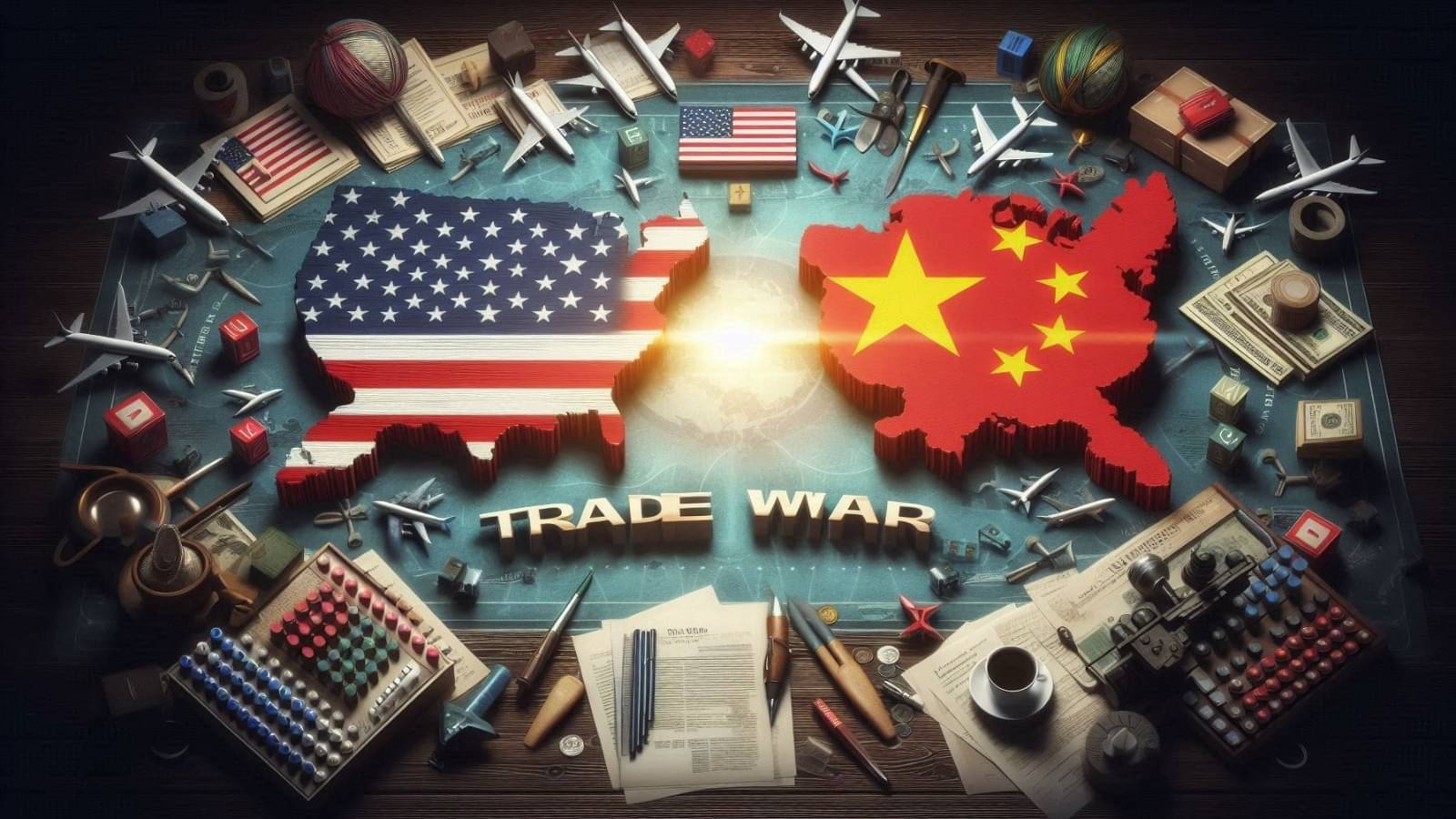
The border between the United States and Canada, once the world’s most functional economic artery, is now a site of industrial sabotage. As of 12:01 a.m. this Saturday, the White House has officially triggered a 50 percent tariff on $20 billion worth of Canadian imports. This is not merely a policy adjustment. It is a direct assault on a supply chain that has spent decades knitting the two nations into a single, breathing organism. Washington claims this is a necessary defense of American jobs, but the reality is a high-stakes gamble that threatens to incinerate the competitive advantage of North American manufacturing.
Prime Minister Mark Carney wasted no time in confirming that Canada would retaliate dollar for dollar, effectively pulling the emergency brake on all trade negotiations. For those watching the floor of the American economy, the consequences are immediate. We are no longer talking about bureaucratic friction; we are talking about the deliberate inflation of raw material costs for every domestic manufacturer relying on Canadian steel, aluminum, and electrical components. In related updates, we also covered: Why the New US Canada Tariff War Changes Everything.
The breakdown of these talks exposes a fundamental fracture in how the current administration views international commerce. Where previous eras sought to secure stability, this administration treats trade as a zero-sum game, often weaponizing Section 338 of the Tariff Act of 1930 to force compliance. The logic is as simple as it is dangerous: by penalizing imports, the government believes it can coerce production back into the American heartland. But manufacturing is not a light switch. You cannot simply pivot a supply chain that requires precision-engineered components from across the border without crippling the output of your own factories.
Behind the scenes in Washington, the narrative is that Canada attempted a last-minute reversal on key commitments. U.S. Trade Representative Jamieson Greer characterized the Canadian stance as a failure to finalize a deal that offered "the best treatment" of any major exporter. Ottawa, however, views these late-stage U.S. demands as bad-faith tactics designed to leave Canada with no leverage. When a government shifts the goalposts while the clock is running, the other side rarely stays at the table. Investopedia has also covered this important topic in extensive detail.
Consider a hypothetical domestic furniture manufacturer in Michigan. They rely on consistent, affordable shipments of specialized hardwood and fasteners from Ontario to maintain their margins. With a 50 percent tax slapped onto those materials, their cost of production spikes overnight. They have two choices: raise prices for the American consumer—who is already struggling under the weight of inflation—or slash their workforce to balance the books. This is the "protection" currently being touted by policymakers. It is a tax on the American middle class, hidden in the language of national interest.
There is also the matter of the North American trade pact, once considered the bedrock of continental security. The current administration has effectively bypassed the spirit of that agreement, treating it as a secondary consideration to the immediate political optics of a trade war. By ignoring the established frameworks for fair dispute resolution, Washington has signaled to its partners that no agreement is ironclad. This creates a vacuum of trust that will take a generation to refill.
The impact on specific provinces is brutal. British Columbia, with its heavy reliance on timber and paper, faces an existential threat to its primary export market. Quebec, already nursing the wounds of previous sector-specific levies, now finds its electronics and metal industries under a secondary wave of fire. These are not abstract entities; they are thousands of small and medium-sized businesses whose business models are being dismantled in a board room in Washington.
Observers might ask why the U.S. would take such a risk ahead of the November midterms, when voters are hyper-sensitive to any rise in the cost of living. The strategy relies on a gamble that the public will conflate protectionism with prosperity. However, economic history suggests that when you hike the cost of inputs, the consumer eventually pays the bill. Every dollar of this tariff is a transfer of wealth from American businesses to the federal treasury, with zero guarantee that the jobs in question will actually materialize domestically.
The suspension of talks is the most ominous development. When diplomats stop talking, the friction between economies turns into heat, and that heat eventually warps the institutional infrastructure that keeps nations aligned. Canada has made it clear that they are turning their gaze elsewhere, exploring new partnerships and diversifying their trade exposure to reduce reliance on an unpredictable neighbor.
The irony is that the U.S. and Canada share a nearly $900 billion trade relationship for a reason: it works. It is efficient, integrated, and mutually beneficial. By treating this partnership as a battleground, the administration is not just damaging a relationship; it is actively degrading the industrial capacity of the entire continent. The tariffs are now law, the retaliations are being finalized, and the factories that depend on a stable border are beginning to count the cost of this breakdown.
The path forward is now obstructed by political pride. There is no off-ramp visible, and the architects of this policy appear content to let the market feel the full weight of their decision. For the workers, investors, and consumers caught in the crossfire, the coming months will be defined by one thing: instability. The cost of this confrontation is rising with every passing hour.

,webp/023/474/562/v2/2560x1440.211.webp)
:max_bytes(150000):strip_icc()/reasons-why-kids-are-bullied-460777-3d1c3ef5de04467392e431cfca81ffc7.png)