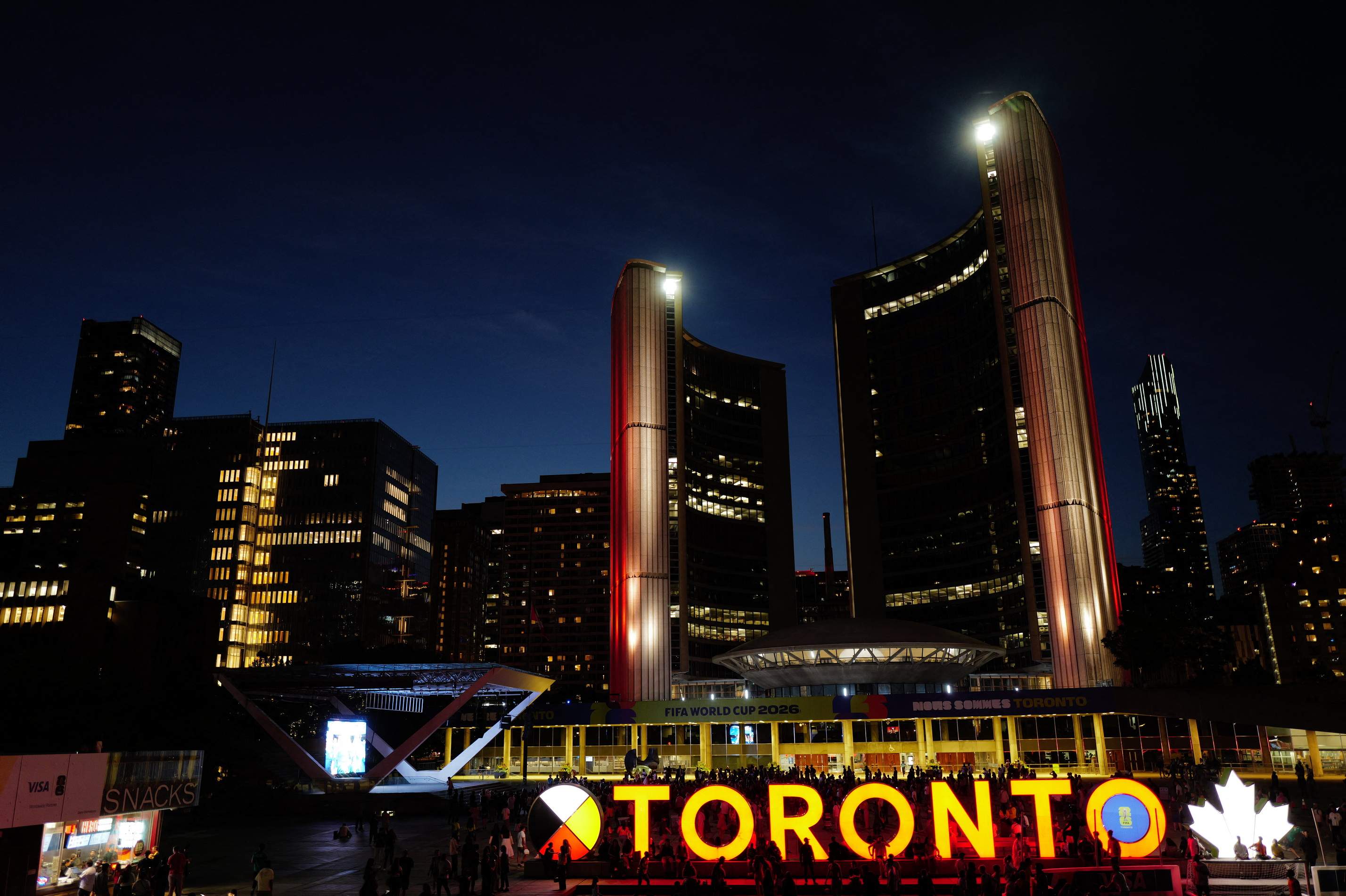
The October 2026 Toronto municipal election yielded a 72 percent incumbent retention rate on city council, returning 18 sitting councillors while turning over seven of the 25 ward seats and confirming Mayor Olivia Chow for her first full four-year term. Surface-level election summaries treat these results as a simple roster update of winners and losers. A rigorous structural analysis reveals something far more consequential: a decisive consolidation of urban progressive voting blocs, the collapse of multi-decade suburban incumbency shields, and a sharp divergence between open-seat dynamics and incumbent-defended races.
The Three Mechanisms of the 2026 Council Turnover
To understand why seven seats changed hands while 18 remained static, political analysts must separate the turnover into three distinct causal mechanisms rather than treating all seven new councillors as a single wave.
1. Strategic Open-Seat Succession
Three of the seven new councillors entered city hall through seats vacated by retiring veterans or an outgoing mayoral challenger, rather than defeating a sitting representative on election night. In these races, institutional endorsements and existing political machinery dictated the outcome:
- Ward 4 (Parkdale—High Park): Housing advocate Diana Chan McNally captured 42.47 percent of the vote in a 10-candidate field to succeed Gord Perks, who retired after 20 years on council. McNally consolidated institutional labor and progressive backing—including Perks, former mayor David Miller, CUPE Local 79, and ATU Local 113—creating an insurmountable organizational advantage over runner-up Nadia Guerrera (27.75 percent).
- Ward 14 (Toronto—Danforth): Following Paula Fletcher’s retirement announcement, Toronto District School Board trustee Sara Ehrhardt secured 48.78 percent of the vote across an 18-candidate ballot. Fletcher’s direct endorsement transferred her local voter network intact, leaving former councillor Mary Fragedakis in second at 22.7 percent and sitting Ward 11 councillor Dianne Saxe—who abandoned her own seat to run in Toronto—Danforth—in third at 8.4 percent.
- Ward 19 (Beaches—East York): Former federal Liberal cabinet minister Nate Erskine-Smith won 46.75 percent of the vote in a 13-candidate race to claim the seat vacated by Brad Bradford during his unsuccessful mayoral bid. Erskine-Smith leveraged pre-existing federal riding name recognition and donor infrastructure to outpace runner-up Natalie Johnson (24.4 percent) by more than 10,000 votes.
2. Incumbent Defeats via Targeted Coalition Building
Three sitting councillors lost their seats directly to challengers. Unlike open-seat contests, unseating an incumbent in a first-past-the-post municipal system without party labels requires either uniting the opposition vote or fracturing the incumbent's historical base.
- Ward 5 (York South—Weston): Tenant advocate Chiara Padovani unseated Frances Nunziata, ending a municipal tenure that began on Toronto City Council in 1998. Padovani won 39.10 percent of the vote compared to Catholic school trustee Daniel Di Giorgio’s 28.63 percent and Nunziata’s 21.70 percent. After finishing as runner-up in 2022, Padovani maintained a continuous neighborhood presence through a community hub in her former campaign office and unified labor and progressive endorsements (Toronto & York Region Labour Council, Progress Toronto). Nunziata, backed by the centre-right group ABC Toronto, suffered severe vote erosion as Di Giorgio absorbed traditional centrist and conservative suburban voters.
- Ward 13 (Toronto Centre): Curran Stikuts defeated single-term incumbent Chris Moise in the closest margin of the election, capturing 28.62 percent of the vote to Moise’s 23.4 percent across an 11-candidate field. High candidate fragmentation lowered the victory threshold below 30 percent, allowing Stikuts to win by just 2,187 votes as dissatisfaction with downtown service delivery and housing affordability split Moise’s 2022 coalition.
- Ward 23 (Scarborough North): Former Liberal MP Shaun Chen defeated incumbent Jamaal Myers by 2,885 votes, taking 35.88 percent to Myers’ 25.3 percent. Chen resigned his federal seat in August 2026 citing lingering health effects from a car crash before entering the municipal race four days later. The presence of another former Liberal MP, Han Dong (13.4 percent), split the federal-to-municipal crossover vote, yet Chen’s established constituency machinery proved sufficient to overcome Myers’ incumbency advantage.
3. Strategic Musical Chairs and the Incumbency Penalty
The seventh turnover occurred in Ward 11 (University—Rosedale), demonstrating the high cost of abandoning an incumbent seat. Former three-term councillor Mike Layton—stepson of Mayor Olivia Chow—announced his return to municipal politics in University—Rosedale. Within days, sitting councillor Dianne Saxe scrapped her re-election campaign in Ward 11 and relocated to Ward 14. The move stripped Saxe of her incumbency shield and geographic voter familiarity, resulting in an 8.4 percent third-place finish in Toronto—Danforth, while Layton reclaimed his former seat with 46.22 percent of the vote over runner-up Diana Yoon (19.1 percent).
The Mayoral Asymmetry and External Endorsement Networks
At the top of the ballot, Olivia Chow secured 54.2 percent of the vote (532,201 votes) against Brad Bradford’s 41.1 percent (404,013 votes), establishing a 128,188-vote margin. Because Ontario municipal ballots prohibit formal political party affiliations, external advocacy groups and labor councils operated as proxy party machines throughout the 2026 cycle.
Measuring the performance of these proxy networks exposes an asymmetric return on political capital:
- Labor and Progressive Consolidation: Endorsements from the Toronto & York Region Labour Council, Progress Toronto, and major municipal unions (CUPE Local 79, ATU Local 113) functioned as decisive tie-breakers in open and challenger races. This infrastructure propelled Diana Chan McNally in Ward 4 and Chiara Padovani in Ward 5 to victory. When this machinery backed an incumbent without a strong local base—such as Ala'a Adib against Vincent Crisanti in Ward 1—it failed to overcome entrenched suburban name recognition, yielding only 14.24 percent.
- The ABC Toronto Defensive Ceiling: The centre-right advocacy group ABC Toronto concentrated its endorsements heavily on sitting suburban and midtown councillors, including Vincent Crisanti (Ward 1), Stephen Holyday (Ward 2), Frances Nunziata (Ward 5), James Pasternak (Ward 6), and Mike Colle (Ward 8), alongside challenger Ted Opitz (Ward 3). While ABC Toronto’s slate held safe seats in Etobicoke Centre (Holyday at 57.73 percent) and York Centre (Pasternak at 70.99 percent), the group failed to flip a single progressive-held seat. In Ward 3 (Etobicoke—Lakeshore), ABC-backed former Conservative MP Ted Opitz captured 36.97 percent but fell short against incumbent Amber Morley (48.40 percent).
The Incumbency Fortress: Quantifying the 18 Returning Councillors
The 18 incumbents who retained their seats divide cleanly into two operational tiers based on their margin of victory and vulnerability to vote-splitting.
Tier 1: Unassailable Fortresses (Greater than 60 Percent Vote Share)
Nine returning councillors won supermajorities exceeding 60 percent, rendering their races non-competitive regardless of challenger spending:
- Paul Ainslie (Ward 24, Scarborough—Guildwood): 72.3 percent
- Jon Burnside (Ward 16, Don Valley East): 71.3 percent
- James Pasternak (Ward 6, York Centre): 71.0 percent
- Mike Colle (Ward 8, Eglinton—Lawrence): 70.3 percent
- Josh Matlow (Ward 12, Toronto—St. Paul's): 67.6 percent
- Rachel Chernos Lin (Ward 15, Don Valley West): 67.5 percent
- Alejandra Bravo (Ward 9, Davenport): 66.5 percent
- Anthony Perruzza (Ward 7, Humber River—Black Creek): 66.4 percent
- Lily Cheng (Ward 18, Willowdale): 63.1 percent
- Shelley Carroll (Ward 17, Don Valley North): 62.0 percent
Tier 2: Plurality Survivors (35 to 58 Percent Vote Share)
Eight incumbents survived with smaller margins, frequently insulated by fragmented opposition fields rather than majority consensus:
- Stephen Holyday (Ward 2, Etobicoke Centre): 57.7 percent
- Michael Thompson (Ward 21, Scarborough Centre): 51.1 percent
- Amber Morley (Ward 3, Etobicoke—Lakeshore): 48.4 percent
- Ausma Malik (Ward 10, Spadina—Fort York): 47.3 percent
- Vincent Crisanti (Ward 1, Etobicoke North): 45.5 percent
- Neethan Shan (Ward 25, Scarborough—Rouge Park): 44.8 percent
- Nick Mantas (Ward 22, Scarborough—Agincourt): 40.7 percent
- Parthi Kandavel (Ward 20, Scarborough Southwest): 36.0 percent
Parthi Kandavel’s survival in Scarborough Southwest illustrates the mathematical protection of multi-candidate fields. Winning with 35.99 percent across eight candidates, Kandavel edged out runner-up Kevin Rupasinghe (30.9 percent) by just 1,718 votes—the narrowest survival margin of any incumbent in 2026.
Limitations of Ballot-Level Electoral Analysis
Evaluating city hall dynamics solely through election-night vote shares introduces three analytical blind spots that distort legislative forecasting:
- The Strong Mayor Veto Override Threshold: Under Ontario’s Strong Mayors, Building Homes Act, Mayor Olivia Chow holds unilateral authority over budget proposals and provincial-priority bylaws, requiring a two-thirds council supermajority (17 of 25 councillors) to override a mayoral veto. Counting raw ideological headcounts misses the operational reality that Chow only needs nine aligned votes—roughly one-third of council—to sustain any executive action.
- Federal Crossover Volatility: The 2026 cycle saw an influx of former federal MPs (Nate Erskine-Smith, Shaun Chen, Han Dong, Ted Opitz). Federal riding boundaries align roughly with Toronto’s 25 wards, granting former MPs immediate voter database access. However, municipal governance lacks party whips; former federal caucus colleagues frequently fracture on hyper-local zoning, bike lane, and property tax votes once sworn in.
- Turnout Compression: Municipal elections consistently suffer from low voter participation compared to provincial and federal contests. A 70 percent victory margin in a low-turnout ward represents a narrow slice of eligible residents, creating vulnerability if a localized infrastructure or zoning controversy mobilizes dormant voters in 2030.
Legislative Alignment and Governance Execution for the 2026–2030 Term
The incoming 25-member council shifts the ideological center of gravity decisively toward Mayor Chow’s administration. Replacing conservative veteran Frances Nunziata with Chiara Padovani, centrist Chris Moise with Curran Stikuts, and outgoing mayoral rival Brad Bradford with Nate Erskine-Smith eliminates key opposition votes while adding reliable progressive and pragmatic allies. Combined with Mike Layton’s return in Ward 11 and the smooth progressive handoffs to Diana Chan McNally (Ward 4) and Sara Ehrhardt (Ward 14), Chow enters her first full term with a stable working majority of 14 to 16 councillors on core budget, transit, and housing items.
For policy advocates, real estate developers, and municipal stakeholders operating in Toronto between 2026 and 2030, lobbying strategies must abandon broad council-wide persuasion. Direct capital toward securing alignment with the Mayor’s Office and the newly consolidated progressive-pragmatic core (Wards 3, 4, 5, 9, 10, 11, 12, 13, 14, and 19), as the suburban conservative bloc (Wards 1, 2, 6, 16, and 22) no longer possesses the numerical floor required to block executive budgets or force substantive fiscal concessions on the council floor.


