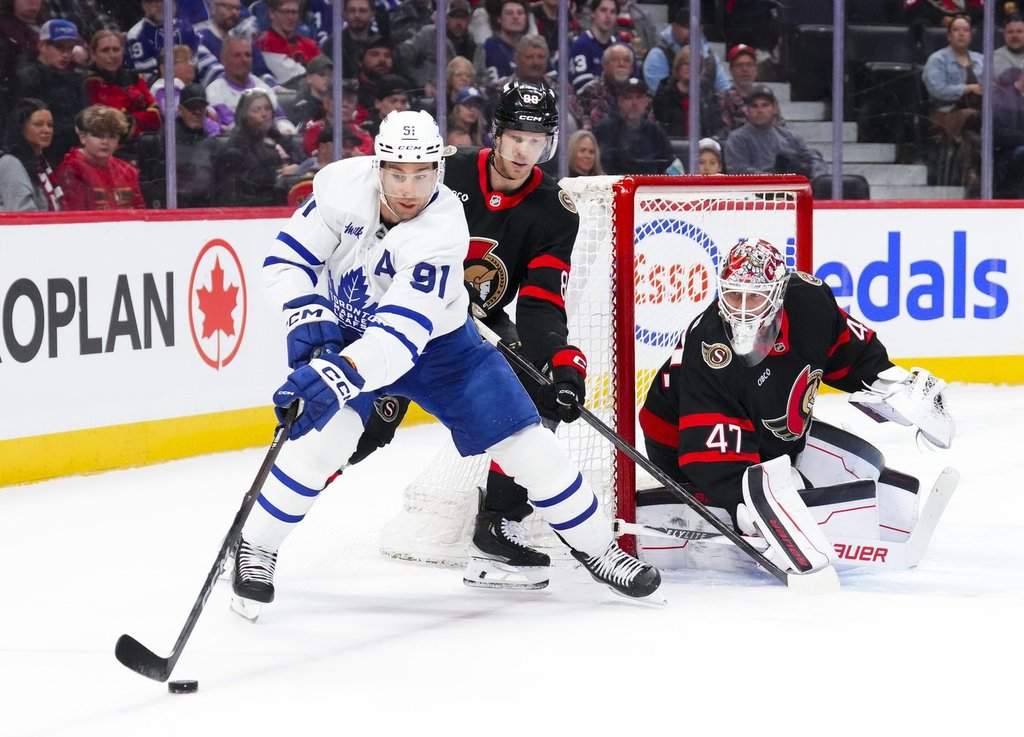
The air inside a Canadian hockey arena in mid-April doesn't smell like spring. It smells of damp wool, overpriced burnt coffee, and the sharp, metallic tang of shaved ice. It is a sensory loop that has repeated for decades, a ritual of hope that usually ends in a very specific kind of silence. You know the one. It’s the sound of a television clicking off in a dark living room in Red Deer, or the quiet shuffle of fans exiting a subway station in Toronto, shoulders hunched against a wind that feels personally insulting.
Canada is a country currently defined by a void. Since the Montreal Canadiens hoisted the silver trophy in 1993, the Stanley Cup has crossed the border to the south and stayed there. It has visited the deserts of Nevada, the humid swamps of Florida, and the sunny beaches of California. It has done everything except come home.
This isn't just about a game. It is about a collective psychological scar that reopens every time the first leaf buds appear on the trees. When the NHL playoffs begin, a nation of nearly 40 million people begins a coordinated breath-hold that lasts for two months.
The Anatomy of the Ache
To understand why this drought feels so heavy, you have to look at the math of misery. In 1993, a gallon of gas in Vancouver cost about 50 cents. The internet was a niche hobby for academics. Most of the players currently competing for the Edmonton Oilers or the Winnipeg Jets weren't even born.
The drought has lasted so long it has become an entity. It sits in the empty seat at the sports bar. It lingers in the rafters of the Scotiabank Centre. We talk about it in whispers, as if naming the streak might give it more power, like a hockey-obsessed Voldemort.
Consider a hypothetical fan named Elias. In 1993, Elias was ten years old. He watched Patrick Roy wink at the camera and felt invincible. He assumed that, as a Canadian, winning the Cup was a birthright, as certain as the sunrise or the arrival of a tax bill. Today, Elias is forty-three. He has gray in his beard and two kids who have never seen a Canadian captain pass that trophy to a teammate. His relationship with the sport has shifted from arrogant joy to a sort of guarded, defensive pessimism. He watches the opening round not with excitement, but with a calculated fear of disappointment.
He is not alone. This is the baseline emotional state of a hockey nation.
The Northern Hopefuls and Their Different Burdens
The teams entering the fray this year don't just carry their own tactical systems; they carry the specific anxieties of their zip codes. Each one represents a different way to break a heart.
In Toronto, the pressure is a physical weight. The Maple Leafs are the center of the hockey universe, a franchise with a storied past and a present defined by high-octane talent and inexplicable collapses. To be a Leafs fan is to suffer from a very specific kind of vertigo. You are constantly told this is the year, while every fiber of your historical memory screams that a trap is being set. Their stars play under a microscope that would melt most athletes. Every missed defensive assignment is a national scandal; every goal is a reason to plan a parade route that hasn't been used since 1967.
Then you look West.
The Edmonton Oilers carry a different kind of ghost. They are haunted by the 1980s, an era of such profound dominance that anything less than a dynasty feels like a failure. They have the best player on the planet in Connor McDavid—a man who moves across the ice like he’s playing the game in a higher dimension than everyone else. Watching McDavid is like watching a master pianist during a hurricane; there is a terrifying beauty to it. If he cannot bring the Cup back to the North, the question becomes: who ever could?
Winnipeg and Vancouver offer their own brands of resilience. The Jets are the team that left and came back, a blue-collar squad that mirrors the toughness of a prairie winter. The Canucks are a team that has touched the sun and been burned, twice reaching the final game of the season only to see the dream dissolve into riots and tears.
The Myth of the "Canada" Team
There is a recurring debate that crops up every April: should a fan of the Calgary Flames cheer for the Edmonton Oilers if they are the last Canadian team standing?
The answer, usually delivered with a snarl, is a resounding no.
The drought is a national problem, but hockey is a local religion. The idea of "Canada’s Team" is a media invention designed to paper over the deep-seated rivalries that make the sport meaningful. A Montreal fan doesn't want Toronto to end the drought. They would rather the drought last another century than see the blue and white celebrate on Yonge Street.
This friction is part of the stakes. We are a nation divided by team colors but united by a singular, gnawing frustration. We want the Cup back on Canadian soil, but we are very particular about which patch of soil it lands on.
The Physics of the Playoff Grind
Why is it so hard? Why can't a country that produces the majority of the world's elite hockey talent win its own league's trophy?
The easy answer is the salary cap and the sheer randomness of a best-of-seven series. But the real answer is more visceral. The playoffs are not a test of skill; they are a test of structural integrity. By the time a team reaches the third round, players are skating on broken feet, breathing through cracked ribs, and functioning on a cocktail of adrenaline and desperation.
In the American markets—Florida, Vegas, Dallas—hockey players can often walk down the street unrecognized. They can lose a game and go to a grocery store without having to explain themselves to the cashier. In Vancouver or Toronto, there is no escape. The pressure is a 24-hour atmospheric condition.
Every mistake is magnified by thirty years of collective baggage. When a Canadian goalie lets in a soft goal in the playoffs, he isn't just missing a puck; he is failing a generation of fans who are tired of being the punchline of a joke told by fans in Tampa Bay.
The Ghost in the Room
Imagine the Stanley Cup itself. It is a strange object—a chimney of silver bowls engraved with the names of the dead and the aging. It spent the winter in places where people don't know how to drive in the snow. It has been to pool parties. It has been used as a cereal bowl for the children of American-based superstars.
The facts of the upcoming playoffs are simple: four or five Canadian teams will qualify. They will have home-ice advantages, power-play percentages, and health reports. But those are just the ingredients. The story is the hunger.
There is a point in every playoff run where the strategy gives way to something primal. You see it in the eyes of a player who has blocked three shots in a single shift. You see it in the crowd when they stop singing and start praying.
We are looking for a moment of catharsis that is thirty years overdue. We are looking for the moment when the "1993" trivia fact is finally rendered obsolete.
The playoffs are a brutal, unfair, and exhausting marathon. They are designed to break you. For three decades, they have broken Canada every single spring. We show up anyway. We buy the jerseys, we paint our faces, and we sit in the cold arenas with our hearts exposed.
The puck drops, the blade cuts the ice, and for a few seconds, the ghost disappears. The drought doesn't matter when the game is tied in the third period. In that moment, the only thing that exists is the blur of black rubber and the desperate hope that this time, the wind won't feel so cold when the sun comes up tomorrow.
The ice is ready. The lights are humming. Somewhere, in a locker room filled with the smell of sweat and leather, a captain is pulling on his jersey, unaware that he is carrying the weight of an entire country’s unfinished business on his shoulders. He breathes out, a puff of white mist in the chilled air, and steps toward the tunnel.