A hospital room in Nonthaburi should have been a place of healing. Instead, it became the site where tragedy deepened. A 12-year-old girl succumbed to critical injuries on Saturday, pushing the death toll of the Thailand school shooting to nine.
This wasn't just a random act of violence. It was a multi-site tragedy that started at home and spilled into a crowded educational institution. When a 14-year-old boy turned a weapon on his own grandparents before walking into Debsirin Nonthaburi School, he shattered the fragile sense of security surrounding Thai youth.
Let's look at what actually happened, why it matters, and how communities are left picking up the pieces.
Unpacking the Timeline of the Nonthaburi Tragedy
The sequence of events is grim. Around 10 a.m. on a Friday, panic erupted at Debsirin Nonthaburi School, a co-educational state facility serving about 3,000 students aged 12 to 18.
Before arriving at the campus, the 14-year-old shooter allegedly killed his two grandparents at their family home. He then brought a small, compact firearm—legally registered to his grandfather—into the school.
Five school staff members, including teachers and administrators, died during the initial rampage. The shooter ultimately took his own life.
Among the wounded was a seventh-grade student. The school desperately pleaded for blood donations via social media, hoping to save her life. Despite medical intervention at Bangyai Hospital and subsequent care, she passed away the following day. Her death brought the total lives lost to nine.
Fourteen others remain hospitalized, with several still fighting critical injuries. Most of the victims and wounded fall into the 12-to-14 age bracket.
The Reality of Gun Ownership in Southeast Asia
People often assume mass violence of this nature is strictly an American phenomenon. That assumption is dangerously wrong.
Thailand maintains one of the highest rates of civilian gun ownership in Asia. While mass shootings and indiscriminate violence are statistically uncommon compared to other global hotspots, the country has experienced a shocking uptick in high-profile firearm incidents over recent years.
Consider the timeline of recent trauma:
- A 2023 shooting incident inside a major Bangkok shopping mall involving a 14-year-old suspect.
- A February incident where a 17-year-old stole a police firearm, sparking a high school hostage situation and fatal shooting in southern Thailand.
- The current Nonthaburi attack, which claimed the lives of educators, grandparents, and a child.
When easy access to firearms meets unaddressed adolescent mental health struggles, disaster follows. Investigators noted that the young shooter had shown signs of school-related stress, though some relatives claimed they were completely unaware of any deep turmoil.
How the Community and Schools Are Responding
The immediate aftermath is pure chaos for families. Debsirin Nonthaburi School announced an immediate suspension of all classes through the middle of the week, instructing staff to work remotely while police complete their preliminary investigations.
Forensic experts from Bangkok's Institute of Forensic Medicine processed the tragic return of bodies to grieving families for traditional funeral rites. Meanwhile, parents are left guiding traumatized children through an incomprehensible reality. Local fathers reported that their surviving sons cannot sleep alone out of sheer terror.
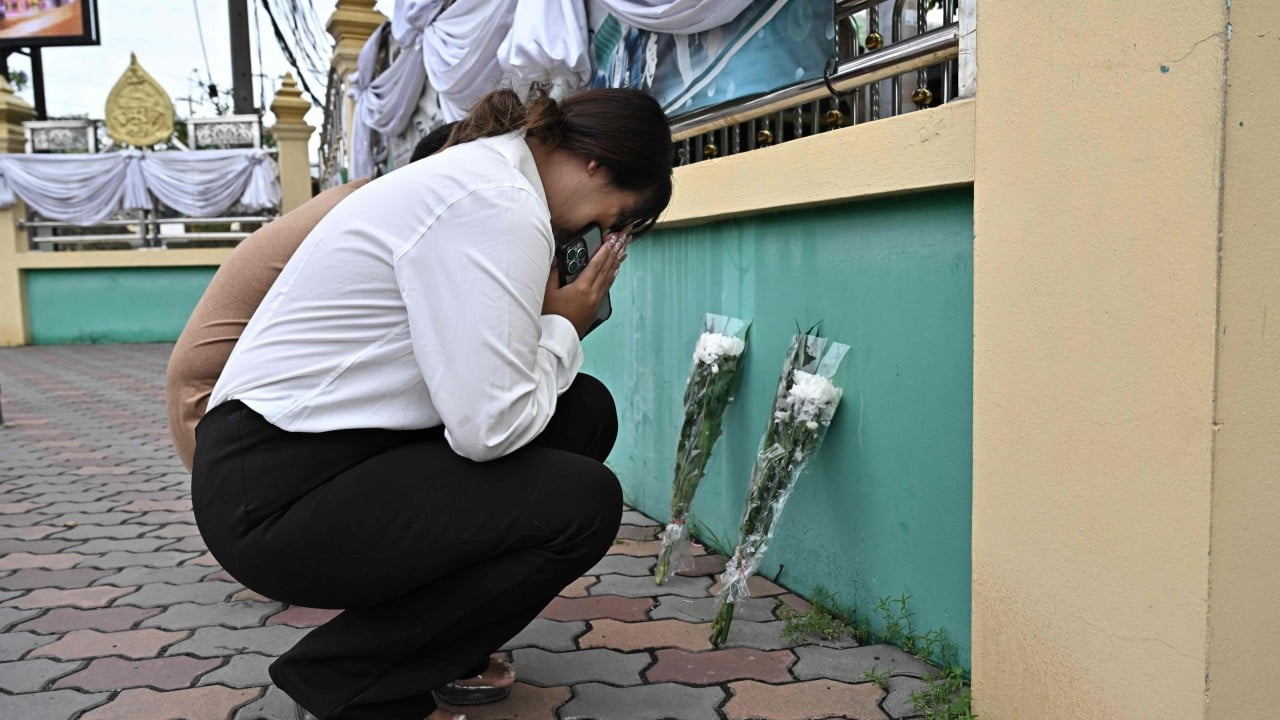
Mourners gathered at the gates of the school, leaving floral tributes on concrete pillars that should have only ever welcomed students to class.
If you are looking at this tragedy from afar, the takeaway isn't just about stricter gun storage laws—though keeping registered firearms away from troubled minors is an obvious start. It is about listening to children before they reach a breaking point. Check in on the youth around you, advocate for accessible school counseling programs, and treat adolescent mental health as the urgent crisis it truly is.

/cdn.vox-cdn.com/uploads/chorus_asset/file/22155007/doc_ock.jpg)