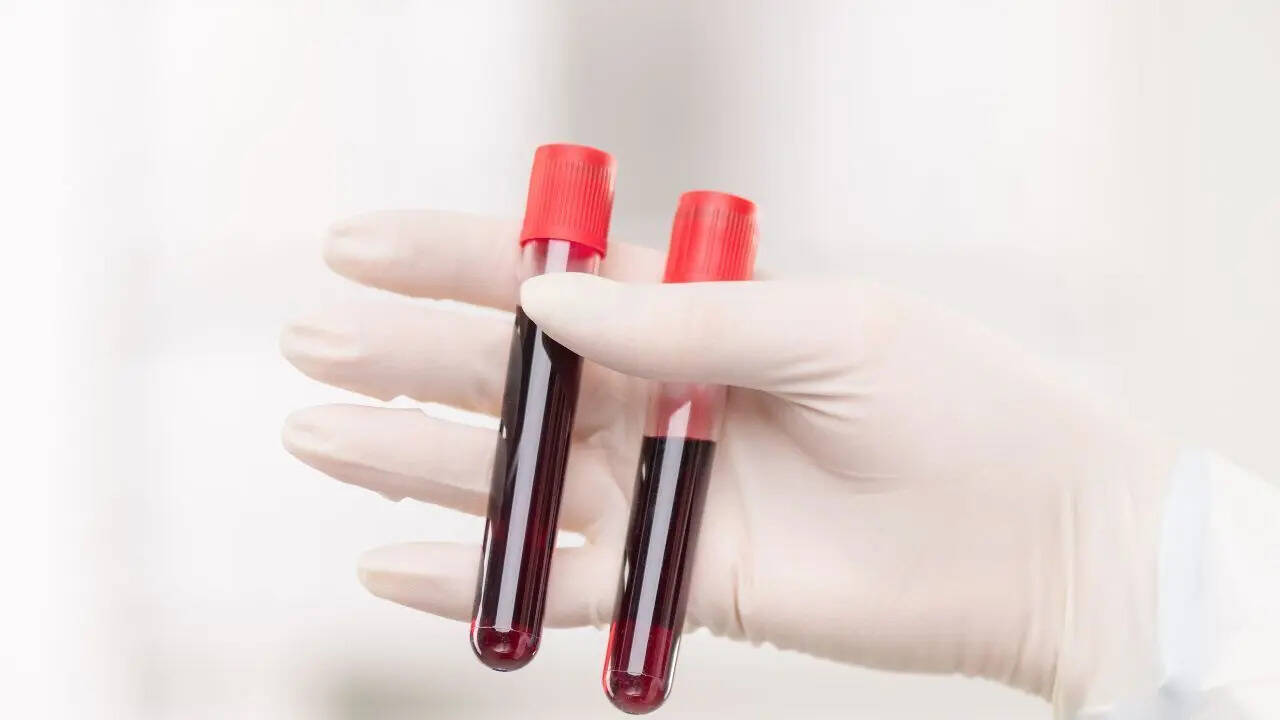
Think your blood type is just a simple letter like A, B, or O? Think again. Most of us grew up believing there are only eight basic blood groups, but a massive study out of Thailand just proved that human biology is far more chaotic than your high school biology textbook suggests.
Researchers at Siriraj Hospital in Bangkok recently analyzed a staggering 544,000 blood samples. In that sea of half a million people, they found just three individuals carrying a "hybrid" blood type so rare it basically breaks the standard rules of medicine. It's called the B(A) phenotype. It's not quite B, it's not quite A, and it's a massive headache for doctors trying to keep people alive during a transfusion. You might also find this related article insightful: The Bio Operational Mechanics of Large Scale Food Supply Chain Contamination.
The hybrid blood anomaly explained
Most people have red blood cells that clearly display one type of antigen. If you're Type B, your cells are coated in B-antigens. If you're Type A, you've got A-antigens. It's a binary system that makes matching donors to patients relatively straightforward.
The B(A) blood type found in Thailand flips the script. These individuals have red blood cells that look exactly like Type B under standard tests, but they carry trace amounts of A-antigens. It’s like a "Type B" car that secretly has a few "Type A" parts under the hood. As discussed in latest articles by Everyday Health, the results are significant.
This discovery wasn't a fluke. The study, published in Transfusion and Apheresis Science, involved a retrospective review of 285,450 blood donors and 258,780 patients. Out of that massive crowd, only one patient and two donors had this specific genetic fingerprint.
Why a "trace" of the wrong antigen is a big deal
You might think a tiny bit of A-antigen in Type B blood wouldn't matter much. You’d be wrong. In the world of hematology, even a microscopic mismatch can trigger a "hemolytic transfusion reaction." That's a fancy way of saying your immune system treats the new blood like an invading virus and starts shredding your own red blood cells.
The researchers found that this B(A) hybrid was caused by four distinct mutations in the ABO gene. These mutations essentially "leak" A-antigens onto cells that should only be B. Because these people were originally misidentified as standard Type B, they could have received blood that their bodies would eventually reject, or worse, donated blood that could cause a reaction in a recipient.
Breaking the 49 blood group barrier
This isn't just about one weird case in Thailand. This discovery has helped push the total number of recognized blood group systems to 49. While the ABO and Rh (positive/negative) systems get all the glory, there’s a whole hidden world of "minor" blood groups like P1PK, GLOB, and Duffy.
In fact, another recent Thai study looked at the p phenotype—an ultra-rare variant in the P1PK system. This one is particularly dangerous because women with this blood type often suffer recurrent spontaneous abortions. Their bodies produce an antibody called anti-PP1Pk that mistakenly attacks the placenta.
What this means for you
If you've ever had a blood test where the results were "inconclusive" or required a re-test, you might be carrying one of these rare variants. Most hospitals don't screen for things like B(A) or the p phenotype because they’re so statistically unlikely. But as genomic sequencing becomes cheaper and more common, we’re realizing that "rare" doesn't mean "non-existent."
It’s a wake-up call for the medical community. Standard serology—the old-school way of testing blood in a lab dish—is no longer enough. We need genetic screening to catch these hybrid types before they cause a catastrophe in the ER.
If you’re curious about your own status beyond the basic A/B/O, your best bet is to:
- Donate blood: Research centers and blood banks often perform more detailed screenings than a standard GP.
- Ask for "Phenotyping": If you have a history of transfusion reactions or unexplained pregnancy loss, ask your doctor for a full blood group phenotype, not just an ABO screen.
- Keep your records: If a lab ever finds an "antibody of unknown significance" in your blood, keep that paperwork forever. It could save your life in an emergency.
Human biology doesn't like boxes. We try to categorize ourselves into neat little groups, but nature keeps throwing us curveballs like the B(A) hybrid. It’s a reminder that even in a crowd of half a million, you might be one of only three people on the planet with a specific biological secret.
New Blood Type Discovered: 3 People on Earth Are Its Only Known Carriers!
This video provides a breakdown of how the B(A) phenotype was identified in the Thai study and why it challenges our current understanding of the ABO system.


.png?width=1200&auto=webp&trim=0%2C0%2C0%2C0)
