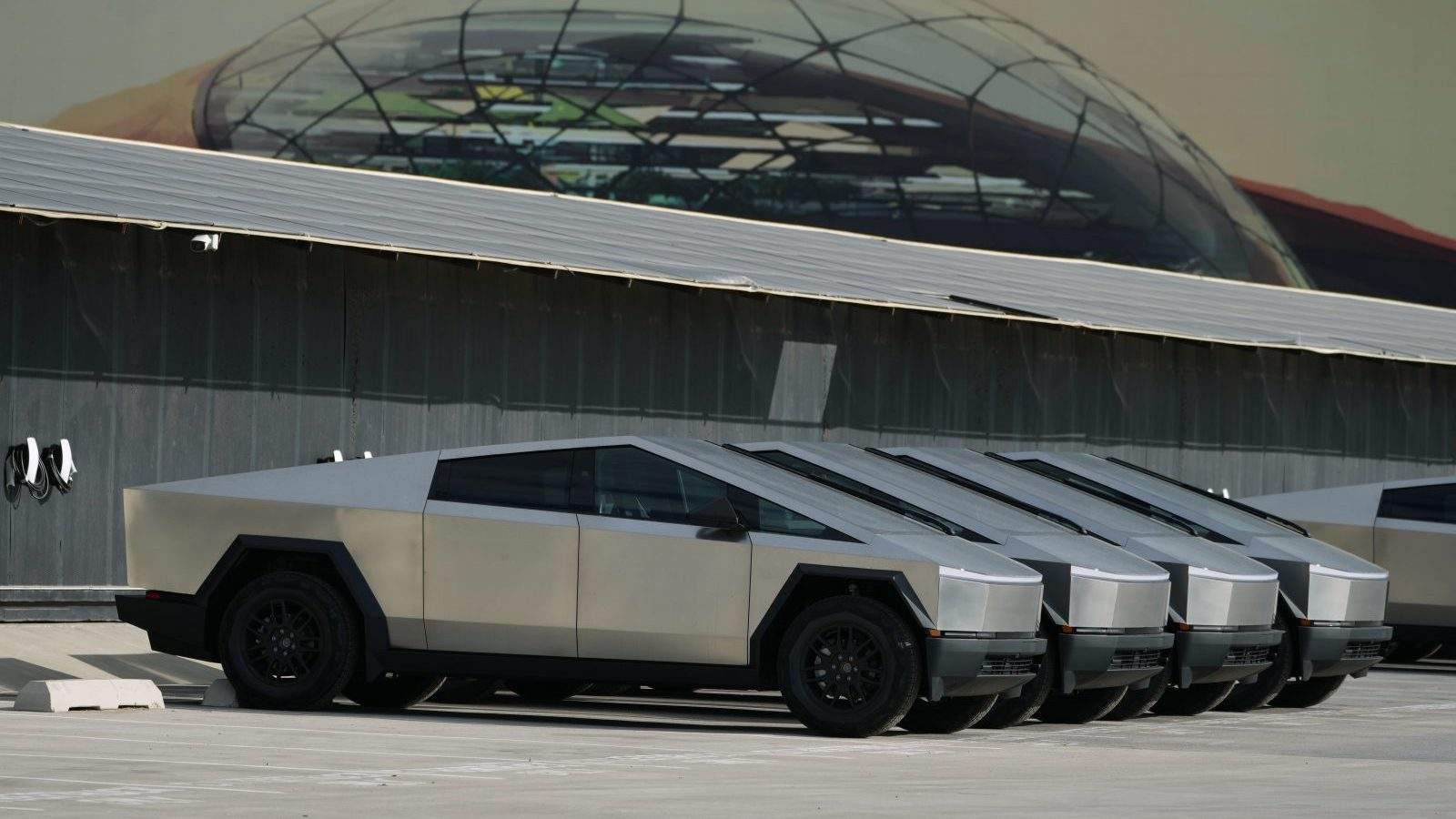
When Elon Musk announced that Tesla is going to stop making Cybertrucks, the shockwaves hit social media faster than they hit Wall Street. Institutional investors had already priced in the reality. The Cybertruck was never going to be a high-volume profit engine for Tesla, and its cancellation marks the end of an audacious engineering experiment that collided head-first with the unforgiving math of automotive manufacturing. For years, the angular, unpainted stainless-steel pickup served as a rolling billboard for the brand, but billboards do not sustain quarterly margins.
The decision comes down to three brutal realities: impossible-to-scale metallurgy, deteriorating unit economics, and a target market that proved far smaller than early reservation numbers suggested. Automakers live and die by factory utilization. When a vehicle requires bespoke tooling, specialized repair networks, and massive battery packs just to achieve baseline utility, it becomes a liability the moment initial hype fades. Also making waves recently: The Structural Economics of an RRSP for Life.
The Stainless Steel Trap
Most modern vehicles are stamped from mild steel or aluminum alloys for a simple reason. Those metals want to be shaped. When a stamping press slams down on a sheet of automotive-grade aluminum, the material flows into the die, holds its form, and resists springing back.
The Cybertruck’s 30X cold-rolled stainless steel exoskeleton rejected every rule in that playbook. Stainless steel is notoriously stubborn. It work-hardens during forming, meaning the more you try to bend it, the harder and more brittle it becomes. It eats through stamping dies at an alarming rate and fights back against every weld. That is why the truck ended up with flat, origami-like planes instead of compound curves. You cannot easily stamp complex automotive geometry out of steel that thick without shattering tooling or spending fortunes on custom presses. Further insights into this topic are detailed by Bloomberg.
Even when the panels came off the line, fitting them together became a nightmare. Painted cars hide minor imperfections under layers of primer, basecoat, and clearcoat. Raw stainless steel hides nothing. Every millimeter of misalignment, every slight bow in a door panel, and every fingerprint shows up in harsh daylight. For a company already scrutinized for panel gaps on its conventional sedans, building a truck out of an unforgiving mirror-like metal guaranteed a permanent quality-control headache.
History tried to warn Austin. John DeLorean’s DMC-12 used brushed stainless steel over a fiberglass underbody in the early 1980s, and the manufacturing tolerances nearly bankrupted the operation before the cars even reached showrooms. Tesla had vastly superior robotics and software, yet the underlying physics of the metal did not change.
Unit Economics Never Forgive
In the automotive business, volume cures almost everything. If you build five hundred thousand Model Y crossovers a year on a standardized platform, you amortize the cost of every bolt, wire harness, and Giga Press across half a million units. Suppliers give you their best pricing. Factory workers and robots hit a rhythm where defects drop and cycle times shrink.
Low-volume, high-complexity vehicles do the exact opposite. They bleed cash. Every unique component on the Cybertruck—from its massive single-piece windshield wiper to its steer-by-wire actuators and 48-volt electrical architecture—required dedicated supply chains. When production volumes fail to hit the hundreds of thousands of units originally projected, those custom parts become wildly expensive. You cannot negotiate steep volume discounts with a glass manufacturer when you are only ordering a fraction of the windshields you promised.
Consider a hypothetical example of how this math breaks down on a factory floor. Imagine a dedicated assembly line designed to produce 250,000 vehicles annually, staffed and equipped for that exact throughput. If demand stabilizes at 40,000 units a year, the fixed overhead—the building, the robots, the depreciation on the tooling, the engineering support—does not shrink by eighty percent. It sits there, dividing itself across fewer and fewer trucks, turning what looked like a healthy gross margin on a spreadsheet into a net loss on every unit that rolls out the door.
The Addressable Market Myth
Early reservation numbers fooled a lot of people. When Tesla opened the order books with a refundable hundred-dollar deposit, hundreds of thousands of people clicked the button. Media outlets treated that number as guaranteed future revenue. Seasoned auto analysts knew better. A hundred-dollar refundable deposit is not a purchase order; it is a lottery ticket for bragging rights.
Once the real prices and real-world specifications arrived, the conversion rate told a different story. The North American pickup truck market is enormous, but it is also deeply conservative and fiercely practical. Ford, General Motors, and Ram have spent decades refining what truck buyers actually use their vehicles for. Contractors, fleet managers, and rural drivers care about payload capacity, bed accessibility, standardized aftermarket racks, and predictable towing range.
Towing is where battery physics becomes cruel. Pulling a heavy trailer creates massive aerodynamic drag. On a gas or diesel truck, you lose fuel economy, pull into a station, and spend five minutes refilling the tank. On an electric truck, towing cuts your range in half—sometimes more—and forces you to unhook the trailer just to fit into a crowded charging stall. For weekend warriors hauling a boat twenty miles to a lake, that is a minor inconvenience. For anyone who uses a truck for actual work, it is a dealbreaker.
Beyond utility, the Cybertruck faced an unexpected hurdle in the insurance and repair ecosystem. Traditional body shops could not easily fix it. You cannot hammer out a dent in thick stainless steel and smooth it over with body filler. Damaged panels often meant full replacements, driving up repair bills and causing insurance premiums to spike. When monthly insurance costs start rivaling the car payment itself, mainstream buyers walk away.
The styling also boxed the vehicle into a permanent niche. Bold design creates instant buzz, which is great for a launch event. Over time, however, polarizing aesthetics limit your audience. A buyer who wants a quiet, capable electric vehicle rarely wants to attract the attention of an entire intersection every time they stop at a red light. Once the early adopters and tech enthusiasts got their trucks, the pool of willing buyers dried up fast.
What Happens to Giga Texas
Shutting down a production line is never as simple as turning off the lights. Giga Texas represents billions of dollars in capital expenditure, and the space currently dedicated to the Cybertruck is prime industrial real estate.
Tesla now faces the massive logistical task of retooling that footprint. The 4680 battery cell production—which was heavily tied to the Cybertruck’s structural pack—will need to be redirected toward higher-volume vehicles, stationary energy storage, or next-generation platforms. Every square foot of factory floor that stops building a low-margin, low-volume pickup is a square foot that can be converted to build something the market actually wants in bulk.
The Legacy of a Rolling Prototype
Automakers rarely admit defeat outright; they simply pivot their capital toward where the returns are. By ending Cybertruck production, Musk is doing what legacy CEOs have done for a century when a halo project stops paying for itself. He is cutting the cord before the sunk-cost fallacy drags down the rest of the balance sheet.
The Cybertruck proved that Tesla could push the boundaries of 48-volt systems, steer-by-wire technology, and radical industrial design. Those innovations will quietly migrate into future sedans, crossovers, and commercial vans where they actually make financial sense. Meanwhile, the stainless-steel wedge itself will take its place in automotive history alongside the DeLorean and the Hummer—a fascinating, unforgettable monument to what happens when engineering ambition outruns market reality.