The intersection of adolescent mental health, firearm accessibility, and the crumbling infrastructure of American compulsory education reached a lethal flashpoint outside a neighborhood school this week. What began as a mundane domestic dispute over a teenager’s refusal to attend class ended in a father’s death. This is not merely a story of a domestic tragedy. It is a grim diagnostic of a system where the pressure to conform to traditional educational structures has outpaced our ability to identify when a child has moved from being "difficult" to being dangerous.
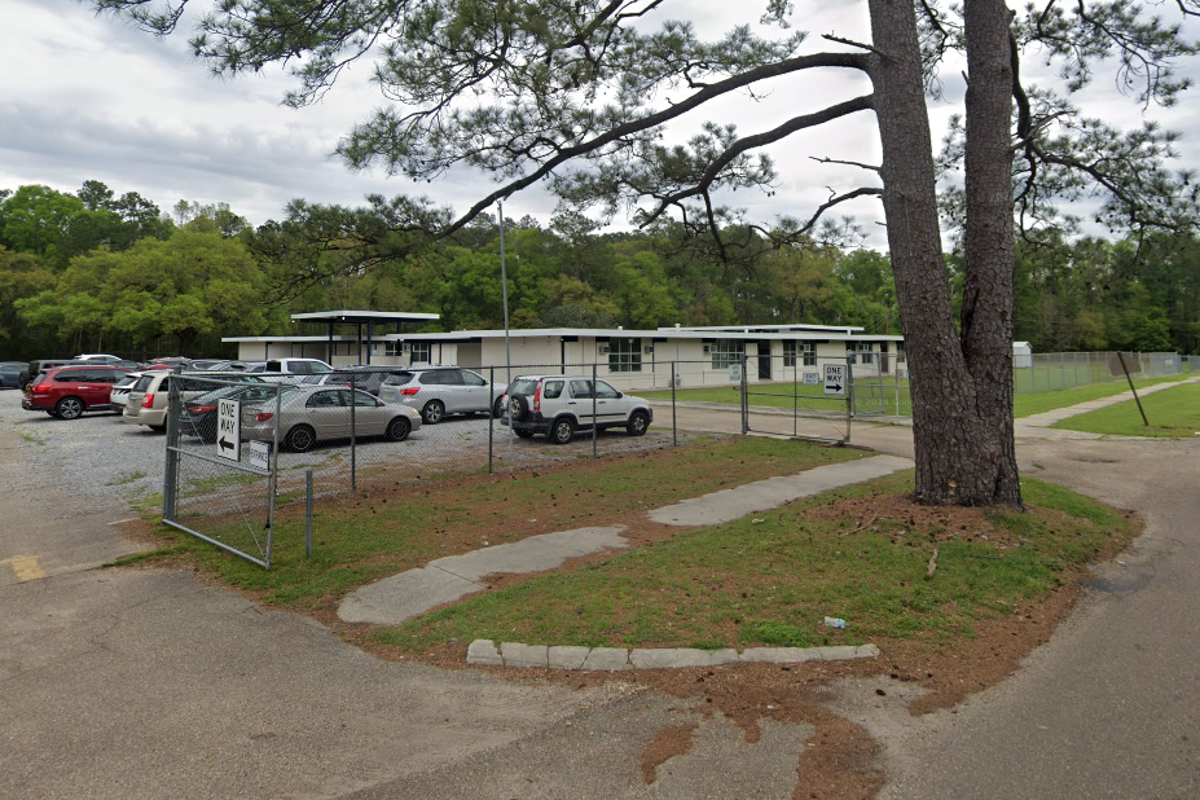
Law enforcement officials confirmed that the confrontation occurred in the immediate vicinity of the campus, a setting that usually implies safety and routine. Instead, it became a crime scene. The suspect, a minor, allegedly shot his father after an argument escalated beyond the point of verbal disagreement. To understand how a fight about missing school leads to a homicide, we have to look past the police tape and into the specific, escalating tensions that define modern truancy and the availability of lethal force in the American household. Meanwhile, you can find similar developments here: Structural Mechanics of Turkish Firearm Reform and the School Safety Mandate.
The Illusion of the Routine Argument
Every morning, millions of parents engage in a tug-of-war with their children over getting out of bed and into a classroom. For most, the stakes are a missed bus or a detention. However, the psychological profile of chronic school refusal is shifting. Experts in adolescent behavior have long warned that "truancy" is a catch-all term that masks deeper issues like severe social anxiety, undiagnosed neurodivergence, or the trauma of bullying.
When a parent pushes back against this refusal, they are often unaware they are poking at a raw nerve. In this specific case, the father was attempting to enforce a boundary that society deems necessary. He wanted his son in school. He wanted a future for him. But in the vacuum of a heated argument, that parental authority collided with a volatile emotional state and, crucially, a weapon. The presence of a firearm transforms a momentary lapse in judgment into a permanent catastrophe. It removes the possibility of a "cool down" period that usually follows a screaming match. To see the complete picture, check out the recent report by TIME.
The Lethal Proximity of Firearms
We cannot discuss this event without addressing the sheer ease with which the minor accessed a gun. Investigative data suggests that a significant percentage of school-age shooters obtain their weapons from within their own homes, often from parents who believe the items are "hidden" or "secured."
The data is clear.
- Access correlates to outcome. Homes with unlocked firearms see higher rates of both accidental discharges and intentional acts of violence.
- The impulsive nature of the teenage brain. Neurologically, adolescents lack the fully developed prefrontal cortex required to weigh long-term consequences during a surge of adrenaline and anger.
- The "solution" fallacy. In the heat of a conflict, a firearm is seen by an emotionally dysregulated youth as a tool to end a problem immediately, rather than a weapon that ends a life.
Beyond the Truancy Statistics
School districts often track truancy through a lens of funding and compliance. When a student doesn't show up, the school loses money. This creates a high-pressure environment where parents are hounded by automated calls, letters, and the threat of court dates. This systemic pressure filters down into the home, turning a child's internal struggle into a legal and financial liability for the family.
When we treat school attendance as a purely administrative issue, we ignore the human element. The father in this case was likely under the same pressure many parents feel—the fear of the state stepping in, the fear of his son falling behind, and the frustration of a daily battle. This pressure cooker environment is where these tragedies are forged. We are asking parents to be the enforcement arm of the state without giving them the mental health tools to manage a child who has fundamentally checked out of the system.
The Failure of Early Intervention
By the time a teenager is standing outside a school with a gun pointed at a parent, a dozen safety nets have already failed. We have to ask where the school counselors were during the previous weeks of missed classes. We have to ask if there were prior reports of domestic instability or if the child had expressed violent ideations in the past.
Modern schools are often understaffed, with counselor-to-student ratios that make individual attention impossible. In many districts, a student who refuses to go to class is viewed as a "problem to be managed" rather than a "child in crisis." This distinction is not just semantic; it dictates the entire response of the institution. Management leads to confrontation. Intervention leads to support.
The Architecture of a Modern Tragedy
The physical location of this shooting—outside the school—is symbolic. It represents the boundary between the private life of the family and the public life of the student. It is a transitional space where expectations meet reality.
Witnesses described a scene of chaos, but for those who study patterns of youth violence, there is a chilling predictability to the sequence.
- Prolonged Stress: A history of academic or social failure.
- Parental Conflict: Increasing friction as the parent tries to "fix" the situation through discipline.
- Lethal Means: The introduction of a firearm into the domestic sphere.
- The Trigger Event: A specific, often minor, confrontation that serves as the final straw.
In this instance, the "refusal to go to class" was the trigger, but it was not the cause. The cause is a complex web of isolation and the normalization of violence as a conflict resolution tool.
Why Traditional Discipline is Failing
The old-school approach of "my house, my rules" is hitting a wall when it comes to the current generation. We are seeing a rise in what psychologists call "Parental Alienation" or "Parental Abuse," where the power dynamics in the home shift violently. When a child feels they have nothing left to lose—no future in school, no social standing, and no internal peace—the threat of traditional punishment loses its effectiveness.
If a child does not value their own life or future, they will not value yours. This is the hard truth that many parents and administrators are afraid to face. The threat of taking away a phone or grounding a teenager is useless if that teenager is experiencing a total psychological breakdown.
The Role of Social Media and Peer Perception
We cannot ignore the digital world's influence on how these conflicts play out. For a modern teenager, "school" is not just a building; it is a stage. Every failure is documented. Every argument with a parent might be leaked. The pressure to maintain a certain image can make the prospect of entering the school building feel like walking into a gauntlet.
If the student was being bullied or felt like an outcast, the father’s insistence on him attending school might have felt, to the boy, like being forced into a cage with predators. To the father, it was just Tuesday. To the son, it was an existential threat. This gap in perception is where the violence lives.
Reevaluating Security and Safety
The immediate reaction to school-related shootings is often to increase police presence or install more metal detectors. However, these measures are designed to keep "external" threats out. They do nothing to address the threat that arrives in the passenger seat of a parent's car.
Real security starts with:
- Mandatory Secure Storage: Legislation that holds gun owners criminally liable if a minor accesses an unsecured weapon and commits a crime.
- Alternative Education Paths: Recognizing that the traditional high school environment is toxic for certain personality types and providing viable, non-punitive alternatives.
- Integrated Mental Health: Moving counselors out of the office and into the community, identifying families in crisis before they reach the school parking lot.
The Hard Reality of the Aftermath
Now, a family is destroyed, a father is dead, and a young man faces a lifetime in the legal system. The community will hold vigils. The school will offer "grief counseling" for a week. But the underlying issues remain. We are still living in a country where a disagreement over a math test or a first-period bell can escalate into a homicide because we have prioritized the "structure" of education over the "well-being" of the educated.
The "why" behind this shooting is found in our collective refusal to acknowledge that our current social contract with youth is broken. We demand attendance, we demand performance, and we provide easy access to the tools of death, then act surprised when the friction produces fire. This was not a random act of violence. It was the predictable result of a system that ignores the warning signs of a child in freefall until they hit the ground.
Parents are being left to navigate this landscape alone, often with no idea that the child they are arguing with has already crossed a mental threshold into a different reality. The father in this case likely thought he was doing the right thing, being a "firm" parent. He paid for that assumption with his life.
The Immediate Need for Change
If we want to stop the next shooting in a school drop-off line, we have to stop looking at truancy as a discipline problem. It is a communication problem. It is a mental health problem. And most of all, it is a safety problem. We have to make it harder for a child to find a gun and easier for a parent to find help.
Until we change the way we handle the "difficult" student, the parking lots of our schools will continue to be more than just places of transit. They will be places of tragedy. The focus must shift from getting the child through the school doors to understanding why they are so desperate to stay outside of them.
Stop focusing on the attendance sheet and start looking at the kid holding the pen. Or the gun.