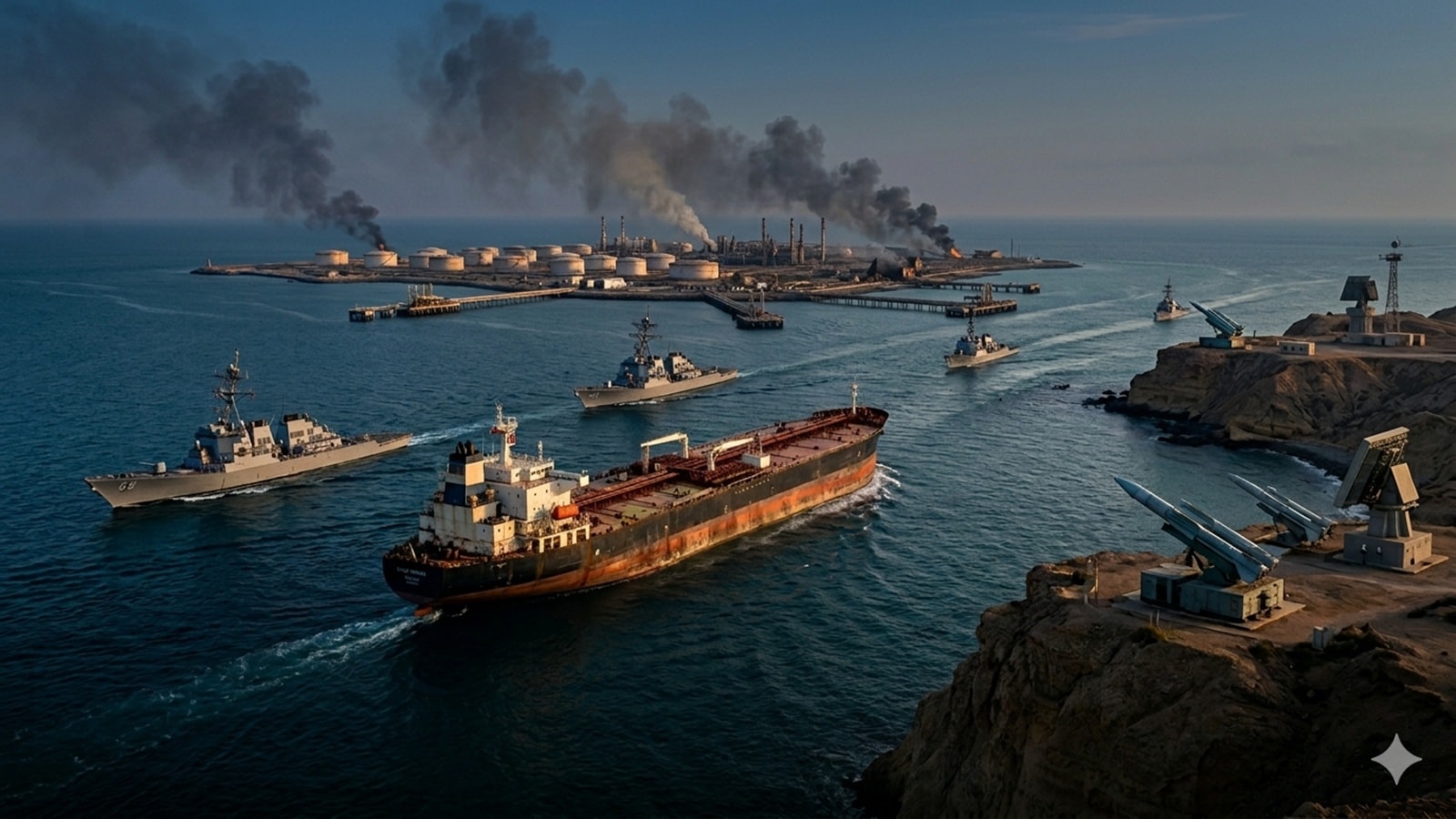
The lazy consensus across Western media and Washington think tanks is currently hyper-ventilating over Iran’s newly minted Persian Gulf Strait Authority. They look at the $2 million transit fees being demanded from oil tankers, the forced submission of cargo manifests to the Islamic Revolutionary Guard Corps (IRGC), and the quiet bilateral talks with Oman, and they scream "defiance." They treat this as a desperate, illegal stunt by a cornered rogue state trying to bypass a U.S. naval blockade.
They are entirely missing the point.
This is not a desperate stunt. It is not an act of defiance. It is a highly sophisticated, market-driven restructuring of maritime geopolitics. Iran is not trying to blow up global trade; it is trying to institutionalize it under its own regulatory umbrella. By shifting the conflict from a shooting war to a bureaucratic compliance regime, Tehran has done something Washington never anticipated: it turned the world’s most volatile maritime chokepoint into a sovereign revenue stream, and it is using the mechanisms of global finance to force compliance.
The mainstream narrative wants you to believe that Donald Trump’s "steel wall" blockade is 100% effective and that a joint U.S.-Saudi-Emirati coalition can simply freeze Iran out of the global economy. That premise is fundamentally flawed. You cannot blockade a state that controls the literal geography of a waterway through which 20% of the world's petroleum flows, especially when that state stops shooting missiles and starts issuing clearance codes.
The Illusion of Free Navigation
For nearly forty years, the West has operated under the delusion of Pax Americana at sea—the idea that the U.S. Navy guarantees free transit through international straits out of sheer altruistic commitment to global commerce.
Let's dismantle that myth immediately. The United Nations Convention on the Law of the Sea (UNCLOS) outlines the right of transit passage through international straits. But international law is only as strong as the enforcement mechanism behind it. Iran never ratified UNCLOS. More importantly, the Strait of Hormuz is not a wide-open ocean; its shipping lanes pass directly through the territorial waters of Iran and Oman.
When the IRGC establishes a single controlled corridor around Larak Island, demands clearance codes over VHF radio, and deploys pilot boats for mandatory escorts, it is behaving exactly like the Panama Canal Authority or the Suez Canal Authority. The only difference is the color of the uniform.
The media characterizes the involvement of Oman—a key U.S. security ally in the Gulf—as a shocking betrayal or a "secret" conspiracy. This ignores centuries of regional history. Muscat and Tehran share joint diplomatic oversight of the strait's shipping channels. Oman is not betraying Washington; it is engaging in cold, hard realism. They recognize that a permanent state of kinetic warfare in their backyard is bad for business. If formalizing a toll booth system stabilizes the corridor, prevents ships from being blown to hell, and brings predictable legal architecture to the Gulf, regional actors will sign up.
The Hypocrisy of Sanctions Compliance
The U.S. Treasury has issued stern warnings to global shipping conglomerates, threatening massive sanctions for any company that pays Iran in fiat currency, digital assets, or informal swaps to cross the strait. Treasury Secretary Scott Bessent scoffed on television that the money collected so far is a "pittance" compared to Iran’s historical oil revenues.
This is a profound misunderstanding of how corporate risk assessment works.
Imagine a scenario where you are the CEO of a multi-billion-dollar maritime shipping firm. You have a choice. You can follow Washington's orders, refuse to pay the $2 million fee, and let your $150 million ultra-large crude carrier sit stranded, racking up massive demurrage fees while risking a kinetic strike or an IRGC seizure. Or, you can pay the fee, obtain an IRGC clearance code, secure an escort, and deliver your cargo safely to its destination in Asia.
What do you think happens? The market pays.
They don't pay in U.S. dollars via SWIFT. They pay in Chinese yuan. They pay via informal trade offsets. They pay through sovereign intermediaries in jurisdictions that do not recognize unilateral American sanctions. Lloyd’s List Intelligence has already tracked dozens of successful transits utilizing this exact vetting system. The corporate world does not care about ideological crusades; it cares about predictability and risk mitigation.
By offering a structured, bureaucratic mechanism for safe passage, Iran has shifted the calculus for global shipping companies from a terrifying gamble to a predictable cost of doing business. It has transformed itself from an unpredictable pirate into a high-priced toll collector.
Why a Naval Blockade Cannot Stop Bureaucracy
The White House insists that its naval presence is a "steel wall." But a blockade is a blunt, industrial-era tool designed to stop physical hulls from moving. It is entirely unsuited to fight a decentralized, digital compliance regime.
If the U.S. Navy begins physically interdicting every vessel in international waters that has paid a toll to Iran, Washington is the one that breaks international maritime law. Interdicting neutral, third-party commercial vessels from countries like India, China, or South Korea because they paid a transit fee to a coastal authority is an act of aggression that will alienate the very allies the U.S. needs to sustain its regional posture.
Furthermore, Iran's strategy exploits a critical vulnerability in Western economic warfare: the addiction to cheap energy. Every time a major flare-up occurs in the strait, Brent crude spikes. The permanent installation of a "Tehran tollbooth" adds roughly $1 to $2 to the cost of every barrel of oil transiting the region. While that is an inflationary headache for Western central banks, it is entirely manageable for global markets compared to the alternative of a complete shutdown of the waterway.
Iran has calculated, correctly, that the global economy would rather absorb a predictable, institutionalized tariff than endure an unpredictable, chaotic war.
The Downside of the Toll Booth Strategy
To be entirely fair, this contrarian play by Tehran carries massive, systemic risks for Iran itself.
By formalizing the Persian Gulf Strait Authority, Iran has explicitly staked its state reputation on its ability to guarantee safety for those who pay. The moment a rogue proxy group, an uncontrolled militia, or a rogue IRGC command asset fires on a vessel that holds a valid Iranian clearance code, the entire illusion of institutional control evaporates.
If Iran cannot guarantee absolute safety in exchange for its exorbitant fees, the shipping companies will revert to treating the region as an active war zone, insurance premiums will render the route unviable, and the U.S. military will have all the justification it needs to permanently dismantle Iran's coastal infrastructure. Tehran has traded the flexibility of asymmetrical, deniable warfare for the rigid responsibilities of a sovereign service provider.
Stop Fighting Yesterday's War
The current policy debate in Washington is stuck in the 1980s. Strategists keep looking back to Operation Earnest Will, when the U.S. Navy reflagged Kuwaiti tankers and escorted them through the Gulf to protect them from Iranian mines. They assume the same playbook will work today.
It won't. In the 1980s, Iran was trying to disrupt trade to hurt Iraq. Today, Iran is trying to regulate trade to sustain itself.
The establishment cannot comprehend a Middle Eastern adversary that doesn't just rely on asymmetric terror, but instead uses maritime law, sovereign joint ventures, corporate risk aversion, and non-dollar financial networks to achieve its goals. By treating the Strait of Hormuz as a commercial asset rather than a military firing range, Tehran has rewritten the rules of engagement.
Washington can keep pounding the table about "freedom of navigation" and deploying more carrier strike groups to play sea-lanes cop. But while the U.S. military is looking for a fight, Iran is busy collecting the rent.


