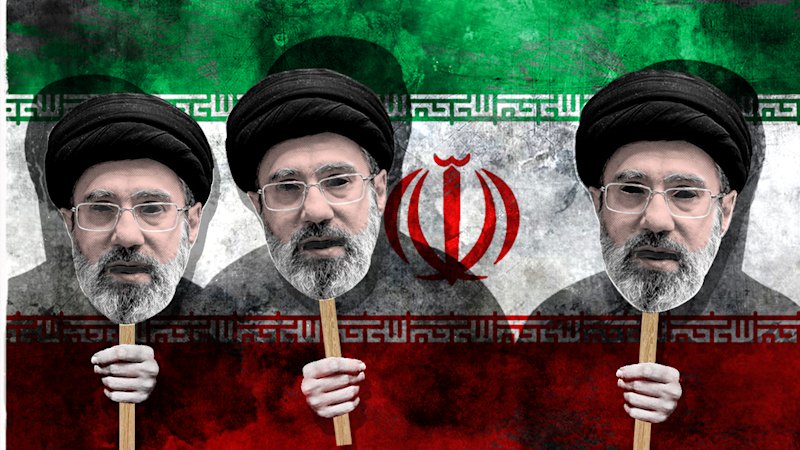
The most powerful man in the Middle East is currently a rumor. Since the opening salvos of Operation Epic Fury on February 28, 2026, Ayatollah Ali Khamenei has vanished from the public eye, leaving behind a regime that looks increasingly like a ghost ship. While President Donald Trump has already taken to social media to celebrate the "obliteration" of Iran’s top leadership, the reality on the ground in Tehran is far more tangled and dangerous than a victory post suggests. We are no longer watching a standard geopolitical standoff. We are watching the messy, unscripted collapse of a fifty-year theocratic experiment.
Trump needs a living, breathing authority figure in Tehran to sign a surrender, yet his own military strategy may have insured that no such person exists. By targeting the head of the snake, the administration has created a vacuum that is being filled not by reformers, but by the most radical elements of the Islamic Revolutionary Guard Corps (IRGC).
The Succession that Never Was
For years, intelligence circles whispered about the "Mojtaba Option." The Supreme Leader’s second son, Mojtaba Khamenei, was long groomed to take the mantle. But the strikes in February didn't just target the elder Khamenei; they ripped through the heart of the family compound. Current reports suggest Mojtaba survived the initial attack but is severely incapacitated, hidden away in a medical bunker and surrounded by a shrinking circle of loyalists and doctors.
This isn't a transition. It is a decapitation. The Assembly of Experts, the 88-member body responsible for picking a new leader, is effectively paralyzed. Many of these clerics are in their eighties. They are not built for a wartime scramble. With communications fragmented and the IRGC seizing control of the streets, the constitutional process is a dead letter.
The danger for Washington is palpable. Diplomacy requires a counterpart. If there is no Supreme Leader, there is no one with the religious or political capital to tell the various proxy militias—from Hezbollah to the Houthis—to stand down. We are seeing a "fractured command" scenario where local commanders, fearing they are next on the target list, are making autonomous, often desperate, decisions.
Trump and the Art of the Vanishing Deal
The Trump administration’s strategy hinges on a fundamental assumption: that extreme pressure forces a deal. This worked with trade tariffs and bilateral agreements in his first term, but the Iranian clerical establishment is not a corporate board. They operate on a timeline of decades and a currency of martyrdom.
By essentially confirming the death of Ali Khamenei via Truth Social, Trump has boxed himself in. If the leader is dead, who signs the "Big Deal" Trump keeps promising?
- The President? In the Iranian system, the president is an administrator, not a sovereign. He cannot signed away the nuclear program or the ballistic missile infrastructure without the Supreme Leader’s seal.
- The IRGC? They are the ones with the guns, but they lack the theological legitimacy to maintain the state’s identity.
- A Regency Council? The Iranian constitution allows for a temporary council, but this body is designed for a peaceful interim, not a total war.
The administration’s "shoot and kill" orders against Iranian mine-laying boats in the Strait of Hormuz further escalate the stakes. While the U.S. Navy has the clear tactical advantage, the economic fallout of a prolonged closure of the world’s most vital oil artery would be the one thing Trump’s domestic base won't forgive: a spike in gas prices that erodes the American consumer’s purchasing power.
The Economic Shadow War
While the missiles fly, a quieter and perhaps more significant battle is being waged in the prediction markets and shadow banking sectors. The value of the Iranian Rial has effectively ceased to exist in any formal sense, but the IRGC’s economic wing—a multi-billion dollar conglomerate—remains operational. They have spent forty years learning how to bypass Western financial systems.
Investors are now betting on the "day after." If the regime collapses, the scramble for Iran’s massive natural gas reserves will be the gold rush of the century. But if the IRGC holds on as a military junta, the region enters a permanent state of low-boil conflict that keeps oil markets in a state of perpetual anxiety.
The volatility is already showing. Prediction markets for a "regime fall by May 31" have seen wild swings, reflecting the deep uncertainty over whether a successor will emerge from the bunkers or if the streets of Tehran will descend into a multi-sided civil war.
The Intelligence Gap
The most pressing question for the Pentagon isn't whether they can hit a target, but whether they know what happens after the target is gone. The "highly sophisticated tracking systems" Trump praised are excellent at finding people, but they are notoriously bad at predicting social psychology.
History is littered with the corpses of regimes that Western powers thought they could replace with a "more reasonable" alternative. In Iran’s case, there is no organized opposition ready to take the reins. The Green Movement was crushed years ago. The current protesters are brave, but they are leaderless and facing a military that knows it is fighting for its literal survival.
If the Ayatollah is indeed dead, the U.S. has achieved its most ambitious regime-change goal since 2003. But as the smoke clears over Tehran, the silence coming from the leader’s office is not the sound of victory. It is the sound of a vacuum. And in the Middle East, a vacuum is almost always filled by something worse than what came before.
The administration needs to find a way to stop the "Epic Fury" long enough to see if anyone is left to talk to. If they wait too long, they won't be negotiating a nuclear deal; they will be managing the fallout of a failed state with a nuclear hobby.
A ghost ship is easy to sink. It’s much harder to board and steer.