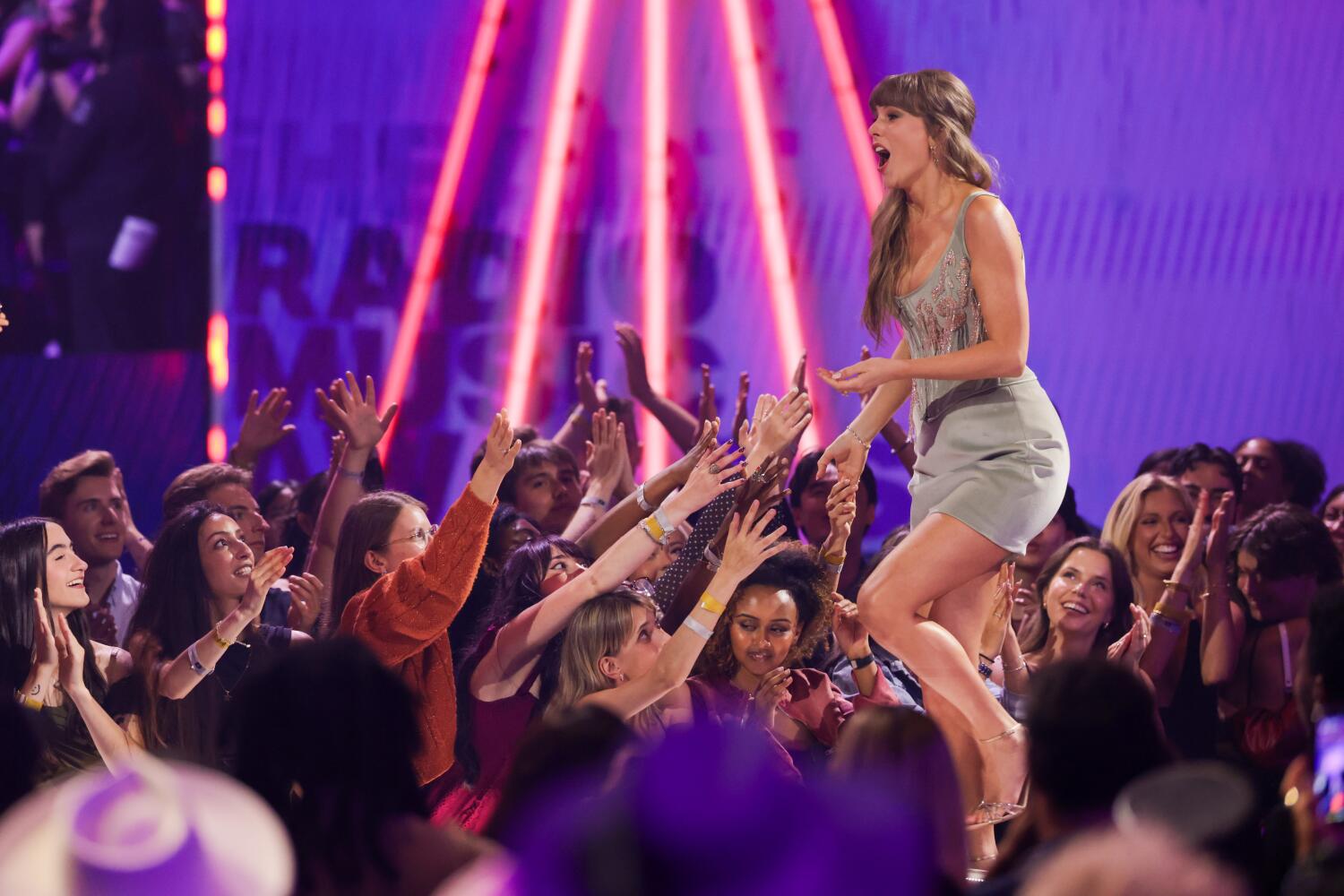
The media narrative surrounding Taylor Swift’s latest wave of trademark filings is predictable, sycophantic, and fundamentally flawed. The headlines scream that the artist is "protecting her voice and likeness" from the encroaching threat of artificial intelligence and digital impersonation. Fans cheer. Legal pundits nod in solemn agreement.
They are all missing the point.
Trademark law is not a shield against technological evolution. It is a blunt instrument designed to police commerce, not to stop the march of generative media. By attempting to codify her identity into a series of registrable marks, Swift is not securing her legacy. She is falling into a trap that has bankrupted far more nimble players in the entertainment industry: the illusion that a legal filing can exert control over cultural diffusion.
The Trademark Fallacy
The legal establishment treats trademarks as permanent property rights. In the real world, they are nothing more than assertions of market exclusivity for specific goods or services. When a celebrity tries to trademark a name, a catchphrase, or even a specific vocal cadence, they are attempting to lock the public out of the inevitable process of imitation, parody, and evolution.
I have sat in boardrooms where legal teams convinced executives that a massive, sprawling trademark portfolio would act as an impenetrable wall. They spent millions on enforcement. They filed lawsuits against teenagers in basements and small-scale creators on digital platforms.
The result? They turned themselves into villains.
When you sue your audience for mimicking you, you do not preserve your brand value. You invite a Streisand Effect that accelerates your obsolescence. Swift’s lawyers are busy drafting documents that assume a world where the law can dictate human behavior. We do not live in that world. We live in a world where a fan in Tokyo can generate a synthetic cover of a hit song using an open-source model that cares nothing for the USPTO’s database.
Intellectual Property Is Not A Moat
The obsession with protecting "likeness" through intellectual property is a symptom of a declining creative edge. True dominance in music and entertainment comes from output that remains impossible to replicate because of its cultural context, not because of its legal status.
Consider the economics here. A trademark filing is a defensive reaction. It is the action of an incumbent looking at the rearview mirror while the car is speeding into a canyon. If Swift spent half as much time iterating on her creative model as she does on her filing strategy, she would be unassailable.
The danger of this path is the shift from content creator to content litigator. Once you start measuring your success by the number of cease-and-desist orders you issue, you have stopped being a cultural leader and started being a landlord. Landlords are universally hated.
The Synthetic Future
Technology does not care about your registrations. The open-source community is currently refining tools that can replicate anyone’s vocal characteristics with alarming accuracy. These models are not distributed through a central server that can be shut down by a court order. They are decentralized, peer-to-peer, and practically unstoppable.
Imagine a scenario where the most popular song of the year is an AI-generated track that features the voice of a famous singer. It is not an official release. It does not exist as a "product" in the traditional sense. It is just a cultural artifact floating in the ether.
How does a trademark stop this? It does not.
The legal team will send letters to service providers, to hosting platforms, to individual developers. They will demand takedowns. They will win a few battles. But the culture will move on, and they will be left fighting ghosts while the world listens to something else.
Why The Legal Route Fails
Most people assume that more regulation equals more safety. This is a cognitive bias. In the creative arts, more regulation usually means less freedom and lower quality.
When you make it harder for people to create, you do not force them to create better art. You force them to create art in the shadows. The most interesting, boundary-pushing work has always existed at the fringes of legality. By trying to force the entire world to adhere to strict copyright and trademark standards, you are just ensuring that the next generation of creative tools will be developed outside the reach of US jurisdiction.
I have seen companies blow millions on aggressive intellectual property enforcement. They win in the courtroom and lose in the marketplace. Every dollar spent on a trademark lawyer is a dollar stolen from the creative process.
Abandoning Control For Relevance
The alternative to this defensive posture is a radical shift toward radical transparency and engagement.
Instead of fighting the technology that mimics her, Swift should be leaning into the chaos. What if she released raw, uncompressed stem files of her vocals for fans to play with? What if she incentivized the creation of derivative works instead of threatening them?
This is the shift that separates the legends from the dinosaurs.
The legends recognize that they are not a product to be protected. They are a platform for others to interact with. When your voice becomes a medium for others to express themselves, you are no longer just a musician. You are the infrastructure of popular culture.
That is not something you can trademark. You cannot own the way people talk about you, the way they remix you, or the way they consume you. Trying to do so is a confession of weakness.
The market does not reward legal protectionism. It rewards cultural resonance. Every minute spent worrying about who is "using" your likeness is a minute lost building something that nobody could possibly ignore. Stop protecting the past. Start building a future that is too fast to catch and too vibrant to suppress.
The lawsuits are a sideshow. The real game is happening in the places where the lawyers cannot go. If she keeps focusing on the filings, she is going to wake up one day and realize she owns a museum of things that people used to care about, while the rest of the world has moved on to the next, unlitigated, living organism of sound.