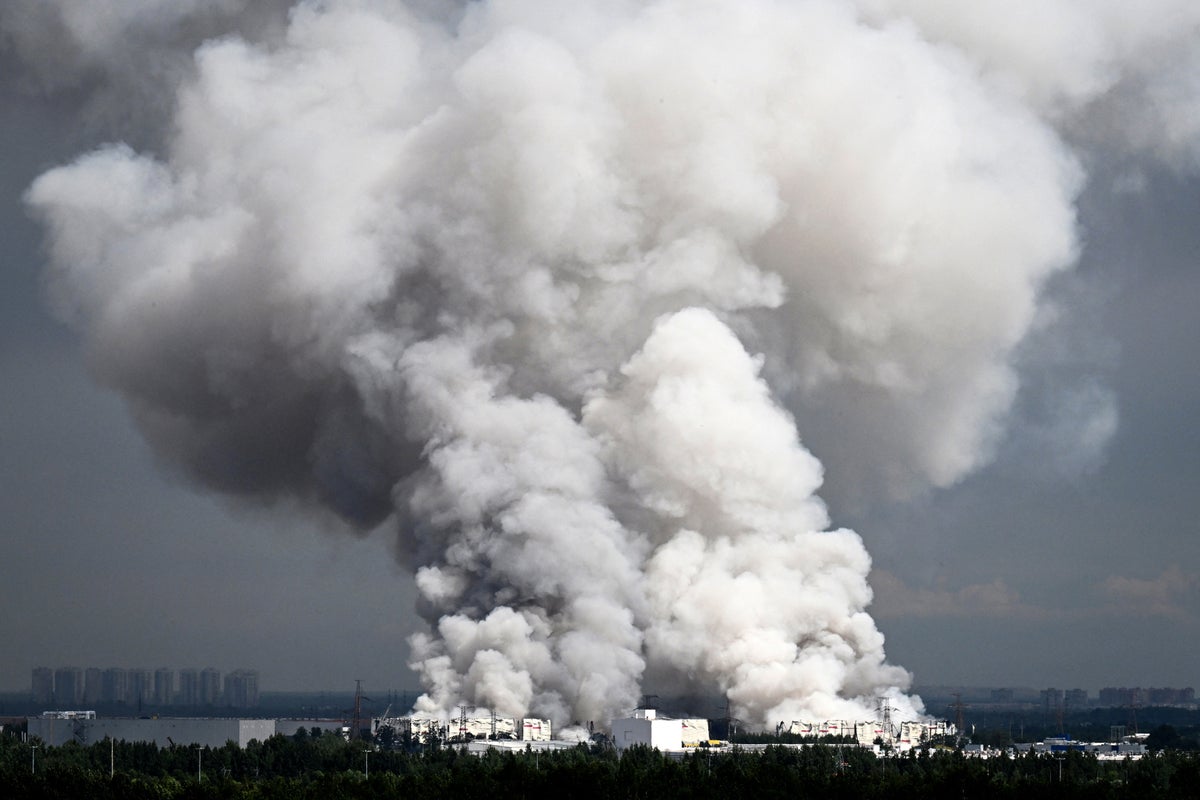
Every mainstream defense analyst right now is high on the same lazy narrative. The talking heads look at Wildberries, see a colossal logistics engine processing millions of parcels daily across Eurasia, and scream for tactical strikes. They call it Russia’s Amazon. They argue that turning its sorting hubs and fulfillment centers into craters will cripple the Russian economy, choke off consumer goods, and fracture domestic morale.
It sounds tidy. It fits neatly into a television graphic. And it is completely, dangerously wrong.
I have spent the better part of two decades tearing apart supply chain architectures for multinationals operating in high-risk zones. I have seen companies blow millions trying to break a distribution network by hitting its most visible storefront. It feels satisfying in the moment, and it accomplishes precisely nothing of strategic value.
Targeting Wildberries because it looks like an e-commerce giant is like trying to drain an ocean by scooping up the foam on the surface. You aren't attacking the systemic core; you are attacking the symptom.
Let us look at the mechanics of what Wildberries actually is, why the consensus view is fundamentally flawed, and what a real logistical disruption would actually require—though nobody in the command centers wants to hear it.
The Misconception of the Monolith
The mainstream media loves the "Russian Amazon" tag because it requires zero cognitive load to understand. Jeff Bezos has Amazon, Russia has Wildberries, therefore hitting Wildberries hurts Russia the way hitting Amazon would hurt the United States.
Except that analogy collapses under the weight of basic economic geography.
Amazon is an integrated retail and cloud infrastructure behemoth built on proprietary cloud platforms, centralized enterprise resource planning systems, and deeply concentrated domestic warehousing tied to Western financial rails. Wildberries, by contrast, operates on a sprawling, decentralized franchise model. It is a distributed network of independent pickup points, third-party sellers, and gray-market parallel importers that function more like a medieval bazaar wrapped in a modern mobile app than a monolithic corporate machine.
When a fulfillment center takes a hit, Western analysts clap their hands and forecast weeks of delivery delays for ordinary citizens. What actually happens? The system reroutes. Sellers pivot to rival platforms like Ozon or Yandex Market within forty-eight hours. Inventory shifts to regional micro-warehouses operated by localized logistics partners.
The network is antifragile precisely because it is fragmented. By concentrating strikes on high-profile consumer infrastructure, you inflict localized human misery on civilian neighborhoods while the core logistical machinery simply mutates around the damage.
The Logistics Reality Nobody Talks About
Let us define what an actual supply chain stress test looks like. To cripple a distribution network of this scale, you do not bomb the warehouses where women pick out cheap shoes and kitchen gadgets. You choke the upstream vascular system: the tier-three suppliers, the customs clearing houses in Central Asia, the payment routing corridors, and the heavy freight rail junctions that move bulk cargo before it ever touches a Wildberries sorting belt.
Parallel importation is the lifeblood of the modern Russian retail sector. Since the mass exodus of Western brands, consumer goods flow through an intricate web of intermediaries spanning Kazakhstan, Turkey, the United Arab Emirates, and China.
Imagine a scenario where a shipment of electronics leaves Shenzhen, gets relabeled in Bishkek, clears customs under a generic industrial code, settles payment via a regional tier-two bank using a non-SWIFT messaging standard, and finally enters the Russian distribution ecosystem.
Striking a Wildberries hub touches none of that. It is like swatting a mosquito while ignoring the swamp.
The laziness of the current discourse stems from a fundamental ignorance of how modern retail absorbs shocks. Retailers in sanctioned economies do not maintain single points of failure; they maintain dozens of redundant, low-visibility vectors. When one vector gets blown up, the cost of rerouting is absorbed by a devalued currency and resilient arbitrage networks.
The Human Cost of Symbolic Destruction
There is a darker, more cynical angle to the obsession with consumer infrastructure. Analysts who advocate for these strikes often whisper that destroying domestic convenience will turn the Russian middle class against the Kremlin.
This is political science fiction written by people who have never lived through an asymmetric conflict.
Historical data from the Blitz, the strategic bombing campaigns of World War II, and every modern urban conflict since demonstrates a consistent psychological principle: attacking civilian conveniences does not cause uprisings; it causes consolidation. When a neighborhood pickup point for household goods is destroyed, the psychological response of the average consumer is not to march on the capital to demand regime change. It is to blame the external actor delivering the ordnance.
You harden domestic resolve by validating the state propaganda narrative that the entire West is out to destroy the ordinary citizen's way of life. You turn a faceless economic entity into a martyr for everyday normalcy.
What Actually Disrupts the Flow
If you want to understand how trade networks actually break, look at financial liquidity and heavy transport bottlenecks.
Consumer retail is the tail of the dog. The dog is bulk freight capacity, container availability, and cross-border settlement speeds.
- The Rail Bottlenecks: Russia's vast geography means long-haul logistics rely entirely on the railway grid. Single-track bottlenecks in Siberia and key marshalling yards dictate whether goods move at all. Consumer apps are irrelevant if the freight cars are parked on a siding waiting for spare parts that cannot be imported.
- Secondary Sanctions on Intermediaries: The real vulnerability lies in the banking corridors of the Caucasus and Central Asia. When secondary sanctions force compliance officers in Almaty or Tashkent to freeze accounts used by parallel importers, the entire retail apparatus grinds to a halt overnight. No bombs required. Just relentless financial compliance pressure.
- Container Turnover: Modern shipping depends on standardized metal boxes. When those boxes pile up at congested ports because return logistics are broken, the velocity of trade drops precipitously.
None of these look good on a breaking news ticker. None of them result in dramatic explosions that can be packaged into a ten-second clip for social media.
The Strategic Blind Spot
The fixation on Wildberries reveals a deeper malaise in modern strategic planning: the preference for theatrical impacts over systemic attrition. We want wars to look like video games where destroying the main boss building wins the level.
Real economic warfare is boring, bureaucratic, and grinding. It happens in compliance offices in Frankfurt, customs manifests in Urumqi, and rail maintenance yards thousands of miles away from any consumer warehouse.
Stop pretending that blowing up a parcel sorting facility is a masterstroke of economic warfare. It is an expensive, counterproductive distraction that misses the architecture of modern trade entirely.
The network adapts. The shipments reroute. And the people cheering for the strikes are left wondering why the shelves inside the stores are still full while the only thing that changed is the address of the warehouse.