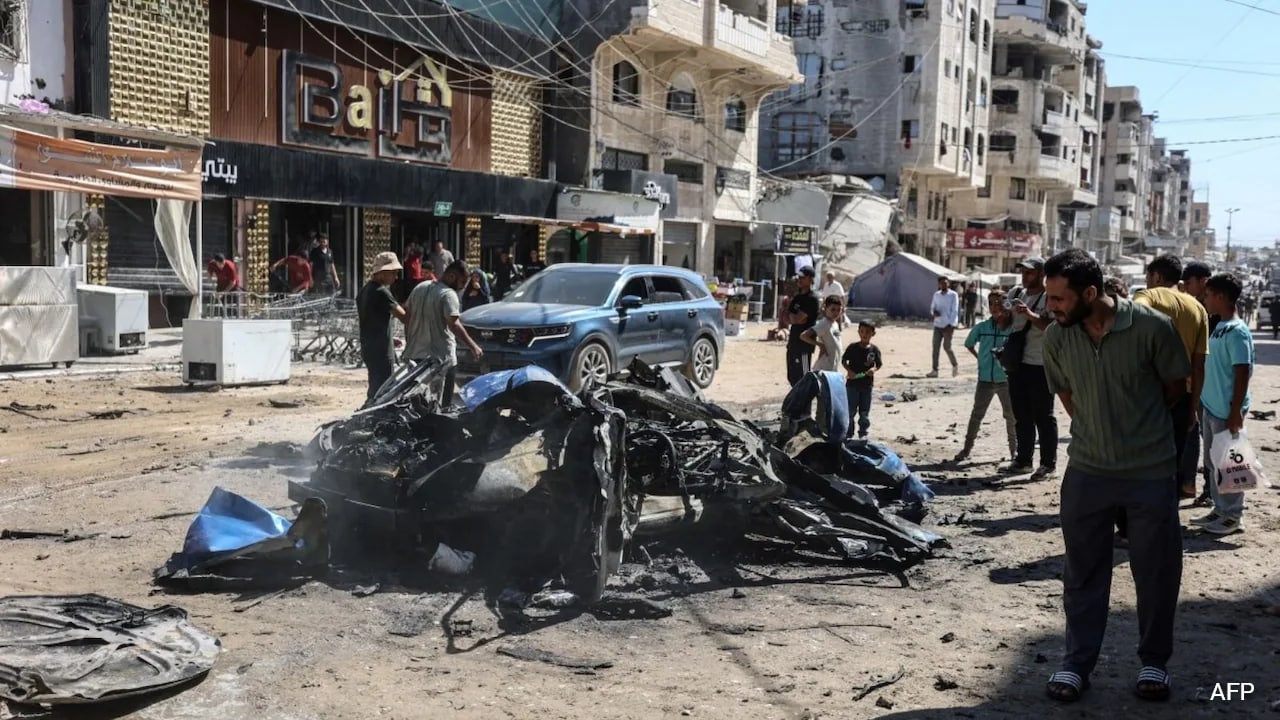
Military operations directed against high-value leadership figures within fragmented, cellular insurgent organizations operate under specific mathematical and structural constraints. When state intelligence agencies execute targeted strikes against underground command structures, the outcomes are dictated less by immediate tactical destruction and more by the systemic friction introduced into the adversary network.
Analyzing operations such as the recent targeted actions in Gaza requires looking past surface-level casualty counts to evaluate structural degradation, command attrition rates, and the dynamics of cellular adaptation.
The Attrition Coefficient of Leadership Nodes
In decentralized paramilitary organizations, leadership replacement follows a predictable curve defined by institutional knowledge and operational trust. When a senior commander is eliminated, the organization suffers a temporary loss of coordination efficiency.
However, the velocity of replacement depends directly on the structural depth of the remaining cadre.
- First-Tier Loss: Removal of primary strategic planners creates an immediate operational vacuum. Lower-tier commanders must step up, often lacking the strategic vision or broad authority of their predecessors, which increases communication bottlenecks.
- Second-Tier Substitution: As experienced commanders are systematically removed, the organization is forced to promote operators with shorter tenures. This lowers the average operational competence across the command chain while increasing reliance on insecure communication channels to maintain basic coordination.
This dynamic generates a declining marginal return on high-value strikes over time. While early eliminations disrupt command continuity, successive eliminations hit progressively less experienced tiers, shifting the primary effect from strategic disruption to tactical annoyance.
The Collateral Cost Function and Urban Density
Targeting leadership nodes embedded within high-density urban terrain introduces severe operational trade-offs for military planners. The cost function of urban warfare is governed by physical constraints:
- Information Latency: Real-time intelligence on a target's precise location often degrades due to urban shielding, subterranean movement, and counter-surveillance protocols.
- Blast Propagation Constraints: To neutralize targets in fortified or multi-story structures, munitions must deliver sufficient energy through structural barriers, invariably increasing the radius of secondary effects.
- Population Density Multipliers: Dense civilian infrastructure ensures that any kinetic intervention carries a high probability of non-combatant casualties, which shifts the political and diplomatic equilibrium regardless of tactical success.
The intersection of these variables creates a permanent friction point. Military planners must balance the tactical imperative of neutralizing a high-value asset against the strategic blowback generated by civilian infrastructure damage and secondary casualties.
Ceasefire Fractures and the Mechanics of Restraint
Protocols governing localized ceasefires rarely halt underground recruitment and rearmament efforts. Instead, they establish a degraded equilibrium where both state and non-state actors operate under constrained rules of engagement.
- Reconstitution vs. Compliance: Non-state actors frequently use ceasefire periods to rebuild logistical pipelines, repair tunnel infrastructure, and train replacement fighters.
- Enforcement Thresholds: State actors monitor these activities through intelligence feeds, intervening kinetically only when reconstitution crosses a pre-determined threat threshold.
This creates a perpetual cycle of intermittent escalation. The resumption of targeted strikes typically signals that intelligence agencies have detected a transition from passive survival posture to active operational planning, rendering the ceasefire framework functionally obsolete in specific operational sectors.
Strategic Forecast
The systematic targeting of regional commanders alters the internal politics of the insurgent group rather than ending its operational capacity entirely. As command tiers compress, decision-making becomes more localized and less centralized.
This decentralization paradoxically makes the organization harder to neutralize through decapitation strikes, as individual cells gain operational autonomy. Future effectiveness will depend on intelligence granularity and the ability to sever lower-level logistical nodes rather than focusing exclusively on top-tier leadership elimination.