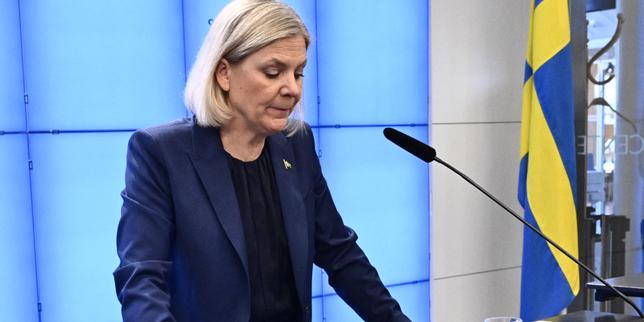
In late November 2021, Magdalena Andersson achieved a historic milestone as Sweden's first female prime minister, only to surrender the mandate a mere seven hours later. This unexpected collapse exposed the structural vulnerabilities of Swedish minority governance and the shifting dynamics of the Riksdag. Behind the dramatic optics of a resignation lay rigid parliamentary arithmetic and an intractable budget impasse that paralyzed Stockholm. The crisis was not merely a personal political failure for the Social Democratic leader. It served as a symptom of a deeply fractured political ecosystem where traditional blocs have disintegrated, leaving major governing parties vulnerable to extreme parliamentary pressure from ideological flanks they spent decades trying to isolate.
To understand why Andersson walked away from the highest office in the land before her chair had even warmed, one must examine the peculiar mechanics of Swedish coalition building. For generations, Swedish politics operated on a predictable axis. A strong Social Democratic party anchored the left, negotiating with smaller agrarian or environmental allies, while a cohesive center-right bloc opposed them. Politics was characterized by stable minority administrations or comfortable majority coalitions. That architecture has entirely collapsed.
The entry of the nationalist Sweden Democrats into the political mainstream fractured the traditional center-right. Parties that once refused to touch the nationalists with a political barge pole eventually found themselves coordinating votes with them to achieve power. This new reality transformed Swedish parliamentary politics into a high-stakes game of chicken where minor policy shifts carry existential risks for the government of the day.
On that fateful Wednesday in November, the fault lines cracked wide open. Andersson had secured a fragile agreement with the Left Party, conceding minor welfare adjustments to ensure their abstention or support. But this maneuver alienated the Center Party, a crucial centrist faction that recoiled at any prospect of the Left Party exerting influence over state finances. The arithmetic of the Riksdag is unforgiving. Every vote matters. Every defection is fatal.
When the Center Party withheld its support, the opposition smelling blood in the water united behind a joint budget crafted by the conservative Moderates, the Christian Democrats, and the Sweden Democrats. That alternative budget passed by a narrow margin. For Andersson, a socialist prime minister sworn in to execute a specific social democratic fiscal policy, attempting to govern with an opposition budget authored in part by nationalists was a bridge too far.
Stepping down was not an act of cowardice. It was a calculated cold-blooded display of political self-preservation. By resigning immediately, Andersson denied the opposition the narrative that she was willing to compromise core socialist principles just to cling to power for a few weeks. She forced the opposition back onto the defensive, highlighting the awkward contradictions of their tactical alliance with the far-right.
The media narrative at the time focused heavily on the historic nature of her brief tenure. Commentators obsessed over the trivia of a prime minister whose term lasted hours rather than years. But this superficial focus missed the deeper structural rot eating away at Swedish political stability. The real story was not about Magdalena Andersson. It was about a parliament that had become structurally ungovernable through conventional means.
Sweden operates under negative parliamentarism. A prime minister does not need a positive majority to take office; they merely need a lack of a majority opposing them. This constitutional quirk allows for extremely weak administrations that survive only through delicate truces and abstentions. When those truces fracture over a single spending line in a multi-billion-krona state budget, the government dissolves like salt in water.
The budget that triggered the crisis contained significant tax cuts and increased funding for law enforcement and defense, priorities pushed by the conservative bloc. The opposition argued that their fiscal plan addressed Sweden's pressing security and economic anxieties more effectively than the incumbent administration's proposal. The Social Democrats countered that the conservative budget dismantled the universal welfare state and relied on tacit cooperation with a nationalist party with roots in extremism. Both arguments held internal logic, which is precisely why the political deadlock felt so complete.
Following her resignation, the constitutional ball bounced back to Andreas Norlén, the speaker of the Riksdag. The speaker initiated a frantic round of consultations with party leaders, seeking a path forward that would avoid a snap election. Snap elections are historically rare and widely feared in Sweden, as they disrupt legislative continuity and rarely resolve underlying parliamentary stalemates.
The political reality facing the speaker had not changed from the morning of Andersson's resignation. The arithmetic remained identical. The conservative bloc lacked a majority to form a stable government of its own without relying on volatile support, while the center-left coalition was equally incapable of commanding a reliable legislative majority. Every political actor was trapped in a room of mirrors, reflecting the country's deep ideological and cultural divisions.
Urban versus rural divides, anxieties over immigration and integration, and debates over the green transition have reconfigured Swedish society. The traditional consensus culture, often romanticized abroad as the Swedish model, has been replaced by polarized tribalism. Parties that once found room for compromise now treat legislative negotiations as zero-sum cultural battlegrounds.
When Andersson eventually returned to power days later, leading a single-party minority government composed solely of Social Democrats, it was a victory born of necessity rather than strength. The Green Party had abandoned the coalition following the budget defeat, refusing to administer a state budget amended by right-wing and nationalist votes. Andersson was left to steer the ship alone, navigating a hostile parliament with fewer allies than when she started.
This outcome revealed the ultimate fragility of modern Swedish executive power. A single-party minority government presiding over an opposition-amended budget is an administrative nightmare. Every single policy initiative requires ad-hoc negotiations, floor trades, and constant vigilance against sudden ambushes. It turns governance into a daily endurance test where survival supersedes strategic vision.
International observers often look at Scandinavia as a utopian bastion of political harmony and administrative efficiency. The events surrounding Andersson's brief resignation shattered that illusion for anyone paying attention to the machinery of Stockholm politics. Sweden is grappling with the same populist surges, polarization, and institutional strains affecting the rest of the Western world. The only difference is the constitutional framework through which these conflicts are expressed.
The episode also demonstrated the disciplined execution of the Social Democratic machine. Despite decades of electoral erosion and the rise of formidable challengers, the party remains the ultimate survivor of Swedish politics. They understand power. They know when to absorb a tactical blow to secure a strategic advantage. Andersson emerged from the chaos not as a wounded casualty of a parliamentary coup, but as a resilient leader who stared down an impossible situation and forced her opponents to blink first.
Yet, surviving a parliamentary crisis is not the same as solving it. The structural conditions that brought Swedish governance to a standstill in late November remain entirely unaddressed. Proportional representation combined with deep ideological fragmentation guarantees that future coalitions will be just as brittle, just as susceptible to eleventh-hour defections, and just as vulnerable to the leverage of fringe parties.
The Swedish voter is left in a state of suspended animation. They are asked to participate in a democratic system where the government they elect may find its policy agenda rewritten by the opposition before the ink on the coalition agreement has dried. This disconnect between electoral choice and legislative execution breeds cynicism. When people feel that their votes produce perpetual paralysis rather than decisive action, the appeal of anti-system alternatives grows stronger.
Magdalena Andersson survived the storm, but the ship of state is taking on water. The seven-hour premiership will be remembered as a bizarre historical footnote by casual observers. For serious analysts of European politics, it stands as a bright red warning light flashing across the dashboard of one of the world's oldest and most stable democracies. The consensus is dead, the arithmetic is broken, and the future belongs to whoever masters the art of survival in a burning house.


