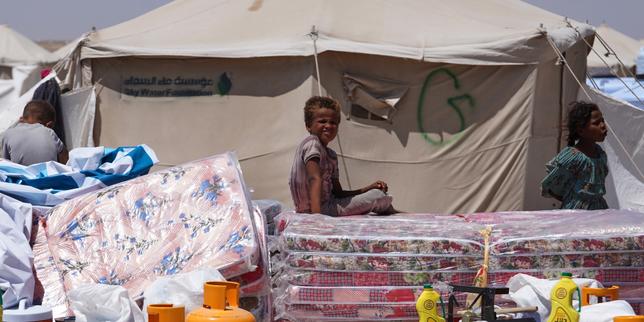
The sea at Mocha does not roar. It breathes in low, rhythmic sighs against a shore that has forgotten the sound of uninterrupted sleep.
For years, this ancient Yemeni port town on the Bab el-Mandeb strait sat as a scarred boundary marker—a heavily fortified waypoint where the frontline chewed through concrete, salt air, and human patience. Then came the shift. Control over new territories near and around Mocha slipped into the grip of the Houthi movement, leaving behind a strange, hollow quiet. It is a quiet that smells of stale diesel, uncollected garbage, and the metallic tang of fear.
Everybody is still in shock.
To understand what happens when a new flag rises over a battered street, you must look past the geopolitical maps and the dry briefings of international monitors. You must look at Tariq.
Tariq is a hypothetical composite of a dozen shopkeepers whose names are whispered behind heavy shutters, though his reality is drawn directly from the documented testimonies of displaced merchants and residents stranded in newly captured sectors. He owns a small storefront fifty meters from the main coastal artery. Before the latest territorial shifts, his shelves held imported cooking oil, Egyptian canned beans, and bright blue packets of laundry detergent. Today, half those shelves are bare. The supply lines have been choked, squeezed, and rerouted by checkpoints that demand paperwork, permits, and palms greased with a currency that loses its value before the sun sets.
He wakes before dawn. He does not turn on the radio. The news only brings names of towns he has never visited, falling like dominoes in a game he never agreed to play.
"We are living between ticks of a clock that refuses to strike," a resident of the southern Tihama fringe told local field researchers recently, capturing the paralysis of daily life under shifting authorities.
That paralysis is engineered. When territory changes hands in Yemen, the immediate casualty is not always blood; it is certainty. Curfews descend without warning. Movement permits take weeks to process, turning a thirty-minute trip to visit a sick relative into a bureaucratic odyssey through a half-dozen armed outposts. Teachers wonder if the textbooks delivered next week will match the ideological contours of the new administration. Mothers calculate whether sending their daughters to the village well is worth the risk of stray bullets or aggressive questioning from teenage guards holding Kalashnikovs with calloused, bored fingers.
Consider the geometry of survival here. It is built entirely on margins.
When a family’s monthly income is equivalent to thirty U.S. dollars—thanks to a collapsed economy and a split currency system where northern bank notes and southern notes fight for dominance—every single loaf of bread is a negotiation with fate. In the newly claimed zones, these economic fault lines are stretched to the snapping point. Prices for flour and fuel spike overnight not because the grain does not exist twenty miles away, but because a blockade line has been redrawn across a highway.
We talk about supply chains in global boardrooms as if they are abstract algorithms. Here, a supply chain is a nervous, sweating driver sitting in an overloaded truck cabin for three days at a makeshift barrier, praying the soldier checking his cargo isn't in a mood to confiscate his tires.
The human mind is remarkably elastic until it snaps. In Mocha and the surrounding coastal plains, people have stretched their endurance so thin that it sings in the wind like a taut wire. They have learned to read the posture of an armed man from fifty yards away. They know the subtle shift in a neighbor's shoulder that means another wave of displacement is coming. They keep their suitcases half-packed beneath wooden beds, a silent admission that home is merely a temporary campsite.
Yet, life persists in the cracks of the concrete.
Children still chase rusted bicycle rims down alleys where bullet holes trace constellations of violence across crumbling stucco. Women gather at dawn around communal water taps, trading low-voiced gossip, sharing news of who managed to smuggle medicine across the line, who got married, who didn't survive the fever last Tuesday. This is not resilience born of heroic romanticism; it is the stubborn, biological refusal to stop breathing simply because the world around you is suffocating.
The geopolitical chessboard moves fast. Analysts in Geneva and Washington draw clean lines on high-resolution maps, coloring districts in shades of red, green, and grey. They debate leverage, concessions, and ceasefire architectures.
Back on the ground in Mocha, the ink on those maps is wet with human tears.
When the sun dips below the Red Sea, turning the water the color of bruised iron, the town goes dark long before official curfew hours. Generators cough, stutter, and die across the neighborhoods. The darkness is absolute, heavy, and absolute. In that silence, under a sky crowded with indifferent stars, millions of people wait for a future that has already been decided somewhere else, by someone else, for reasons they are too exhausted to question.
The tide rolls in, washing the salt against the piers, erasing the footprints left in the sand that day, preparing the shore for another blank, uncertain dawn.