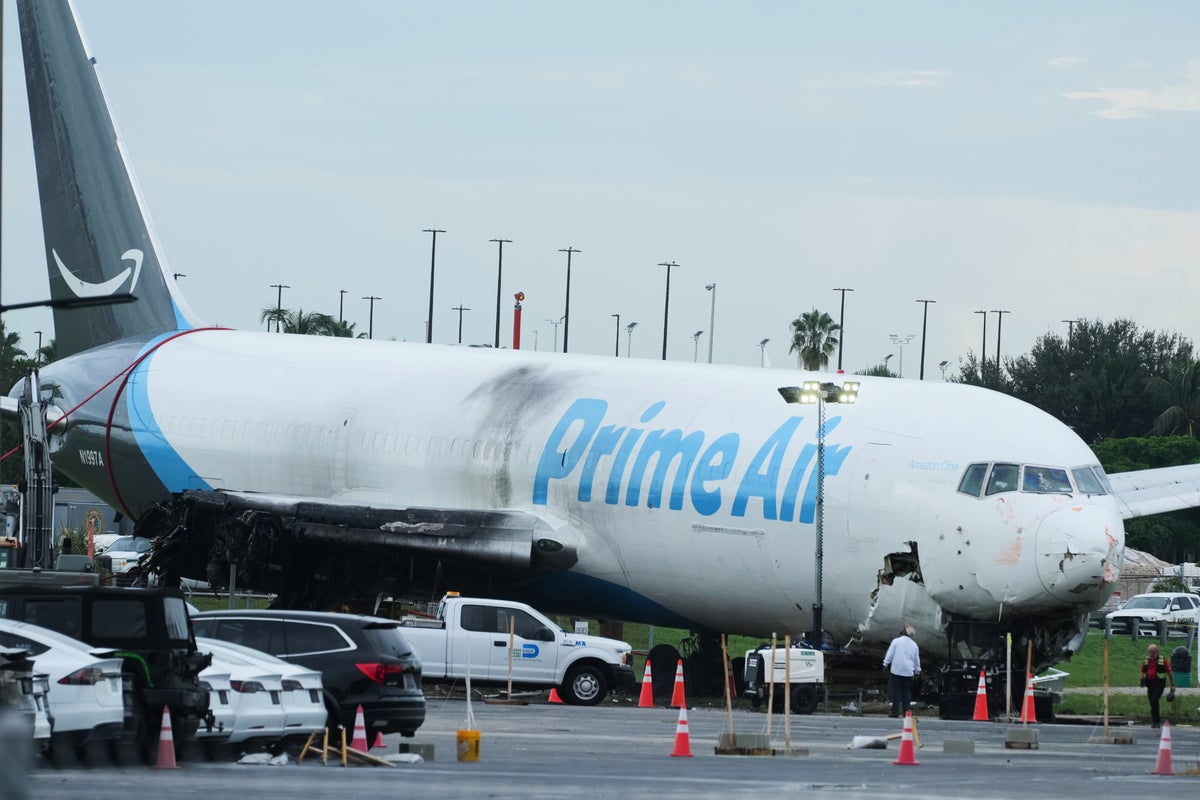
When an air logistics provider suffers a catastrophic runway accident resulting in fatalities, the immediate consequence is not merely a localized tragedy; it is an immediate stress test of the enterprise risk framework governing supply chain operations. Amazon’s decision to terminate its partnership with an air carrier following a fatal runway incident exposes the strict risk calculus governing high-throughput logistics networks. This analysis deconstructs the operational, economic, and structural dynamics that force corporations to sever critical carrier relationships under acute crisis conditions.
The Operational Risk Threshold
In global logistics, corporate entities operate within a matrix of redundancy and compliance metrics. When a carrier experiences a fatal hull loss or a fatal runway excursion, the threshold of acceptable systemic risk is instantly breached.
Logistics outsourcing relies on third-party risk management frameworks, commonly abbreviated as TPRM. These frameworks quantify carrier reliability through key performance indicators, including safety audit scores, crew training protocols, and maintenance compliance logs. A fatal incident acts as a lagging indicator of systemic vulnerability.
From an economic perspective, corporations evaluate the cost of operational continuity against the reputational and legal liabilities of maintaining a partnership with a compromised carrier. The risk function calculates exposure across three distinct vectors:
- Regulatory scrutiny from civil aviation authorities investigating systemic operational failures.
- Reputational contagion, where the brand equity of the shipper becomes associated with the safety lapses of the contractor.
- Operational disruption costs incurred during the rapid reallocation of freight volume to alternative carriers.
The Mechanics of Carrier Substitution
Severing ties with a dedicated cargo provider introduces an immediate capacity deficit. Modern e-commerce fulfillment models depend on predictable flight schedules, hub-and-spoke routing synchronization, and strict time-window delivery guarantees.
When a major air carrier is removed from the network overnight, the logistics management system must absorb the displacement through a defined hierarchy of capacity mitigation:
- Dynamic Spot Market Procurement: Shippers must acquire immediate ad-hoc charter capacity, often at a significant price premium, to prevent fulfillment bottlenecks at primary sorting hubs.
- Network Rebalancing: Remaining logistics partners are forced to absorb incremental payload allocations, which can strain secondary carrier capacity and increase the risk of cascading delays.
- Modal Shift Interventions: High-priority freight must temporarily transition to alternative transport modes, such as line-haul trucking or rail, extending transit times and altering regional fulfillment economics.
This reallocation process exposes the friction inherent in carrier contracts. Modern logistics agreements incorporate termination-for-cause clauses triggered by severe safety violations or regulatory suspensions. These clauses protect the enterprise from prolonged legal entanglements while enabling swift operational decoupling.
Regulatory Oversight and Structural Accountability
Aviation safety is governed by rigorous oversight from national and international regulatory bodies, such as the Federal Aviation Administration or equivalent civil aviation authorities. When a fatal accident occurs, investigations focus on pilot fatigue, maintenance practices, air traffic control interactions, and organizational safety culture.
For enterprise shippers, relying on air carriers under active safety investigation creates an untenable liability posture. If regulatory bodies uncover systemic failures within the carrier's operations, liability can theoretically extend to commercial partners who failed to exercise adequate due diligence in carrier selection and monitoring.
Consequently, the termination of a contract functions as a defensive maneuver designed to insulate the corporation from secondary regulatory penalties and civil litigation arising from wrongful death claims or operational negligence.
The Cost Function of Redundancy
The incident highlights a fundamental economic trade-off in modern supply chain management: efficiency versus resilience. Systems optimized purely for cost minimization and high asset utilization often suffer from single points of failure.
To mitigate vulnerability to sudden carrier termination, enterprises must build structural redundancies into their air cargo networks. This requires maintaining multi-vendor agreements, geographic diversification of logistics hubs, and continuous real-time auditing of contractor safety metrics.
While maintaining secondary and tertiary carrier relationships increases fixed overhead costs, it establishes the operational elasticity required to absorb sudden shocks without compromising delivery performance or corporate integrity.
Strategic Outlook
The immediate fallout of a fatal logistics accident forces a permanent realignment of market standards. Air cargo providers must continuously validate their safety management systems to retain enterprise clients, while shippers must refine their vendor risk assessment models to detect operational degradation before it manifests as a catastrophic failure. The separation of commercial partners following such an event is a rational, mechanical response designed to preserve system stability and enforce absolute accountability across the supply chain ecosystem.