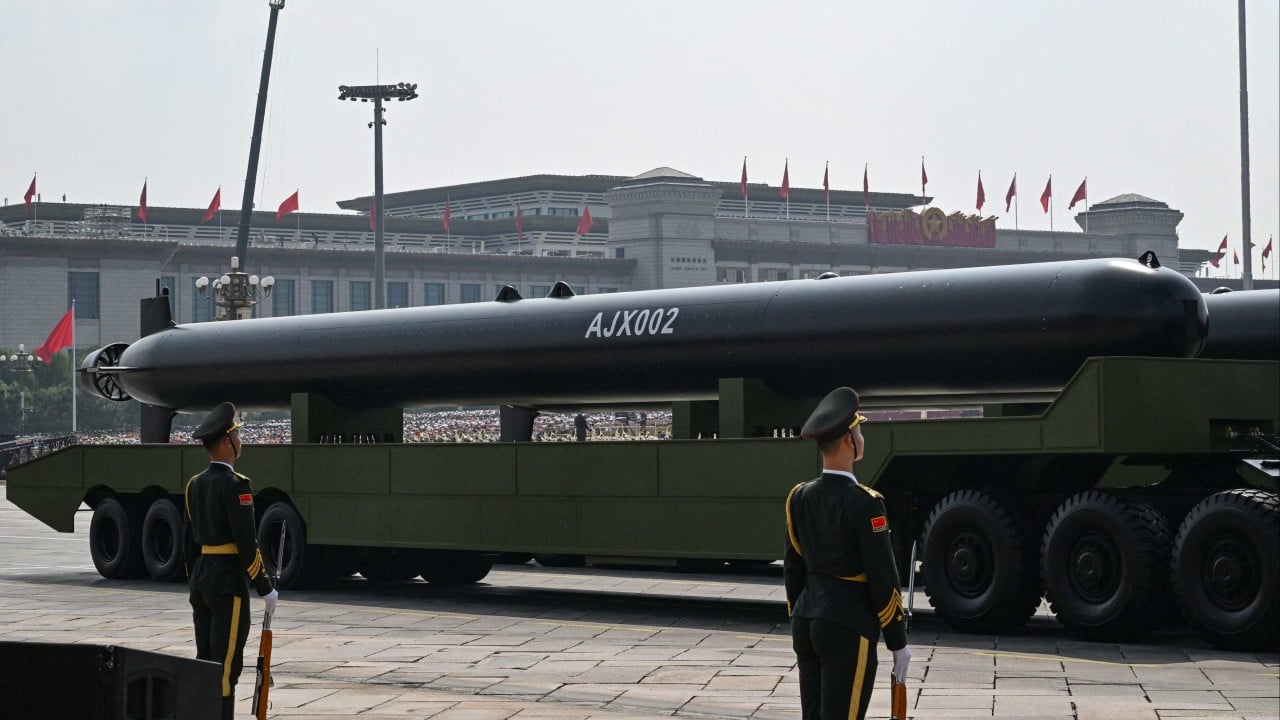
The proliferation of extra-large uncrewed underwater vehicles has transformed maritime security calculations, shifting the focus of coastal defense from traditional blue-water fleet engagements to hyper-localized harbor protection. As adversarial states test autonomous platforms capable of transoceanic endurance, maritime security agencies face a structural mismatch between legacy patrol architectures and the stealth characteristics of subsea drones. Navigating this operational shift requires examining the underlying physics, detection bottlenecks, and tactical interventions defining modern littoral defense.
The Architectural Mismatch of Littoral Surveillance
Traditional maritime defense relies on surface-centric sensors, visual patrols, and acoustic arrays optimized for crewed vessels. Uncrewed underwater vehicles exploit the physical limitations of these legacy detection systems. Water acts as a high-attenuation medium for electromagnetic waves, rendering standard surface radar useless against submerged targets. Consequently, defense planners must rely entirely on acoustic sensing, which is inherently constrained by thermal layers, salinity gradients, and ambient biological noise.
[Legacy Surface Radar] ---> Blocked by Sea Surface (Electromagnetic Attenuation)
[Acoustic Sonar Array] ----> Constrained by Thermal Layers and Ambient Noise
[Subsea UUV Target] -------> Operates in Low-Signature, Acoustic Shadow Zones
The United States Coast Guard faces an acute adaptation challenge in this domain. Historically mandated with law enforcement, port security, and search-and-rescue operations within the littoral zone, the service now encounters an operational environment where uncrewed platforms can conduct intelligence collection, infrastructure sabotage, or kinetic mining with minimal acoustic footprints. The core vulnerability is not merely a lack of assets, but a fundamental asymmetry in the cost function of detection versus deployment.
The Vector Calculus of Subsea Threat Vectors
To evaluate the operational risk posed by uncrewed underwater assets, analysts must deconstruct their deployment mechanics into three primary operational variables: propulsion architecture, energy density, and navigation autonomy.
- Propulsion and Acoustic Signatures: Modern subsea drones frequently employ diesel-electric hybrid designs or advanced lithium-iron-phosphate battery banks. By eliminating human life-support requirements, designers replace crew accommodations with massive energy storage volumes. This allows platforms to execute long-duration, low-revolutions-per-minute transits that minimize cavitational noise.
- The Energy-Range Tradeoff: Achieving extended range requires balancing hull volume between payload capacity and fuel or battery mass. While surface vessels radiate thermal and radar signatures, subsea platforms trade high-speed transit for absolute stealth, loitering silently near critical choke points such as undersea fiber-optic cables, naval stations, and commercial ports.
- Terminal Autonomy: Unlike crewed submarines that require real-time communication links—which risk revealing position—advanced subsea drones utilize pre-programmed inertial navigation systems paired with periodic celestial or bathymetric corrections. This limits the utility of electronic jamming or communication interception as defensive countermeasures.
Tactical Mitigation and Technology Readiness Levels
Mitigating subsea threats demands a shift from wide-area tracking to localized, high-probability intercept frameworks. Because passive acoustic detection yields high false-alarm rates in busy coastal shipping lanes, defense agencies are actively sourcing technologies rated at a Technology Readiness Level of five or higher for operational testing.
+---------------------------+-----------------------------------+-----------------------------------------+
| Detection Layer           | Primary Technology                | Operational Limitation                  |
+---------------------------+-----------------------------------+-----------------------------------------+
| Outer Domain (Open Ocean) | Distributed Fixed Sonar Arrays    | High installation cost, maintenance lag |
| Mid Domain (Approach)     | Mobile Autonomous Sensor Nodes    | Battery life, data transmission limits  |
| Inner Domain (Harbor)     | Active/Passive C-UUV Interceptors | Short reaction window, high false positives|
+---------------------------+-----------------------------------+-----------------------------------------+
Active defensive systems focus on two distinct functional pillars: wide-area surveillance integration and kinetic or non-kinetic neutralization tools. While space-based and airborne maritime patrol assets can identify surface staging activities or support vessels, they remain blind to submersed assets once sub-surface transit commences. Therefore, interdiction relies heavily on deploying counter-UUV systems capable of disabling guidance systems or delivering precise kinetic payloads directly within harbor boundaries.
Strategic Realignment for Littoral Security
Addressing the rise of subsea drones requires abandoning the assumption that coastal zones are inherently secure by virtue of geographic distance or friendly air-sea dominance. Agencies tasked with domestic maritime security must transition from reactive patrol models to integrated, multi-domain sensor webs that merge acoustic intelligence with active intervention capabilities. The strategic imperative is clear: close the vulnerability gap at the port threshold before uncrewed systems establish permanent operational persistence in domestic waters.