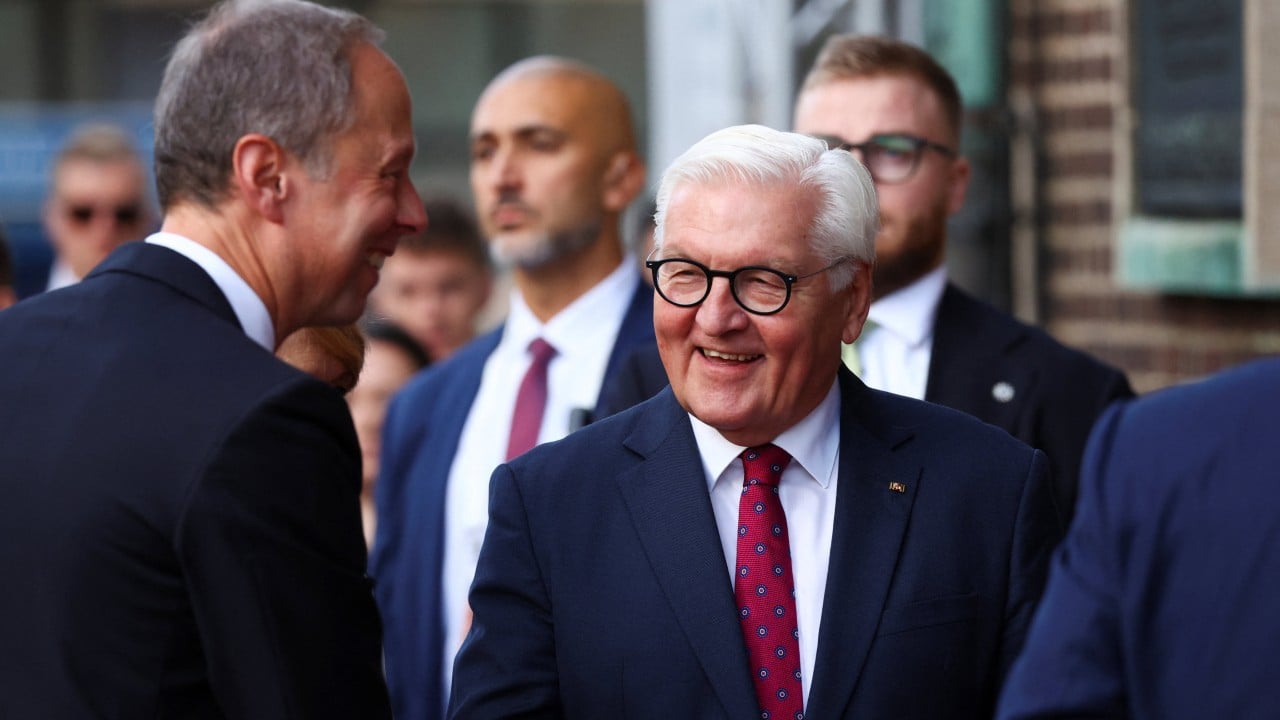
International statecraft relies on the management of structural imbalances. When German Federal President Frank-Walter Steinmeier undertook his state visit to Beijing, the diplomatic engagement served a specific economic function: managing the friction of a severely distorted bilateral trade corridor. Diplomatic communiqués frequently mask these structural friction points behind pleasantries regarding cultural exchange and multilateral stability. Beneath the diplomatic veneer, however, lies an unyielding economic reality driven by asymmetric market access, structural overcapacity, and the narrowing margin for error in industrial export-dependent economies.
Deconstructing the mechanics of this trade relationship requires moving past conventional diplomatic commentary to examine the core components governing Berlin's evolving posture toward Beijing.
The Asymmetry Matrix: Trade Imbalances and Structural Dependencies
The primary friction point in contemporary Sino-German economic relations is not ideological; it is transactional. Germany's traditional export model relied heavily on an industrial feedback loop: exporting high-end capital goods, machinery, and automotive products to absorb China’s manufacturing demand. This mechanism has inverted.
China has matured from an assembly importer into a dominant domestic producer across critical technology vectors, including electric vehicles, renewable energy infrastructure, and advanced manufacturing inputs. Consequently, the bilateral trade ledger reflects an entrenched structural surplus favoring Beijing.
When examining this surplus through an analytical lens, three structural mechanics emerge:
- The Capital Goods Displacement Vector: German industrial machinery exports face diminishing marginal utility in China as domestic industrial capabilities catch up or surpass imported alternatives.
- The Symmetrical Market Access Disparity: European capital operates under strict domestic and international compliance frameworks, while inbound Chinese industrial output enters the single market backed by systemic state-directed financing and production scale economies.
- The De-risking Versus Decoupling Boundary: Berlin rejects total decoupling—a scenario that would catastrophic-ally compress Germany's export-reliant GDP. Instead, it seeks targeted de-risking, an operational framework designed to isolate critical supply chains without severing profitable transactional ties.
This creates a severe policy bottleneck. German industrial heavyweights, particularly within the automotive sector, maintain deep capital investments inside mainland manufacturing hubs, creating a powerful domestic lobbying bloc that opposes aggressive protectionism. Simultaneously, federal policymakers face mounting pressure from Brussels and domestic constituents to prevent the hollowed-out de-industrialization of Europe's manufacturing core.
The Cost Function of Strategic Hedging
State visits conducted during periods of macroeconomic strain operate as diplomatic insurance policies. For Germany, the cost function of maintaining the status quo involves accepting a gradual erosion of its industrial manufacturing advantage. For China, the cost of an unyielding trade stance risks accelerating punitive EU-wide tariff barriers and regulatory market-access exclusions.
Steinmeier’s overtures in Beijing mapped out a precise diplomatic boundary: Europe welcomes economic development, but rejects unilateral market benefits that distort domestic competition. The mathematical reality of this stance is clear. Germany cannot afford a full-scale trade war due to its acute vulnerability to external supply shocks and energy cost volatility. At the same time, it cannot absorb unlimited import pressure without triggering structural unemployment in its Mittelstand manufacturing sectors.
Navigating this corridor requires a calculated shift from open-market laissez-faire policies toward managed trade parameters. The deployment of anti-subsidy investigations by the European Commission, coupled with high-level political visits, acts as a signaling mechanism. It establishes the baseline cost for market distortion, forcing bilateral negotiations away from open confrontation and toward managed quota systems or localized production thresholds.
The Strategic Play
To alter the trajectory of this trade imbalance, Berlin must operationalize a coherent industrial defense strategy rather than relying on reactive diplomatic appeals.
The immediate tactical priority involves enforcing strict reciprocity enforcement mechanisms across digital infrastructure, green technology subsidies, and public procurement tenders. Rather than relying on broad-based protectionist tariffs that invite retaliatory friction against German automotive exporters, policy execution should focus on localized price floors and mandatory technology-transfer guardrails.
Concurrently, European capital must accelerate the redirection of redundant supply chains toward alternative emerging markets in Southeast Asia and Latin America to diversify export exposure. The objective is not to isolate the Chinese market, but to rebalance the bargaining leverage equation, transforming political dialogue from an exercise in damage control into a position of calculated industrial strength.