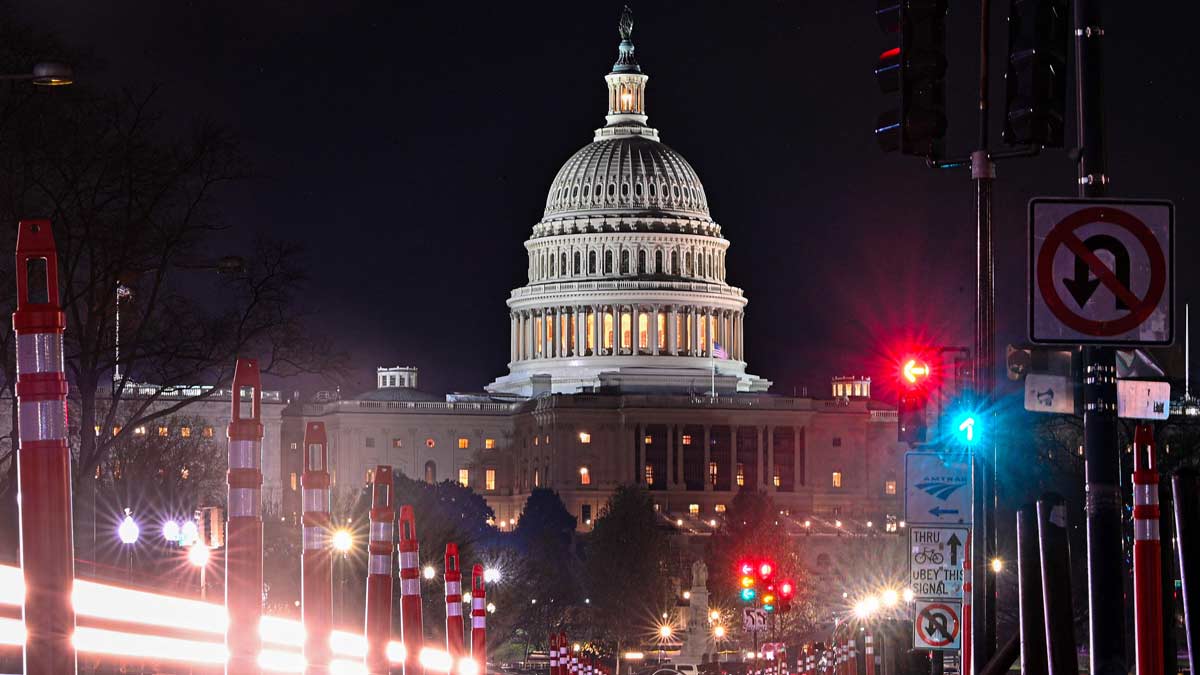
The intersection of geoeconomic policy and commodity trade flows is governed by distinct cost functions rather than political rhetoric. Recent legislative maneuvers in the United States, specifically targeting secondary buyers of Russian hydrocarbons through authorization of punitive tariffs scaling up to one hundred percent, force a rigorous examination of how sovereign trade structures adapt to coercive pressure. Deconstructing this mechanism requires analyzing the systemic incentives driving major energy importers, the operational limits of secondary sanctions, and the macroeconomic feedback loops that determine whether such tariff threats function as effective deterrents or empty leverage.
At the core of this legislative framework lies an attempt to weaponize import dependency. When a state introduces statutory authority to penalize external purchasers of Russian crude or natural gas, it creates a binary cost function for the target nation. The objective is to degrade Moscow's energy revenues by shrinking its addressable market, forcing a choice between access to Western consumer markets or continued procurement of discounted commodities. However, this model ignores the structural realities of global energy markets. Crude oil is a fungible asset. When discounted Urals crude is redirected away from traditional buyers, global supply curves shift, creating a liquidity pool that non-compliant economies can absorb at a structural advantage.
The mechanism relies on three distinct variables: the elasticity of domestic energy demand in importing nations, the availability of alternative supply vectors, and the administrative friction of enforcement. For an economy like India, heavily reliant on diversified energy inputs to sustain industrial growth and manage domestic price stability, crude acquisition is optimized for cost efficiency. The price ceiling imposed by Western coalitions on Russian petroleum opened a wide discount spread. Refiners capturing this spread pass marginal cost savings down the domestic supply chain, creating a macroeconomic buffer against global inflationary shocks. Consequently, any legislative threat that imposes a prohibitive tariff penalty must outweigh the cumulative financial gain of purchasing discounted energy.
When the United States legislative branch advances mechanisms permitting up to one hundred percent tariffs on major importers of Russian hydrocarbons, the immediate analytical error is assuming uniform compliance. In practice, the implementation of such authorities introduces severe diplomatic friction and retaliatory risk. Trade diplomacy operates on reciprocity. If a primary economy imposes tariff penalties on a strategic partner for purchasing third-party commodities, the target nation faces a localized optimization problem: absorb the tariff cost, diversify sourcing to higher-cost Middle Eastern or Atlantic basin suppliers, or contest the legality and enforcement of the extraterritorial mandate within multilateral frameworks.
The practical outcome of such legislative tools rarely matches their statutory maximalism. Executive waiver provisions, administrative discretion, and geopolitical counter-weights frequently blunt the edge of secondary sanctions. For instance, the strategic necessity of maintaining bilateral security and economic alignments often forces the executive branch to exercise restraint, preferring targeted diplomacy over broad trade warfare that could fragment alliances. The legislative passage serves primarily as a signaling device—a mechanism to shift bargaining leverage during trade negotiations rather than an immutable tax schedule destined for immediate execution.
To evaluate the long-term viability of this strategy, one must examine the shifting architecture of global trade settlement systems. Coercive financial measures accelerate the adoption of alternative bilateral payment mechanisms, non-dollar currency settlements, and localized insurance networks. When major trading nations face continuous exposure to unilateral tariff risks, their long-term rational choice is to insulate their supply chains by institutionalizing parallel financial pathways. This structural decoupling diminishes the future efficacy of primary and secondary sanctions alike, eroding the unipolar dominance of the enforcing state's financial infrastructure.
Strategic navigation of this environment demands continuous monitoring of administrative enforcement thresholds rather than headline legislative text. Policymakers and commercial entities must model their exposure not on statutory maximums, but on the probability distribution of enforcement actions versus diplomatic exemptions. Risk mitigation relies on maintaining diversified procurement channels that can absorb sudden regulatory shifts without triggering structural supply shocks.