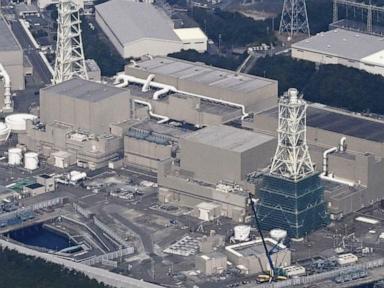
The recent high-profile management resignations at Chubu Electric Power following the manipulation of seismic safety data for the Hamaoka nuclear facility represent more than an isolated corporate governance failure. They expose a systemic vulnerability at the intersection of regulatory compliance, corporate self-preservation, and national energy strategy. When an operator alters baseline metrics to clear regulatory hurdles, the failure is rarely born of individual malice alone. It is the predictable output of an institutional design where operational survival relies on meeting pre-determined safety thresholds under intense financial and political strain.
Deconstructing this breakdown requires analyzing the operational incentives that govern Japan's nuclear utilities, the mechanics of seismic stress testing, and the systemic feedback loops that insulate insular technical divisions from external oversight.
The Cost Function of Regulatory Compliance
To understand why a utility would falsify seismic risk metrics, one must evaluate the economic equation governing idled nuclear capacity. Following the 2011 Fukushima disaster, Japan's commercial nuclear fleet faced an unprecedented regulatory bottleneck. Under the post-Fukushima oversight framework enforced by the Nuclear Regulation Authority (NRA), operators must satisfy rigorous backfit requirements, particularly regarding standard ground motion (measured in gals) and tsunami vulnerability.
For an electric utility, an offline reactor represents a dual financial penalty:
- Continued capital expenditure on safety enhancements, maintenance, and prolonged regulatory compliance reviews.
- Opportunity cost of lost baseload generation, forcing reliance on expensive fossil fuel imports to satisfy regional power grids.
In the case of Chubu Electric's Hamaoka plant, located directly within the anticipated impact zone of the high-risk Nankai Trough, the engineering standards required for approval are exceptionally stringent. When baseline geological assessments indicate that projected seismic activity exceeds structural design thresholds, management faces a binary choice: write down massive capital investments by abandoning the site or compress the risk margins to match regulatory expectations.
The falsification of standard ground motion data is the pathological manifestation of this financial pressure. It occurs when organizational key performance indicators prioritize project velocity over analytical fidelity.
The Pathology of Insular Technical Silos
An investigation by an independent third-party panel into Chubu Electric revealed a corporate culture defined by extreme departmental insulation. In highly specialized technical sectors like nuclear engineering, operational units operate as epistemic communities. They develop internal norms, specialized vocabularies, and a defensive posture against external interference.
This structural isolation creates three distinct organizational failure modes:
- The Normalization of Deviance: Over time, operational shortcuts or adjustments to numerical models cease to be viewed as falsifications. Within insular engineering teams, altering data to fit a required safety envelope is rationalized as a necessary workaround to achieve a broader, strategically vital corporate objective.
- Asymmetric Information Flow: Senior executives are structurally separated from raw technical data. They rely on middle management to distill complex geological assessments into executive summaries. If middle management is incentivized to deliver "acceptable" outcomes, downside risks are filtered out before reaching the board.
- Ineffective Internal Whistleblowing: While internal reporting channels often exist on paper, they fail when the organizational culture treats dissent as disloyalty. At Chubu Electric, internal warnings regarding seismic data manipulation were sidelined because the institutional cost of halting the regulatory application outweighed the perceived probability of detection.
Systemic Vulnerabilities in Third-Party Oversight
The discovery of data tampering via an external whistleblower, rather than through internal audit mechanisms, highlights the limitations of compliance verification models. Regulatory regimes assume that operators act in good faith when submitting foundational data. Because regulatory bodies cannot independently re-survey every square meter of bedrock or audit every raw data stream in real time, they rely on certified models and utility-submitted documentation.
This trust-based verification model creates an inherent vulnerability to strategic manipulation. When penalties for non-compliance are diffuse—spread across corporate reputation and stock price—while the rewards of securing a reactor restart are immediate and concentrated, the incentive structure favors strategic obfuscation. The intervention of an independent investigative panel and the subsequent business improvement orders issued by the Ministry of Economy, Trade and Industry (METI) act as retroactive corrections rather than preventive controls.
Strategic Implications for Energy Infrastructure Management
The fallout from Hamaoka forces a re-evaluation of how critical infrastructure operators manage risk, compliance, and governance. Executive resignations and public apologies alter the immediate leadership tier, but they do not restructure the underlying economic and operational pressures that drove the misconduct.
To prevent structural recurrence across the broader energy sector, governance models must be re-engineered around specific operational controls:
- Decoupling Compliance from Operational Incentives: Safety divisions and regulatory compliance officers must report directly to external oversight committees or independent board members, entirely separate from the profit-and-loss metrics of generation and restart divisions.
- Mandatory Open-Data Protocols: Regulatory submissions concerning high-consequence infrastructure must mandate the inclusion of raw, unprocessed sensor telemetry and geological data, accessible to independent academic and international verification bodies prior to safety review completion.
- Institutionalized Red Teaming: Nuclear operators should institutionalize adversarial engineering reviews—routinely employing independent third-party teams whose explicit mandate is to attempt to invalidate baseline safety assumptions before applications reach national regulators.
Restoring analytical integrity to nuclear safety reviews requires treating data falsification not merely as an ethical lapse by individuals, but as an engineering failure of the institutional feedback loops designed to prevent it. Until the systemic cost of administrative delay is lower than the cost of data integrity compromises, the structural incentive for manipulation will persist.