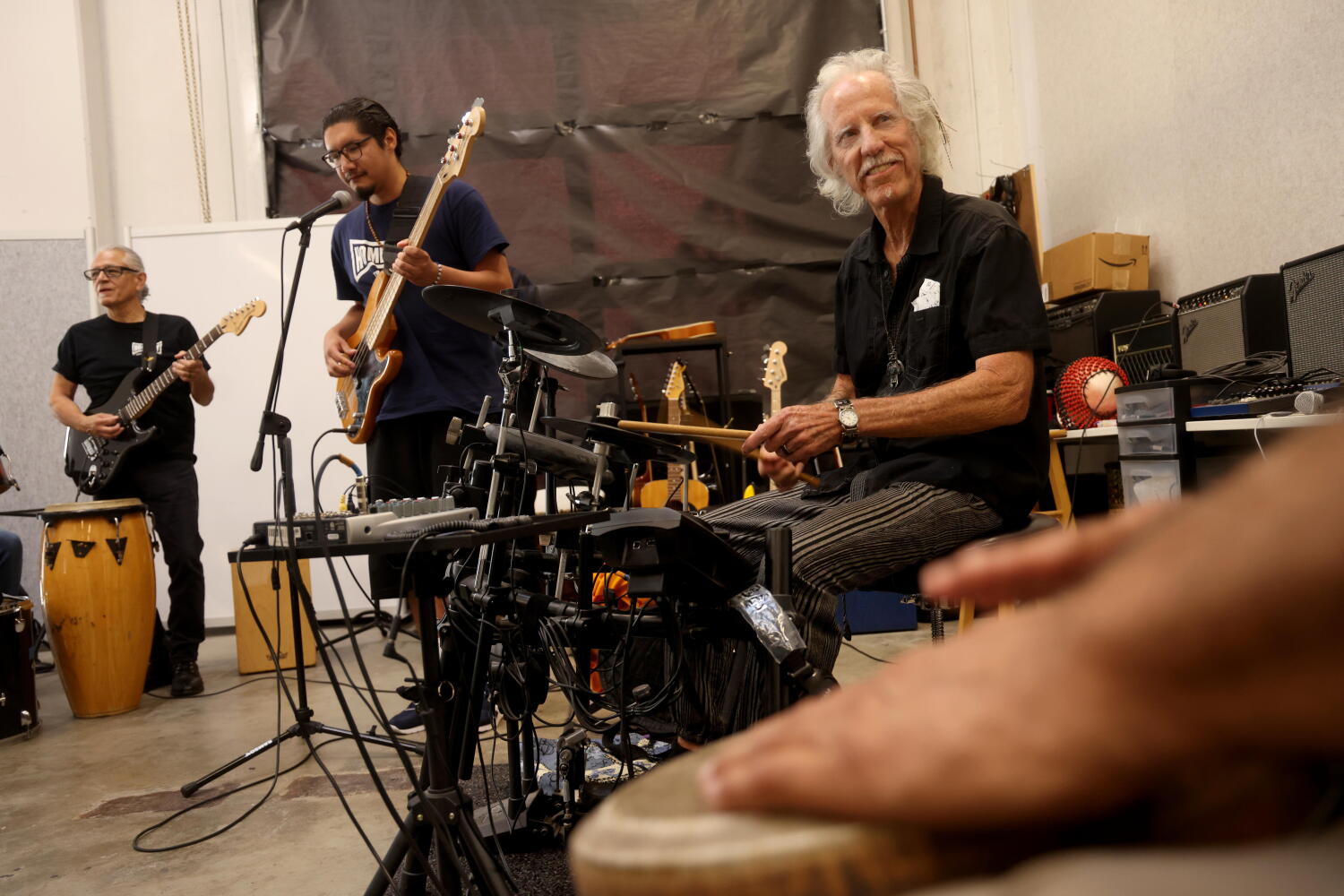
The mechanics of institutional rehabilitation rely less on inspirational rhetoric and more on the structural replacement of environmental cues. When cultural figures engage with organizations like Homeboy Industries, public commentary routinely frames the interaction through the lens of casual charity or superficial philanthropy. This perspective misdiagnoses the underlying economic and operational framework of intervention models designed to reduce recidivism. Evaluating how cultural capital, such as the musical legacy of the Doors drummer John Densmore, interfaces with non-profit rehabilitation centers requires stripping away sentimentality to examine resource allocation, community integration, and behavioral modification loops.
At the core of effective intervention models lies a fundamental economic problem: the high friction cost of re-entering the formal labor market for individuals with histories of systemic marginalization, incarceration, or gang affiliation. Traditional employment vectors present structural barriers, including credential verification gaps, lack of stable transportation networks, and acute social stigmatization. Homeboy Industries addresses this market failure by establishing a controlled ecosystem that combines transitional employment with mental health services, legal support, and tattoo removal.
When external participants, including veteran artists and musicians, visit these centers, the immediate utility is not merely morale enhancement. Instead, cultural touchstones serve as social proof bridges. These interactions facilitate network expansion, connecting participants to broader professional ecosystems that remain otherwise inaccessible through standard local channels. The integration of high-status cultural figures alters the informational asymmetry between marginalized populations and mainstream industries, accelerating the validation process for the non-profit's workforce development pipeline.
To understand why traditional philanthropic approaches frequently fail, one must examine the cost function of conventional social programs. Most welfare-to-work initiatives rely on a linear transmission model: distribute training manuals, subsidize initial wages, and expect self-sustaining employment outcomes. This approach ignores localized friction coefficients, such as chronic trauma, peer-group pressure dynamics, and institutional distrust.
Successful structural rehabilitation implements a multi-tiered feedback loop that targets psychological stabilization alongside economic utility. The operational components divide cleanly into distinct functional units:
- Environmental stabilization, which neutralizes immediate physical and economic survival pressures through basic needs provisioning and subsidized wages.
- Cognitive reframing protocols, delivered via licensed mental health professionals who address complex post-traumatic stress disorders common in high-violence urban environments.
- Skill acquisition pipelines, functioning as transitional micro-enterprises that build baseline professional reliability, punctuality, and collaborative problem-solving capacities.
- Capital bridging, wherein external networks, advisory boards, and visiting professionals provide mentorship and direct pathways to external market sectors.
The interaction of these four components creates a compounding stabilization effect. If any single component is removed, the system's rate of failure increases exponentially because the remaining pillars cannot absorb the residual environmental stress. For example, providing job training without addressing acute trauma yields high attrition rates during initial workplace conflicts. Conversely, offering therapeutic interventions without economic integration leaves participants vulnerable to the same financial pressures that triggered initial systemic friction.
Analyzing the participation of legacy artists within this architecture reveals a distinct mechanism of engagement. Established cultural figures operate as high-leverage nodes. Their presence validates the institutional credibility of the non-profit to external donor networks while simultaneously offering participants a tangible link to creative agency. Creative expression functions as a cognitive processing tool, allowing individuals to externalize internalized stigma and reframe personal narratives from victimhood to agency.
Critics often dismiss these engagements as public relations exercises, failing to measure the secondary and tertiary effects on organizational sustainability. Donor acquisition costs drop significantly when high-profile individuals validate operational efficacy through direct observation. This reduction in fundraising friction translates directly into expanded capital reserves for core social services, lowering the marginal cost of rehabilitating each participant.
Scaling these models across different geographic markets requires recognizing the constraints of decentralized non-profit management. Replicating the Homeboy framework demands dense urban networks, sustained corporate partnerships, and a localized anchor institution willing to absorb the high initial capital expenditure of transitional enterprises like bakeries, silkscreening operations, and electronic recycling programs. Without these revenue-generating social enterprises, non-profits remain entirely dependent on volatile philanthropic cycles, rendering their intervention models vulnerable to macroeconomic downturns.
Future developments in social intervention engineering will depend on data-driven tracking of long-term economic mobility rather than short-term output metrics like hours of counseling completed or workshops attended. The transition from qualitative storytelling to rigorous longitudinal tracking allows organizations to isolate which specific programmatic inputs yield the highest reduction in 3-year and 5-year recidivism rates.
Implement institutional scaling by auditing local supply chains to identify which municipal and corporate procurement contracts can be redirected to transitional social enterprises, thereby guaranteeing baseline revenue stability independent of donor sentiment.