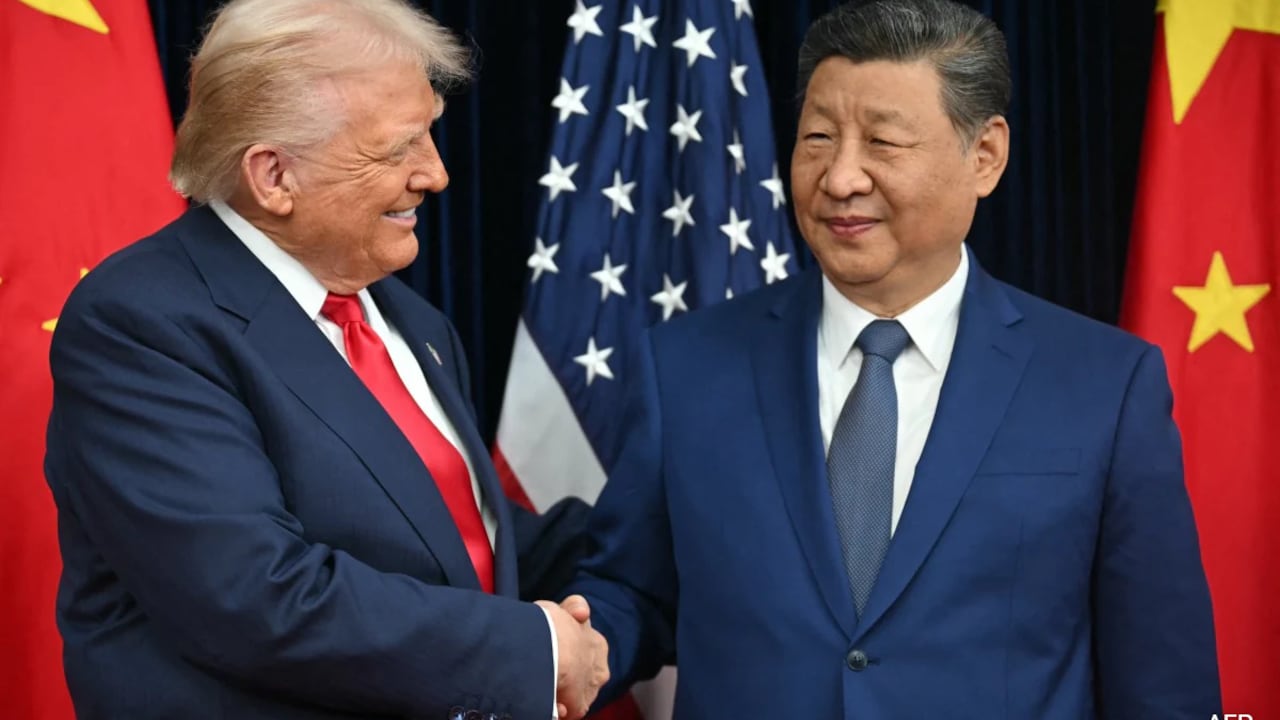
International relations between the United States and China operate under an immutable law of transactional gravity. The architecture of this bilateral framework is dictated not by ideological alignment, but by the continuous calculation of structural dependency, tariff cost functions, and asymmetric leverage. When examining the periodic softening of rhetoric and the scheduling of high-level summits between Washington and Beijing, analysts must abandon simplistic narratives of personal rapport and instead decode the underlying macroeconomic and geopolitical drivers that force both powers toward temporary detente.
The mechanics of this strategic recalibration rest on three distinct pillars: the necessity of export stability for Chinese domestic growth, the vulnerability of American agricultural and industrial supply chains to retaliatory friction, and the management of emerging technological domains such as artificial intelligence governance. Understanding how these variables interact requires moving past diplomatic theater and evaluating the hard economic constraints facing both administrations.
The Cost Function of Tariff Escalation
The primary driver behind any tactical softening of stances is the compounding cost function of bilateral trade restrictions. Tariffs operate as an economic tax paid primarily by domestic importers and consumers, yet they serve as a potent political signaling mechanism. When trade tensions escalate into a cycle of retaliatory measures, the marginal utility of each additional tariff diminishes while the collateral damage to specific domestic constituencies accelerates.
In the agricultural sector, for instance, export flows are highly sensitive to regulatory friction and retaliatory duties. Historical precedents demonstrate that when alternative global suppliers—such as South American grain exporters—are readily available, prolonged trade disputes permanently erode market share for American producers. Consequently, executive pressure mounts from export-dependent sectors to establish temporary truces, stabilizing commodity prices and securing purchasing commitments before structural market displacement occurs.
Conversely, Beijing faces its own internal economic imperatives. Slower domestic demand growth and structural shifts in manufacturing require predictable external trade channels. The establishment of bilateral communication channels, such as the U.S.-China Trade Council or Board of Trade mechanisms designed to negotiate specific reciprocal tariff adjustments, reflects a shared recognition that open-ended economic warfare imposes unacceptable friction on both macroeconomic engines.
Technological Governance and Strategic Chokepoints
Beyond physical commodities, the geopolitical competition has shifted toward high-technology value chains, most notably advanced computing hardware and artificial intelligence governance. The structural dynamic here is defined by asymmetric chokepoints. While the United States maintains dominance in foundational semiconductor design and advanced tool manufacturing, China controls critical segments of the rare earth mineral refining and processing sectors that feed global technology hardware production.
The pragmatic management of these dependencies explains why diplomatic engagements frequently yield targeted frameworks rather than comprehensive decoupling. For example, controlled market access policies for specific tiers of semiconductor products, balanced against regulatory guardrails, illustrate a calculated effort to manage national security risks without inducing total supply chain collapse. The creation of dialogue structures specifically aimed at addressing artificial intelligence risks demonstrates an institutional acknowledgment that certain systemic threats require bilateral risk-mitigation protocols, regardless of broader strategic rivalry.
Geopolitical Containment and the Taiwan Variable
While economic pragmatism dictates the terms of trade negotiations, security parameters remain anchored by hard red lines. The Taiwan question and regional maritime security in the Indo-Pacific represent non-negotiable territorial and strategic boundaries for Beijing. Washington, meanwhile, maintains a posture of strategic ambiguity designed to deter unilateral changes to the status quo while managing alliance networks across East Asia.
During high-level summits, discussions surrounding regional security are frequently compartmentalized away from economic negotiations. This separation is a deliberate tactical choice. By insulating trade and technological dialogue from geopolitical flashpoints, both administrations prevent localized security friction from triggering systemic economic decoupling. However, this compartmentalization is inherently fragile. If regional military or maritime incidents escalate, the political cost of maintaining commercial detente rises sharply, testing the resilience of bilateral communication channels.
The Strategic Outlook
The trajectory of U.S.-China relations is bound within a permanent cycle of friction, negotiation, tactical truce, and renewed competition. Neither total alignment nor total rupture is structurally viable. Future developments will depend heavily on the institutionalization of bilateral councils and their ability to enforce agreed-upon baseline commitments—such as reciprocal tariff packages and technology governance standards—before domestic political shifts disrupt the diplomatic equilibrium. Strategic observers must monitor the execution speed of these institutional mechanisms rather than the rhetorical tone of executive summaries.