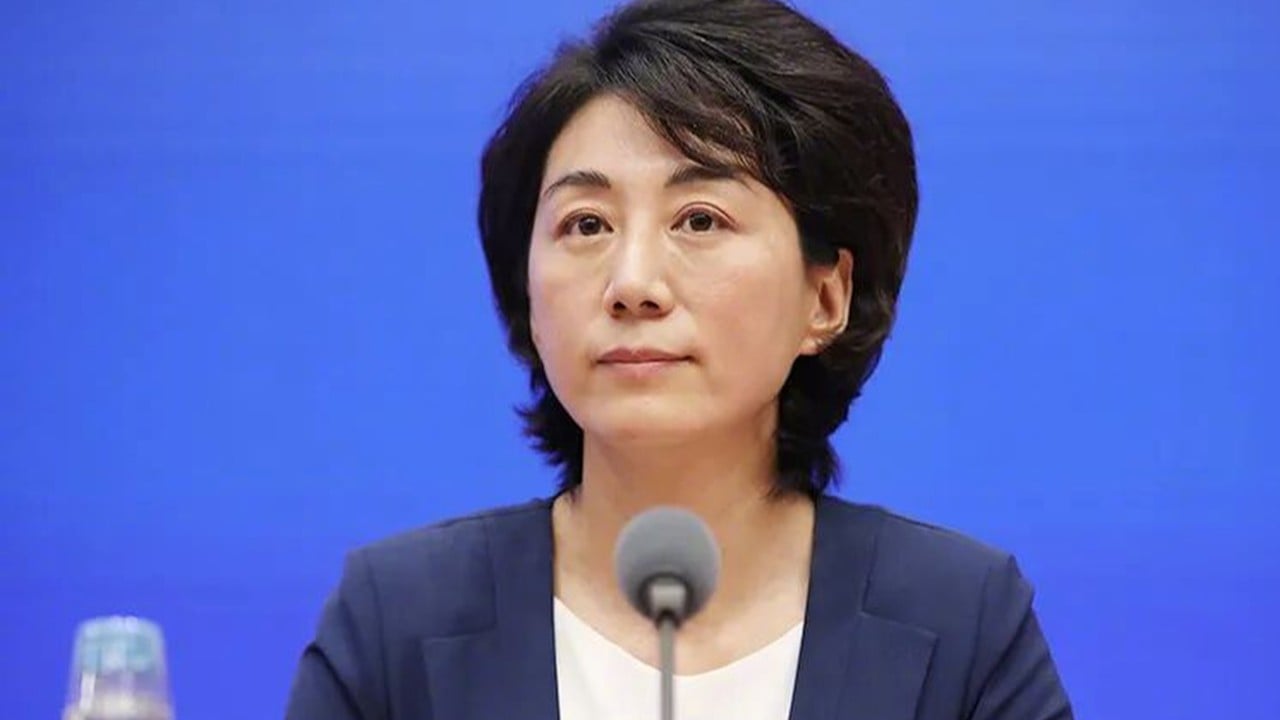
The departure of the United States from the World Health Organization created an immediate fiscal deficit that operational adjustments alone cannot absorb. When the primary assessed contributor withdraws, an international organization faces a dual collapse: the loss of liquid baseline funding and the erosion of technical standard-setting authority. Into this structural vacuum steps Beijing with the formal nomination of Song Li, former Director-General of Maternal and Child Health at China's National Health Commission, to succeed Tedros Adhanom Ghebreyesus.
This transition represents more than a leadership contest. It is a stress test for multilateral resource allocation under conditions of severe budgetary contraction. Analyzing the mechanics of this election requires mapping three distinct forces: the institutional cost function of the agency, the mechanics of alternative state financing, and the governance risk associated with centralized state nominations.
The Cost Function of a Shrunken Secretariat
The financial architecture of the World Health Organization relies on two distinct revenue streams: assessed contributions from member states, which fund the core administrative baseline, and voluntary contributions, which are typically earmarked for specific disease eradication programs by donor governments or philanthropic foundations.
When Washington completed its withdrawal, the organization lost its largest source of flexible funding. Earmarked voluntary funds cannot be reallocated to cover baseline administrative overhead, staff salaries, or normative standard-setting functions. Consequently, the agency executed deep workforce reductions and scaled back regional programs, including a significant contraction of the Pan American Health Organization budget.
The economic challenge for any incoming Director-General is not merely to restore the absolute top-line budget, but to restructure the organization's cost function to operate sustainably within a lower revenue equilibrium. An agency that contracts its permanent technical staff loses institutional memory, epidemiological surveillance capacity, and the speed required to coordinate cross-border outbreak responses.
The Bilateral Capital Injection Versus Multilateral Gaps
Beijing’s strategy to contest the leadership relies on positioning state-backed technical expertise alongside targeted financial pledges. China announced a multi-year funding commitment, yet macroeconomic reality dictates that bilateral or targeted multilateral pledges cannot fully replace the systematic predictability of large-scale assessed contributions.
The economic mismatch creates a vulnerability in the Geneva secretariat. When an organization depends on a narrow pool of major donors to stay solvent, its governance structure shifts from collective international oversight to transactional diplomacy.
Song Li’s administrative background in maternal and child health policy, combined with her involvement in domestic public health and international cooperation frameworks, presents a candidate profile focused on domestic capacity-building and primary care delivery. However, the operational challenge facing the next Director-General is structural insolvency, not clinical program design.
The Geopolitical Risk Matrix of Leadership Capture
The nomination of a senior Chinese health official to head a specialized United Nations agency occurs within a broader pattern of international institutional competition. While Chinese nationals currently head a minority of UN specialized bodies, the concentration of executive leadership from state-managed administrative systems introduces distinct governance tensions.
The primary risk factor is transparency friction during biological emergencies. Global health surveillance relies on immediate, frictionless data sharing across borders. When a member state exercises administrative control over domestic health data reporting, structural conflicts emerge between national sovereignty and global pathogen transparency.
The historical precedent of the COVID-19 pandemic and subsequent origin investigations established a persistent skepticism among traditional donor states regarding the independence of international health secretariats from national capitals. If the executive leadership of the agency is perceived as structurally aligned with a single major power, the remaining Western and aligned member states are likely to accelerate parallel funding mechanisms, bypassing Geneva entirely in favor of regional or decentralized health security pacts.
The Negotiation Bottleneck of the Pandemic Agreement
The incoming Director-General will inherit the finalization of the WHO Pandemic Agreement, specifically the contested Pathogen Access and Benefit Sharing annex. This framework dictates the economic terms under which developing and developed nations exchange biological samples and proprietary countermeasures, including vaccines and diagnostics.
The economic stakes for pharmaceutical manufacturers and national health ministries are absolute. If the PABS annex enforces mandatory technology transfer or open-source genetic sequence sharing without adequate commercial protections, private sector research and development investment in countermeasures may contract. Conversely, without guaranteed equitable access, low-income member states will refuse to share pathogen samples during early outbreak phases. Navigating this zero-sum negotiation requires a leader capable of enforcing compromise between sovereign pharmaceutical hubs and resource-constrained states.
Member states must evaluate candidates based on their capacity to execute three institutional imperatives: rationalize the agency’s operational footprint to match permanent revenue realities, establish enforceable independence safeguards that isolate technical reporting from political interference, and broker a binding pathogen-sharing framework that preserves incentives for pharmaceutical innovation while guaranteeing emergency distribution. The election outcome will determine whether the agency stabilizes as a lean, technically rigorous coordinator or fragments into competing regional blocs.