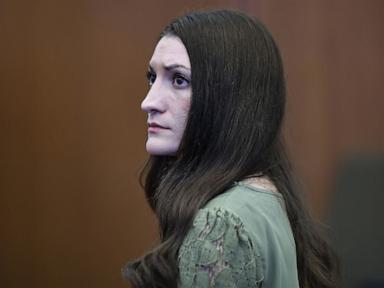
High-stakes criminal litigation involving psychiatric defenses exposes a fundamental vulnerability in the standard twelve-person consensus model. When a trial centers on acute medical pathology rather than physical execution of a crime, the requirement for absolute unanimity transforms the deliberation room into an arena of asymmetric friction. The recent mistrial in the prosecution of Lindsay Clancy, where an 11-1 split dissolved into an unresolvable deadlock, illustrates the breakdown of the jury mechanism when subjective psychiatric thresholds collide with rigid legal definitions of criminal responsibility.
The core mechanics of the trial rested on a stark dichotomy. The physical actions were undisputed: the defendant had strangled her three children. The entire evidentiary weight of a five-week proceeding therefore compressed into a single binary evaluation regarding cognitive state at the precise time of the acts. Under Massachusetts law, an insanity defense requires proof that mental disease or defect robbed the individual of the substantial capacity either to appreciate the wrongfulness of their conduct or to conform their conduct to the requirements of the law.
This establishes a high-dimensional cognitive equation for jurors. They are asked to reconstruct the internal mental state of an individual experiencing a psychiatric emergency—in this case, severe postpartum psychosis—months after the event, relying on medical testimony, digital footprints, and journal entries.
Public statements from the jury foreperson and other panel members following the mistrial revealed a profound procedural fracture inside the deliberation room. According to accounts provided to media outlets, eleven jurors concluded that the psychiatric evidence met the threshold for an insanity acquittal, noting that markers of deep affection for the children demonstrated a complete cognitive collapse rather than calculated malice. Yet, a single holdout resisted the consensus.
The friction point in such stalemates is rarely a simple disagreement over facts; it is a divergence in risk allocation and cognitive processing styles. Jurors evaluate complex medical testimony through their own intuitive models of human behavior. When an expert witness testifies about the neurobiological impacts of extreme sleep deprivation and hormonal collapse on executive function, an analytical juror translates that data into a probability matrix of behavioral control. A resistant juror, conversely, often anchors entirely on physical premeditation markers—such as sending a spouse out of the house for medication—treating those actions as immutable proof of intent, while discounting the compounding pathology of a psychiatric breakdown.
This dynamic exposes the operational flaw in the requirement for unanimous verdicts in complex medical cases. Unanimity assumes that all jurors possess a uniform capacity to weigh probabilistic scientific evidence against strict statutory definitions. When one participant rejects the foundational validity of a psychiatric defense irrespective of the clinical data presented, the deliberation process shifts from persuasion to exhaustion.
The institutional cost of this structural vulnerability is high. A seven-week trial involving dozens of expert witnesses and hundreds of evidentiary exhibits collapses into a null result, forcing the state, the legal teams, and the surviving family members to absorb the financial and emotional overhead of a potential retrial. More importantly, it highlights a training deficit in how evidentiary instructions regarding reasonable doubt are delivered and interpreted. When a juror can explicitly acknowledge harboring doubt yet refuse to alter their voting posture—as members of the Clancy jury alleged occurred—the system demonstrates that it lacks an internal mechanism to filter out ideological obstinacy from legitimate evidentiary debate.
To eliminate this bottleneck in future litigation of this magnitude, legal strategists and judicial administrators must rethink jury orientation protocols. Standard instructions on reasonable doubt assume a baseline of economic and psychological flexibility among jurors that may not hold when dealing with profound trauma and severe mental illness. Future proceedings of this scale require structural safeguards that test for absolute rigidity during the voir dire phase, specifically identifying jurors incapable of processing medical defenses that counter intuitive moral frameworks. The alternative is a recurring vulnerability to single-point-of-failure deadlocks whenever science and statute intersect in the courtroom.


