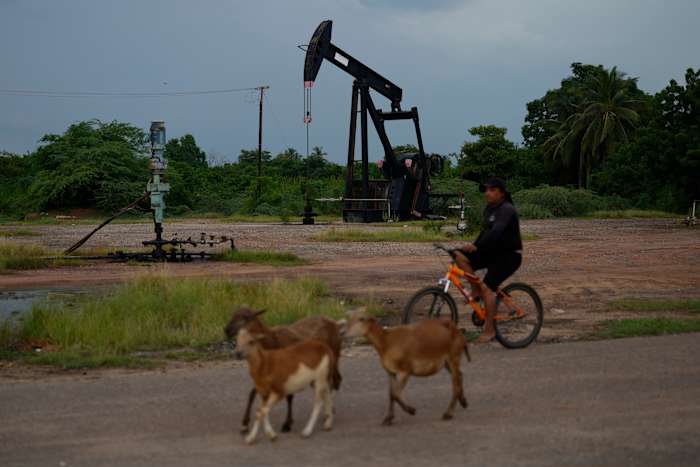
Capital redeployment into mature hydrocarbon infrastructure produces immediate friction between macroeconomic policy announcements and localized operational capacity. When international energy frameworks change, heavy crude hubs such as western Zulia and the Orinoco Belt do not respond with instantaneous output expansion. Instead, production reactivation follows a predictable bottleneck curve dictated by asset degradation, labor scarcity, and logistical choke points. Understanding how renewed operations translate into local economic reality requires examining the underlying operational mechanics rather than headline agreements.
The Infrastructure Degradation Function
Decades of underinvestment, deferred maintenance, and brain drain have left upstream and midstream assets in a state of advanced decay. Restarting fields like Boscán or expanding heavy crude extraction requires more than regulatory clearance or political consensus.
- Subsurface Integrity: Pressure maintenance in mature reservoirs degrades when secondary recovery mechanisms, such as gas or water injection, fail. Re-pressurizing a declining reservoir demands precise engineering and stable power grids, both of which suffer from chronic local deficits.
- Surface Facilities: Upgraders, pipelines, storage tanks, and separation batteries exhibit high corrosion rates. Facilities left idle or operating below capacity suffer from tube fouling, valve failure, and electrical obsolescence. Before commercial flows resume, capital expenditure must target safety and integrity remediation rather than volume growth.
- Diluent Logistics: Extra-heavy crude requires continuous diluent supply—such as naphtha or light sweet crude—to lower viscosity for pipeline transport. Local pipeline networks lack dedicated metering and segregation, creating contamination risks that compromise refinery feedstock downstream.
The Local Economic Transmission Mechanism
Communities adjacent to oil hubs experience the revival of operations through a highly compressed economic funnel. The transmission from macro capital inflows to local purchasing power operates through three distinct vectors.
First, employment absorption is constrained by skill specialization. While low-skilled construction and maintenance jobs materialize quickly during site rehabilitation, technical positions—such as reservoir engineers, instrument technicians, and safety inspectors—frequently face severe talent deficits due to skilled migration. Consequently, local payroll expansion remains muted compared to capital expenditure totals.
Second, municipal service capacity buckles under sudden industrial reactivation. Water treatment facilities, local electrical grids, and waste management systems shared between industrial operators and residential sectors experience immediate strain. When industrial water demand spikes or heavy transport fleets congest local road networks, civilian infrastructure degrades further, fueling resident skepticism toward foreign or state-led production deals.
Third, local supply chain integration is limited by procurement standards. International operators and state-run joint ventures maintain rigorous compliance, safety, and quality assurance thresholds. Local vendors often lack the working capital, certifications, or equipment standards required to qualify as tier-one suppliers. This creates an economic enclave effect where capital enters the region but circulates primarily through external corporate networks, leaving localized monetary velocity low.
Capital Allocation Realities and Risk Mitigation
Operating in post-sanction or transitional regulatory environments forces multinational corporations to adopt strict risk-adjusted capital allocation strategies. Cash recovery mechanisms take precedence over long-term reserve replacement. Because historical expropriation risks and debt claims remain legally active, asset protection requires ring-fencing operations and maintaining lean, flexible footprints.
Foreign operators minimize physical asset ownership on the ground, relying instead on service contracts and joint-venture structures where state entities retain majority title. This structure limits balance-sheet exposure but constrains the speed of capital deployment. Without full autonomy over procurement and operational scheduling, projects face administrative friction that extends project timelines by quarters, if not years.
Strategic Forecast for Regional Assets
The resumption of operations in historic oil hubs will yield incremental volume gains rather than an immediate supply shock. Output trajectories will mirror a logarithmic growth curve, characterized by sharp initial cleaning and safety checks, followed by a protracted plateau as subsurface constraints manifest.
Local populations will continue to experience heightened volatility. Price inflation for local goods, driven by an influx of expatriate and corporate spending, will outpace wage growth for non-oil municipal workers. Sustained economic stabilization depends entirely on whether capital flows transition from short-term extraction maintenance to foundational infrastructure renewal that serves both industrial and civic demands.