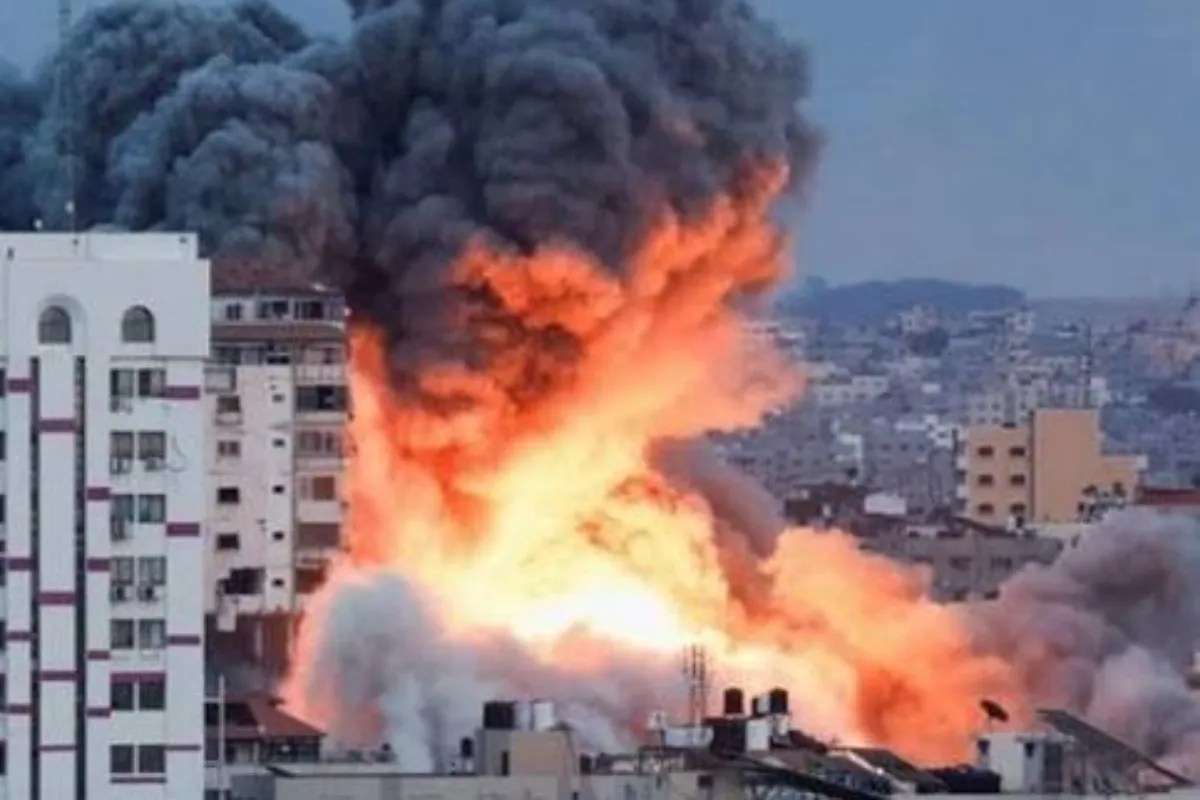
Modern asymmetric urban warfare relies on decentralized cellular networks designed to absorb leadership losses without collapsing. When tactical updates announce the targeted elimination of a regional military commander—such as the reported strike on the Jabalia battalion leadership—the analytical value lies not in the isolated casualty statistic, but in measuring the operational friction induced within the command-and-control hierarchy. Evaluating these developments requires examining how institutional attrition alters organizational behavior under localized siege conditions.
The Operational Decay Function of Decentralized Militias
Traditional military theory treats battalion-level commanders as operational linchpins. In conventional forces, the elimination of a commander breaks the chain of command until a formal succession protocol restores structural integrity. In asymmetric settings, organizations employ modular redundancy. When a primary commander is neutralized, doctrine dictates an immediate downward delegation of authority to lower-tier officers.
However, this redundancy incurs a hidden systemic cost. Junior replacements rarely possess the institutional memory, tactical coordination skills, or informal authority of their predecessors. The organizational decay function operates across three distinct vectors:
- Communication Latency: As trusted leadership nodes are removed, secure channels must either be re-established or bypassed, increasing reliance on vulnerable electronic signatures.
- Tactical Cohesion: Decentralization prevents total collapse, but it simultaneously degrades synchronized multi-unit maneuvers, reducing complex offensive operations to isolated defensive skirmishes.
- Resource Allocation Friction: Logistics management relies on established distribution networks. New leaders face acute friction points in redistributing munitions, medical provisions, and fortification materials across subterranean and urban sectors.
Strategic Objectives Versus Tactical Attrition
Military campaigns driven by targeted high-value individual elimination operate on the premise of cumulative degradation. Each operational strike forces structural adaptation. For the attacking force, the strategic objective is to outpace the adversary's ability to regenerate command competence.
Yet, this dynamic creates an analytical paradox. The continuous elimination of localized commanders forces structural mutation within the target organization. As intermediate leadership layers dissolve, operational control fragments into hyper-local cells operating with near-total autonomy. While this reduces the adversary's capability to execute complex, synchronized operations, it simultaneously complicates counter-insurgency intelligence operations. Fragmented networks generate fewer predictable traffic patterns, rendering broad surveillance grids less effective.
Assessing the Limits of Command Decapitation
History demonstrates that leadership decapitation rarely achieves strategic victory in the absence of concurrent territorial control and population security initiatives. Removing a battalion commander disrupts immediate tactical readiness, but it triggers immediate adaptive responses.
The primary limitation of relying on tactical high-value targeting is the elasticity of the adversary's recruitment pool. In densely populated urban theaters subject to structural devastation, ideological and survival incentives often accelerate the replacement cycle. Consequently, quantitative metrics tracking individual commander eliminations fail to correlate directly with long-term strategic containment unless paired with comprehensive denial of movement and logistical isolation.
Sustain the operational pressure by shifting the analytical focus from individual kinetic events to the systemic tracking of logistical choke points and communication network degradation across northern Gaza sectors.