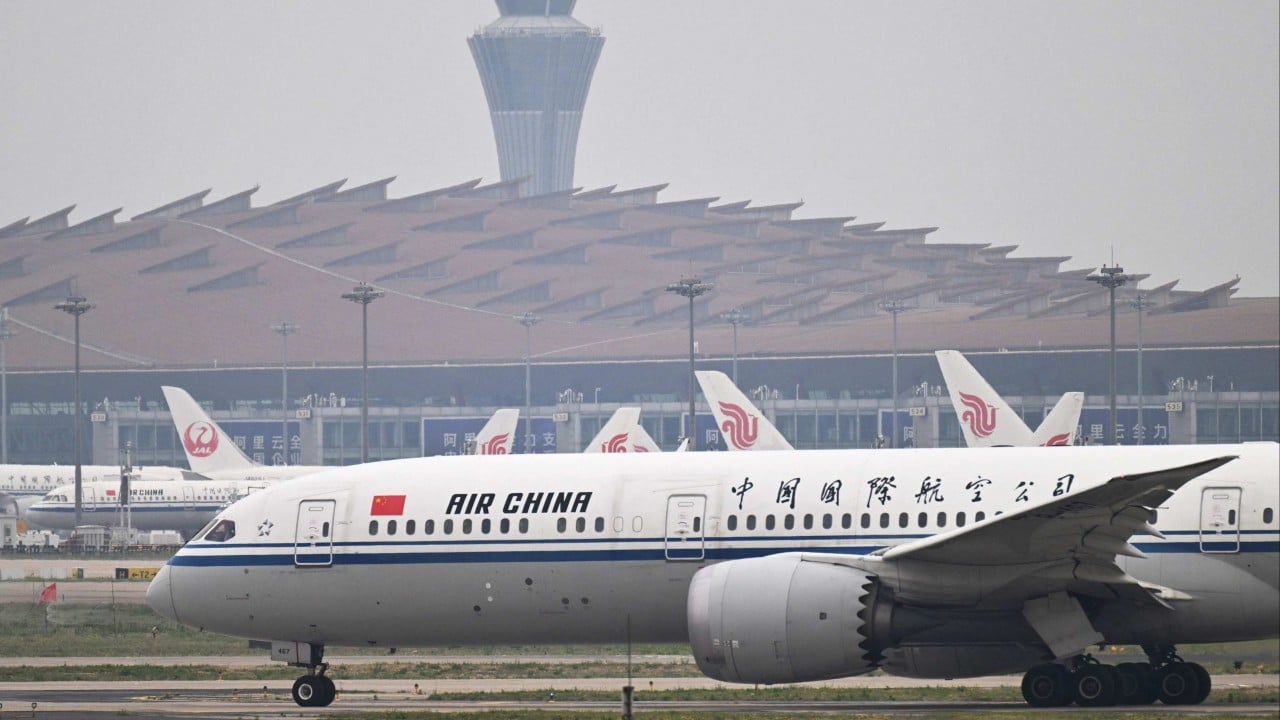
Geopolitical shocks to aviation networks expose the underlying fragility of centralized global transit corridors. When regional conflict destabilizes airspace, the operational impact ripples outward, transforming routine long-haul travel into a high-friction financial and logistical liability. The escalation of hostilities in the Middle East serves as a textbook stress test for international mobility, specifically dismantling the traditional routing assumptions relied upon by outbound travelers originating from Hong Kong.
For decades, the economic and operational blueprint for journeys between East Asia and Europe relied on the Gulf corridor. Mega-hub airports in Dubai, Doha, and Abu Dhabi functioned as the default gravitational centers for long-haul traffic. This architecture optimized fuel burn, maximized carrier yields, and provided predictable connections.
The structural integrity of this Gulf-centric model depends entirely on continuous, uninhibited airspace access. When regional warfare introduces kinetic risk, insurance premiums spike, flight paths are forced into lengthy detours, and direct operating costs surge. Carriers respond by imposing steep fuel surcharges and contracting capacity. For the end consumer in Hong Kong, this translates directly to a bifurcated market: long-haul airfares via traditional itineraries have effectively doubled, while routes requiring transit through compromised airspace face high rates of cancellation.
Under these conditions, travelers encounter a severe cost function penalty. The traditional optimization vector—minimizing total transit time through a single mid-route pivot—is superseded by risk minimization.
The Mechanics of Geographic Arbitrage
When primary transit lanes experience systemic failure, consumer behavior shifts toward geographic arbitrage. In the context of Hong Kong outbound travel, this manifests as a two-pronged structural adaptation: substitution to regional domestic assets via the Chinese mainland, and the utilization of alternative long-haul corridors that bypass the Middle East entirely.
The domestic and regional substitution model leverages mainland China's hyper-dense high-speed rail network. Operating completely free of aviation fuel surcharges and insulated from jet fuel price volatility, high-speed rail and regional coach networks offer a predictable cost structure. Data from local operators indicates that regional mainland tours and high-speed rail bookings experienced double-digit growth, absorbing demand that would have otherwise leaked into international long-haul markets.
This behavior highlights a substitution elasticity driven by risk aversion rather than pure price sensitivity. When safety concerns invalidate a category of travel, consumers do not necessarily abandon leisure spending; instead, they reallocate capital toward lower-risk geographic sectors. Domestic rail corridors within the mainland provide a high-capacity sink for displaced disposable income.
The Alternative Aviation Calculus
For travelers committed to reaching European markets, avoiding the Middle East bottleneck requires navigating a distinct set of operational trade-offs. The alternatives present clear structural constraints:
- Direct routing via non-stop carrier services commands severe pricing power premiums, pricing out marginal leisure segments.
- Extended detours through alternate Asian or northern transit nodes inflate total travel time, degrading the utility of short-duration holiday windows.
- Complete cancellation of long-haul itineraries triggers capital reallocation toward intra-Asia destinations such as Japan and South Korea.
The economic burden of these alternatives falls heavily on tour operators and legacy carriers reliant on hub-and-spoke models through the Gulf. Agencies packaging Europe itineraries face catastrophic inventory write-offs when over 50 percent of structured group bookings are canceled or rendered economically unviable due to airspace avoidance mandates.
Systemic Vulnerabilities in Long-Haul Logistics
The crisis reveals a deeper systemic vulnerability in modern international tourism economics: the lack of modular redundancy. Global route planning has historically favored efficiency over resilience. When a primary chokepoint like the Middle Eastern airspace corridor experiences systemic failure, the secondary and tertiary networks lack the immediate capacity to absorb the displaced volume without severe price inflation.
Airlines cannot instantly redeploy widebody fleets to bypass southern routes without incurring massive stage-length penalties and crew-scheduling friction. Consequently, capacity contracts, and the resulting supply scarcity drives ticket pricing upward independently of baseline inflation.
This dynamic establishes a permanent baseline shift for travel risk management. Corporate travel managers and high-end leisure planners can no longer treat transit hubs as static utility providers. Geographic routing must now incorporate real-time geopolitical risk scoring, factoring in the probability of sudden airspace closures and the subsequent cascading effects on ticket re-issuance and delay liabilities.
Strategic Asset Allocation for Outbound Mobility
To mitigate exposure to recurring regional conflicts, travel logistics must transition toward multi-modal redundancy. Operators and independent planners alike must decouple long-term scheduling from single-region dependency.
For the immediate planning horizon, capital expenditure should prioritize destinations exhibiting insulated supply chains and fixed-cost infrastructure, such as domestic high-speed rail grids. Where international long-haul transit is mandatory, procurement strategies must secure flexible ticketing instruments that absorb sudden routing mandates without punitive change fees, shifting the risk burden away from the consumer back to the carrier network.