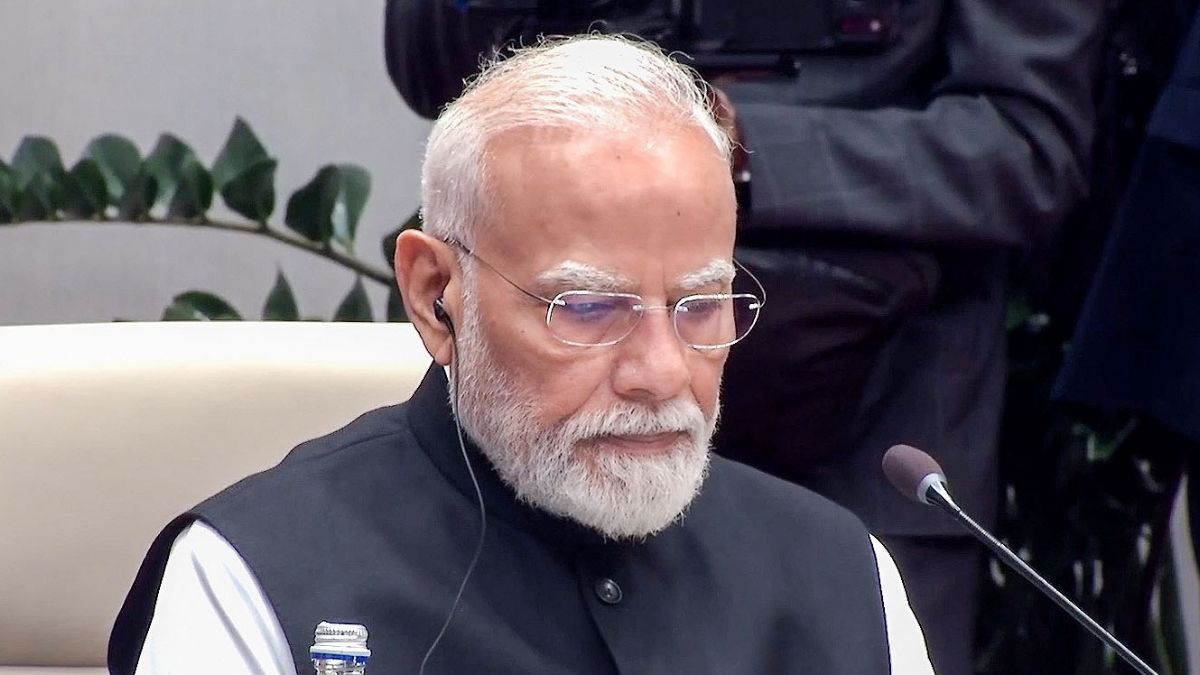
Geopolitical forums often operate as diplomatic theaters, yet the 26th Shanghai Cooperation Organisation Summit in Bishkek functioned as a stark stress-test for multilateral security architecture. When Indian Prime Minister Narendra Modi addressed the assembly—with Pakistani Prime Minister Shehbaz Sharif seated directly in the audience—the rhetoric avoided standard diplomatic euphemism. Instead, the intervention targeted the foundational economics of state-sponsored irregular warfare, dismantling the premise that irregular proxies can function as viable strategic assets without incurring systemic blowback.
Analyzing this diplomatic confrontation requires stripping away conventional media framing. Multilateral bodies like the Shanghai Cooperation Organisation are frequently evaluated through binary outcomes: whether rival states reconcile or trade disputes resolve. This metric is fundamentally flawed. Regional security frameworks are institutional instruments designed to manage friction, establish non-negotiable red lines, and impose reputational and economic costs on actors utilizing asymmetrical force.
The Economic Mechanics of the Terror Ecosystem
To understand the weight of Modi's directives regarding the elimination of the terror ecosystem—specifically targeting financing, recruitment loops, radicalization channels, and geographic safe havens—one must examine terrorism through an industrial lens. Insurgency and proxy networks operate as high-overhead enterprises requiring predictable inputs: capital acquisition, logistics corridors, human capital pipelines, and institutional immunity.
When a state integrates irregular forces into its grand strategy, it attempts to externalize the cost of conflict while retaining plausible deniability. However, the Shanghai Cooperation Organisation summit highlighted a shifting calculus. Transnational networks rarely remain hermetically sealed. The convergence of narco-trafficking, weapons proliferation, and cyber-enabled financial routing creates a frictionless black market that eventually destabilizes the host state itself.
Modi's rejection of an action-reaction framework addresses the core inefficiency of traditional counter-terrorism. Responding exclusively to tactical provocations is a defensive trap that drains resources while leaving the underlying production lines of extremism intact. Dismantling the ecosystem requires intercepting capital flows at institutional banking nodes, disrupting digital radicalization funnels, and stripping away sovereign protection from high-value operatives.
The Three Pillars and the Sovereignty Dilemma
India’s operational framework for the Shanghai Cooperation Organisation rests on three explicit vectors: Security, Connectivity, and Opportunity. At the Bishkek summit, the objective shifted from visionary alignment to enforceable execution. This transition exposes deep structural friction among member states, particularly regarding infrastructure and trade routes.
Connectivity initiatives within Eurasia are frequently subverted by geopolitical ambitions. While multilateral transit corridors promise to compress logistics expenses and open new markets, they routinely collide with the principle of sovereign territorial integrity. Unilateral transit projects that bypass international legal norms or infringe upon disputed borders transform economic integration into tools of regional hegemony. By linking trade facilitation directly to the strict preservation of sovereignty, India established a normative barrier against predatory financial expansionism under the guise of development.
The friction between bilateral grievances and multilateral commerce creates a complex optimization problem for member states. Nations caught between economic dependency on major manufacturing hubs and regional security imperatives must choose between short-term transactional gains and long-term systemic stability.
Externalities of Peripheral Conflict
Security perimeters in an interconnected global economy cannot be contained by national borders. The fallout from peripheral conflicts—exemplified by ongoing instability in West Asia and Afghanistan—directly punctures supply chain resilience, maritime trade lanes, and energy pricing structures.
Developing economies, particularly across the Global South, absorb the heaviest financial and operational shocks from these structural disruptions. Energy volatility and inflated logistics costs function as an indirect tax on emerging markets. Consequently, the insistence on dialogue and diplomacy is not merely a pacifist talking point; it is a pragmatic economic demand. Prolonged kinetic friction degrades global liquidity and stalls capital expenditure in high-growth corridors.
Similarly, the fusion of organized crime and narcotics networks with extremist financing represents an acute vulnerability for Central and South Asian stability. Drug trafficking functions as the primary liquid asset generator for clandestine operations, bypassing formal financial surveillance systems. Strengthening regional coordination mechanisms requires moving beyond intelligence-sharing memorandums toward real-time financial interdiction and synchronized law enforcement protocols.
Strategic Execution and the Path Forward
Multilateral platforms survive on their ability to enforce normative compliance among adversarial members. When a head of government explicitly calls out state-supported proxy networks in the immediate presence of the offending party, the cost of covert operations rises. Silence implies tacit acceptance, while public denunciation forces institutional posturing into the open.
Future regional stability hinges on whether multilateral security structures can transition from deliberative chambers to punitive coalitions. Intelligence transparency, standardized asset-freezing mandates against designated entities, and uncompromising penalties for financial institutions servicing illicit networks remain the non-negotiable prerequisites. Regional integration cannot proceed while subterranean warfare is subsidized as a rational instrument of statecraft. The strategic imperative for participating nations is clear: systematically dismantle the financial and territorial infrastructure of irregular proxies, or accept the inevitable degradation of sovereign security and economic access.