Foreign military interventions in collapsed states fail predictably when they mirror conventional peacekeeping doctrines rather than recognizing the economic and territorial monopolies held by non-state actors. The escalation of El Salvador's military footprint in Haiti—evolving from a minor contingent attached to international stabilization efforts into an independent offensive surge of approximately 2,500 personnel—represents a structural pivot in how transnational security crises are managed. Rather than evaluating this deployment through traditional diplomatic paradigms, it must be analyzed as an aggressive export of an authoritarian domestic security model into an ungoverned operational theater.
The Trigger Event and Force Expansion Mechanics
The operational inflection point occurred on October 18, when an armored vehicle carrying four Salvadoran aviation technicians was ambushed and incinerated in Croix-des-Bouquets, a high-threat corridor controlled by coalitions such as Chèn Méchan and 400 Mawozo. Historically, international forces in Haiti respond to such escalations through defensive consolidation or delayed bureaucratic coordination.
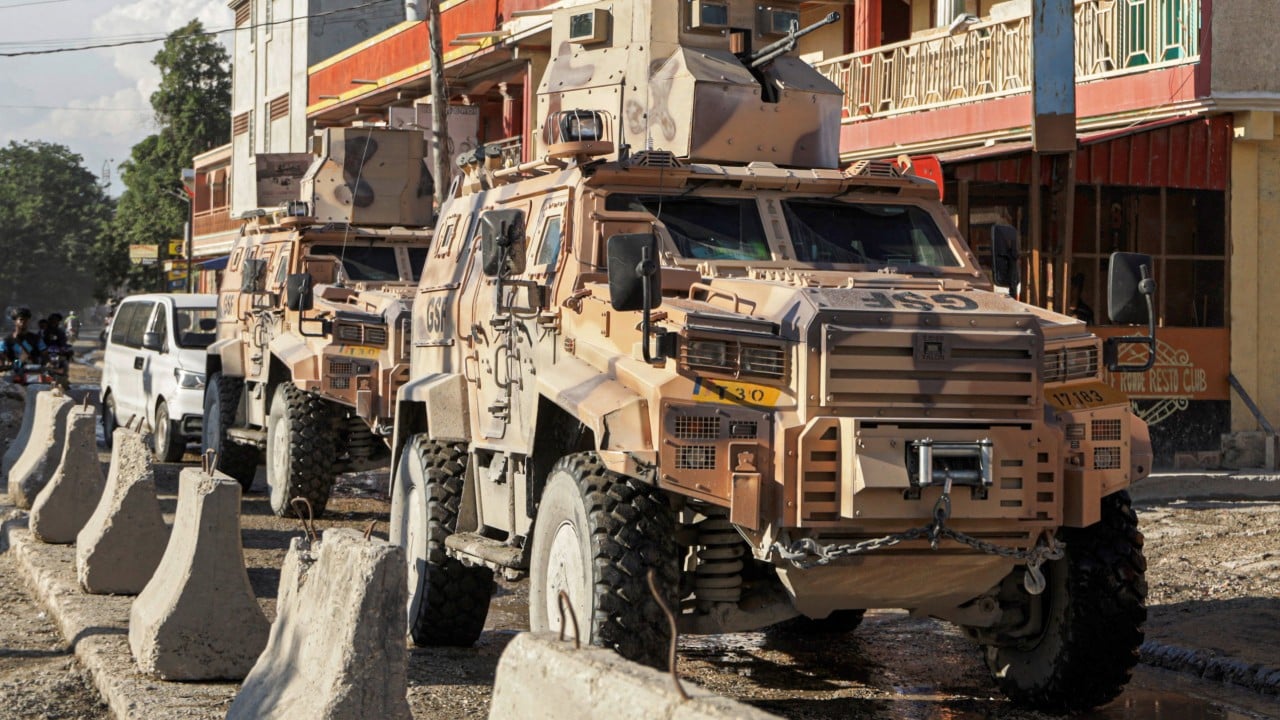
President Nayib Bukele bypassed multilateral channels, deploying an initial vanguard of 100 special forces personnel with the explicit tactical objective of recovering the missing operatives. This narrow rescue mandate rapidly converted into a broader kinetic offensive. By superseding the lethargic deployment velocity of the United Nations-authorized Gang Suppression Force (GSF)—which had stalled at a fraction of its mandated troop ceiling—San Salvador capitalized on a vacuum of kinetic initiative.
This operational expansion exposed a fundamental friction point in international law and command architecture: the bulk of the arriving Salvadoran forces operate outside the monitoring mechanisms and operational chains of the UN support office. This creates a bifurcated security architecture on the ground, where multilateral oversight coexists with unilateral, high-intensity urban combat operations.
The Operational Mechanics of the Bukele Doctrine
The intervention relies on three core operational pillars: rapid-response force projection, high-altitude aerial dominance, and digital intelligence sourcing.
In domestic operations within El Salvador, territorial control was achieved through mass incarceration and total saturation of gang-held neighborhoods. In Haiti, the operational constraints are vastly different; gangs are deeply entrenched in dense urban infrastructure, possessing heavy weaponry and civilian human shields. To offset this, the Salvadoran strategy utilizes concentrated air mobility, deploying helicopter gunships to strike the core residential compounds of high-value targets such as gang leaders Wilson Joseph (known as Lanmò San Jou) and Vitelhomme Innocent.
Simultaneously, the operation leverages an unprecedented digital feedback loop. The Salvadoran executive branch utilizes social media platforms to crowdsource intelligence, bypassing traditional military intelligence pipelines. While this accelerates target acquisition, it introduces significant vulnerabilities regarding data verification, target misidentification, and operational security.
The Institutional Void and Accountability Deficits
The tactical successes of these raids—characterized by the immediate disruption of gang strongholds—mask severe long-term institutional risks. A sustainable counterinsurgency framework requires a sequential progression: clear, hold, and build. While the Salvadoran surge excels at the initial clearance phase, the holding and building phases remain structurally compromised.
Haiti's domestic security apparatus, specifically the Haitian National Police (HNP), has historically suffered from systemic institutional corruption and infiltration. Without a reformed, vetted local police force capable of establishing permanent administrative and judicial control, kinetic clearance yields temporary vacuums rather than permanent state sovereignty. Once foreign forces disengage, displaced gangs retain the structural capacity to re-infiltrate cleared zones, risking severe retributive violence against local civilian populations who cooperated with the intervention.
Furthermore, the integration of multiple distinct armed vectors—including GSF personnel, private military contractors such as Vectus Global utilizing drone warfare, and unilateral Salvadoran special forces—creates a high-probability environment for friendly-fire incidents and collateral civilian casualties. The absence of a unified, transparent rules-of-engagement framework elevates legal liabilities under international humanitarian law, particularly regarding proportionality and civilian protection in dense urban combat zones.
Strategic Horizon and Downside Risk
The calculus of the deployment hinges entirely on short-term psychological impact versus long-term institutional sustainability. For a domestic population exhausted by systemic kidnapping, economic paralysis, and the displacement of over 1.5 million people, the decisive offensive posture of the Salvadoran troops has generated immense public validation and a rare sentiment of psychological relief.
However, external military force cannot substitute for domestic political reconstruction, electoral legitimacy, and judicial integrity. If the intervention functions merely as an ad hoc punitive expedition without anchoring institutional reform, it risks accelerating the erosion of the multilateral rules-based order while leaving the underlying drivers of state collapse untouched. The long-term viability of the model requires transitioning tactical dominance into permanent legal and administrative governance—a transformation that remains absent from the current operational blueprint.