The ink on a waiver does not freeze when it hits the page. It looks like any other liquid, smelling faintly of vinegar and iron, drying into a thin, dark crust under the harsh overhead lights of a capital city thousands of miles away from the smell of burning diesel and damp wool.
To the men in the committee rooms, a sanctions waiver is an adjustment. A gear shifting in a massive, oiled engine of international compliance. A stroke of a pen that moves a line on a ledger from red to black, or at least from crimson to a manageable amber. For another look, see: this related article.
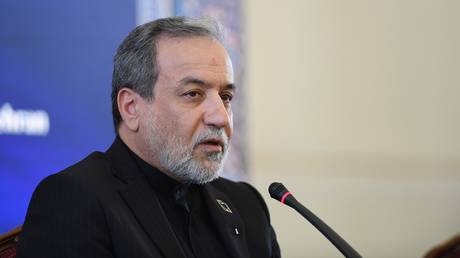
To Volodymyr Zelenskiy, standing behind a microphone with the dark crescents of exhaustion permanent beneath his eyes, that same stroke of a pen sounded like the snapping of thin ice underfoot.
He called it wrong. Not complicated. Not regrettable. Wrong. Further coverage on this trend has been shared by BBC News.
There is an inherent friction between the vocabulary of diplomacy and the vocabulary of survival. Diplomacy likes to stretch things out. It likes to find the gray areas where a compromise can live, breathing stale air in a windowless chamber until everyone agrees to pretend they are satisfied. Survival does not have room for gray. Survival is binary. Either the roof stays up, or it caves in. Either the line holds, or the village burns.
Consider what happens in a trench when the temperature drops below zero and the mud turns to a glue that traps the boots of eighteen-year-olds who should be arguing about music. Every policy decision made in Washington, Berlin, or Brussels trickles down through the atmosphere until it hits that mud. A sanctions waiver granted to ease economic pressure elsewhere in the global system does not float harmlessly in the ether. It lands. It settles on the shoulder of a soldier peering through a cracked pair of binoculars, wondering why the pressure on the adversary has suddenly been dialed back just enough for them to catch their breath.
We forget how long a war feels from the inside. From the outside, it is a news ticker, a series of map updates, a debate about supply chains and liquefied natural gas. From the inside, time stops moving forward and starts pressing straight down, like a heavy wool blanket soaked in freezing rain.
When sanctions are lifted, even partially, even conditionally, the message sent to the eastern front is not one of legal nuance. The message is simple. It is a whisper that says: We are getting tired.
Zelenskiy knows this exhaustion better than anyone. He wears it in his posture, in the way his shoulders pull inward as if bracing for a draft that never stops. His criticism of the waiver was not just a diplomatic disagreement over trade restrictions or energy pipelines. It was an existential plea. When you are fighting an opponent whose greatest asset is infinite patience and a disregard for human cost, any signal of leniency is interpreted by them as an invitation to lean harder.
History is littered with the wreckage of well-intentioned compromises that mistook a pause for peace. In the winter of 1939, small nations learned that diplomatic adjustments made thousands of miles away rarely protect the borders where the wind blows cold. The names change, the languages on the radio change, but the geometry of abandonment remains remarkably consistent.
A waiver is signed to lower the price of oil.
A barrel of crude costs a few cents less on a commodities exchange in Chicago or London.
A thousand miles away, an air raid siren begins its slow, mechanical whine, winding up like an ancient alarm clock that refuses to let anyone sleep.
The disconnect is staggering. On one side of the ocean, policy is an abstraction—a set of variables managed by clever people in suits who believe that every problem can be solved by tweaking the incentives. On the other side, policy is blood and concrete. It is the sound of glass shattering across a kitchen floor in Kharkiv. It is the desperate search for a generator that still has a few gallons of fuel left in its belly.
When the leader of a nation under siege looks at a lifted restriction, he does not see a clever tactical maneuver to keep allies aligned. He sees a crack in the wall. And in winter, a crack is all the wind needs to turn a room into a freezer.
We like to think that global politics is run by chess masters calculating ten moves ahead. More often, it is run by people trying to keep three different fires from going out at the same time, using whatever dry wood they can find, even if it belongs to someone else's fence.
The waiver was granted. The ink dried. The stock markets adjusted by fractions of a percentage point.
And out in the frost, beneath a sky the color of a wet slate roof, the watch continued, waiting to see what the next stroke of a pen would bring.