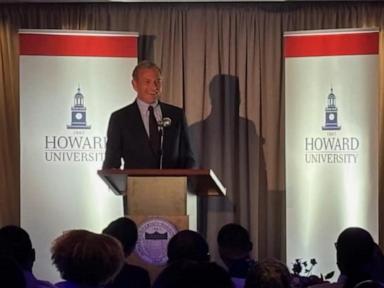
The conferral of an honorary doctorate upon Disney CEO Bob Iger by Howard University serves as a case study in strategic institutional alignment. While casual observers categorize such events as mere ceremonial tradition, a structural analysis reveals a calculated exchange of social and intellectual capital. This transaction functions across three primary vectors: the validation of corporate leadership during periods of industrial volatility, the expansion of a legacy media brand’s talent pipeline, and the reinforcement of an elite academic institution’s role as a gatekeeper to executive influence.
The Mechanics of Symbolic Capital Exchange
The value of an honorary degree is not found in academic rigorousness but in the alignment of brand identities. For Bob Iger, the Howard University doctorate provides a specific form of cultural legitimacy that cannot be purchased through traditional marketing. Howard University, as a preeminent Historically Black College and University (HBCU), possesses a unique "equity of mission" that Disney seeks to associate with its corporate governance.
From a strategic standpoint, this relationship addresses a specific reputation deficit. Legacy media conglomerates face increasing scrutiny regarding their internal hierarchies and the demographic composition of their executive suites. By accepting this honor, Iger signals an endorsement of Howard’s output—effectively "pre-approving" the institution’s graduates for the highest levels of the creative economy.
Conversely, Howard University gains a direct line to the decision-makers at the world’s largest media engine. This creates a feedback loop of prestige:
- The institution honors a global CEO.
- The CEO’s presence validates the institution’s status as a hub for future leadership.
- High-potential students are attracted to the institution because of its proximity to such figures.
- Corporate entities increase recruitment efforts at the institution to capitalize on the branding.
The Recruitment Pipeline as a Strategic Asset
Beneath the ceremony lies a hard-coded business objective: the optimization of the talent acquisition funnel. Disney’s long-term viability depends on its ability to capture and retain creative talent that reflects a globalized audience. Howard University, often referred to as "The Mecca," represents a concentrated source of high-caliber talent in journalism, film, and business.
The "Cost of Talent Acquisition" (CTA) for top-tier creative roles is notoriously high. Building institutional ties through high-level executive recognition reduces this friction. This is not philanthropy; it is infrastructure development.
- Pipeline De-risking: By embedding the CEO into the university’s history, Disney creates a "preferred employer" status among the student body.
- Knowledge Transfer: These ceremonies often precede formal partnerships, such as internships or endowed chairs, which allow the corporation to influence curriculum design to meet industry needs.
- Brand Insulation: In an era of intense public accountability, a deep-seated relationship with a leading HBCU acts as a buffer against accusations of performative diversity.
Structural Variables in Executive Legacy Construction
Bob Iger’s return to the CEO position at Disney was marked by a mandate to restructure the company’s streaming business and stabilize its stock price. In this context, the honorary doctorate is a component of a Legacy Optimization Strategy.
Executive performance is often measured by two distinct metrics:
- Quantitative ROI: Total shareholder return, operating margins, and ARPU (Average Revenue Per User).
- Qualitative Influence: The executive’s perceived impact on the broader social and cultural fabric.
The Howard doctorate addresses the latter. In the competitive landscape of CEOs, Iger is positioning himself not just as a manager of assets, but as a "Statesman of Industry." This distinction is vital for a leader navigating the complexities of modern ESG (Environmental, Social, and Governance) requirements.
The Utility of the HBCU Network in Media
The media industry is currently undergoing a structural contraction. As traditional linear television revenue declines and streaming services pivot toward profitability over subscriber growth, the "War for Talent" has shifted into a "War for Efficiency."
Investing in relationships with HBCUs like Howard is a high-efficiency move. These institutions produce graduates who are statistically more likely to stay within the media ecosystem if they feel a sense of institutional belonging. For Disney, the partnership provides a Geographic and Demographic Hedge.
Howard’s location in Washington D.C. further bridges the gap between the entertainment capital (Los Angeles) and the regulatory capital. This creates a secondary benefit: Regulatory Soft Power. When a CEO is honored by a prestigious D.C. institution, it subtly enhances their standing with policymakers who view the university as a vital constituent.
Friction Points and Institutional Risks
Despite the mutual benefits, this alignment carries inherent risks that the competitor's coverage failed to identify. The primary risk is Symbolic Dilution.
- The Credibility Gap: If the partnership does not yield tangible results—such as a measurable increase in Howard alumni in VP-level roles or higher—the honorary degree can be viewed as "reputation washing."
- Institutional Autonomy: Academic critics often argue that high-profile corporate honors compromise the university’s role as an independent critic of power.
- Expectation Management: By honoring Iger, Howard sets a high bar for future corporate engagement. If Disney undergoes layoffs that disproportionately affect the talent the university produces, the relationship can turn from an asset into a liability.
The Strategic Path Forward
The conferral of this doctorate should be viewed as the opening of a long-term credit facility of trust. To maximize the return on this symbolic investment, both entities must transition from ceremony to systems.
- Quantify the Pipeline: Disney should establish a transparent "Howard-to-Disney" metric, tracking the conversion rate of interns to full-time employees and their subsequent promotion velocity.
- Institutionalize the Access: Moving beyond the CEO, Disney’s "Creative Lead" tier must engage in regular pedagogical exchanges with Howard’s Cathy Hughes School of Communications. This ensures the relationship survives any single executive's tenure.
- Audit the Symbolic Value: Howard University must periodically assess the "Prestige ROI" of its honorary degrees. If the recipients do not actively contribute to the endowment or student opportunities, the institution risks devaluing its highest honor.
The ceremony is not the endgame; it is a signaling event meant to catalyze a deeper integration between a content producer and a talent incubator. In a fragmented economy, the winners are those who can convert cultural symbols into operational advantages.
Disney must now move to formalize a Multi-Generational Talent Agreement that guarantees a set number of executive-track roles for Howard graduates annually. Failure to do so will result in the "Degree Decay" effect, where the honor loses its strategic value and becomes a footnote in a legacy that the market will ultimately judge by the numbers rather than the accolades.