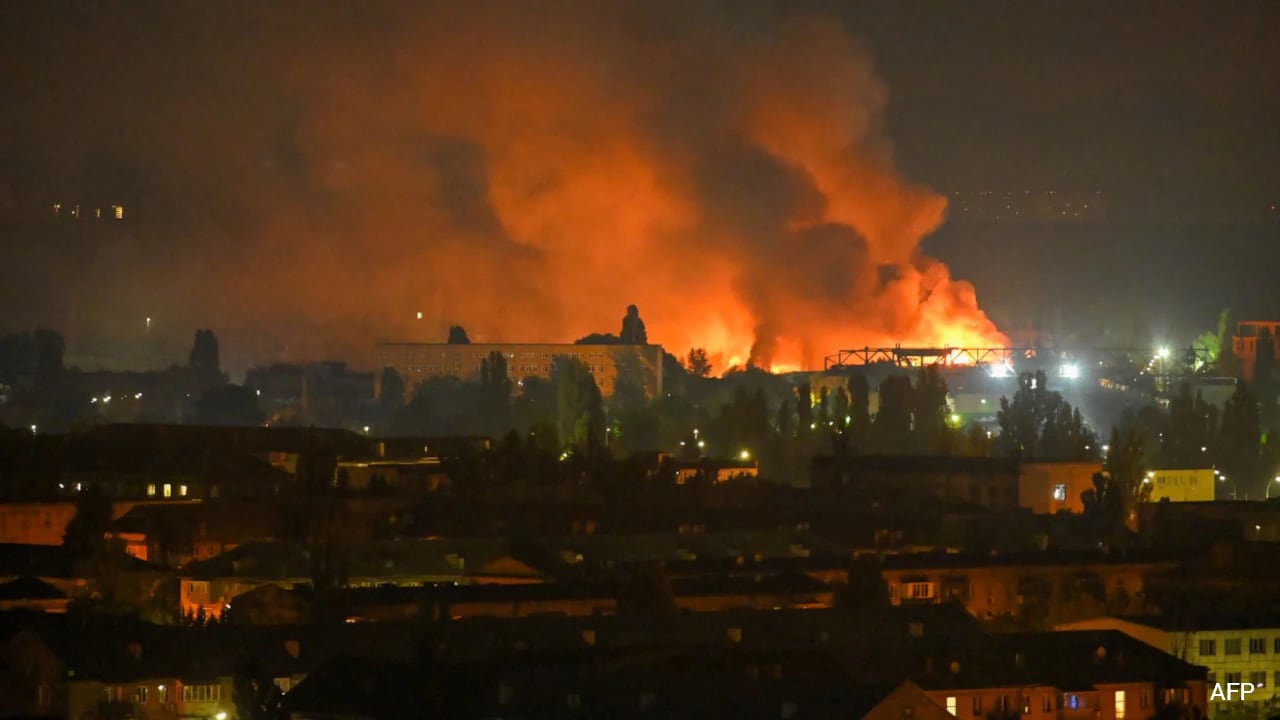
The arithmetic of modern attrition rarely makes for clean reading. Overnight missile and drone exchanges between Russian and Ukrainian forces left at least seven civilians dead, structural scars across multiple regions, and fresh questions regarding the long-term sustainability of air defense inventories on both sides of the frontline.
In Kharkiv and Odesa, Russian aerial packages targeted high-density urban sectors and port infrastructure, exploiting thin spots in regional shielding. Simultaneously, deep inside Russian territory, long-range unmanned aerial systems struck logistics hubs and border settlements in Belgorod. This symmetrical exchange of pain illustrates a grim evolution in the conflict. Both capitals have shifted from broad territorial maneuvering to targeted structural strangulation, trading blows designed to degrade economic output, public morale, and logistical capacity.
The Air Defense Deficit
At the heart of Ukraine's vulnerability lies a quantifiable hardware shortage. Interceptor missiles for American-built Patriot systems remain scarce. These batteries represent the sole defensive layer currently capable of intercepting incoming ballistic threats.
When those stocks dwindle, response windows narrow instantly. Moscow's planners monitor these supply curves closely, timing major salvos to coincide with periods of low interceptor density.
The Cost of Extended Frontlines
Protecting every major population center simultaneously is an absolute logistical impossibility. Strategic assets must be triaged.
- Urban Centers: High-rise residential sectors frequently absorb collateral damage when air defense debris falls or kinetic payloads miss hardened military targets.
- Logistics Nodes: Ports along the Black Sea and inland transport junctions form the primary arteries for commercial and military survival.
- Energy Infrastructure: Refineries and electrical substations remain primary magnets for asymmetric drone warfare.
This triaging leaves civilian populations in secondary cities exposed to recurring terror from the skies.
Asymmetric Pressure on Russian Logistics
While Ukraine absorbs ballistic and cruise missile weight in the west, Kyiv has successfully operationalized long-range asymmetric retaliation. Recent waves of uncrewed aircraft have systematically targeted internal Russian supply lines, including major commercial fulfillment centers and regional fuel refineries.
Striking facilities belonging to major distribution networks like Wildberries or regional oil processing plants accomplishes a distinct objective. It forces Moscow to divert short-supply electronic warfare units and mobile air defense groups away from active combat zones to protect domestic rear-guard assets.
The economic friction generated by these domestic disruptions adds up. Refining capacity slows. Localized fuel shortages manifest. Insurance and transport overhead spikes across the Federation.
Spillover Dynamics and Regional Vulnerability
The geographical containment of this war grows more tenuous by the week. Recent incidents involving errant or targeted hardware drifting across international borders underscore the danger of operational spillover.
When combat drones cross into Moldovan or neighboring airspace, triggering emergency responses and local detonations, the conflict demonstrates its refusal to stay neatly inside official map coordinates. Localized security structures in Eastern Europe find themselves perpetually on edge, reacting to acoustic signatures and radar blips that signal yet another deviation from controlled military parameters.
There are no diplomatic breakthroughs hiding in the immediate forecast. The logic governing these nightly launches is governed by cold mathematics, production lines, and the brutal calculus of endurance.