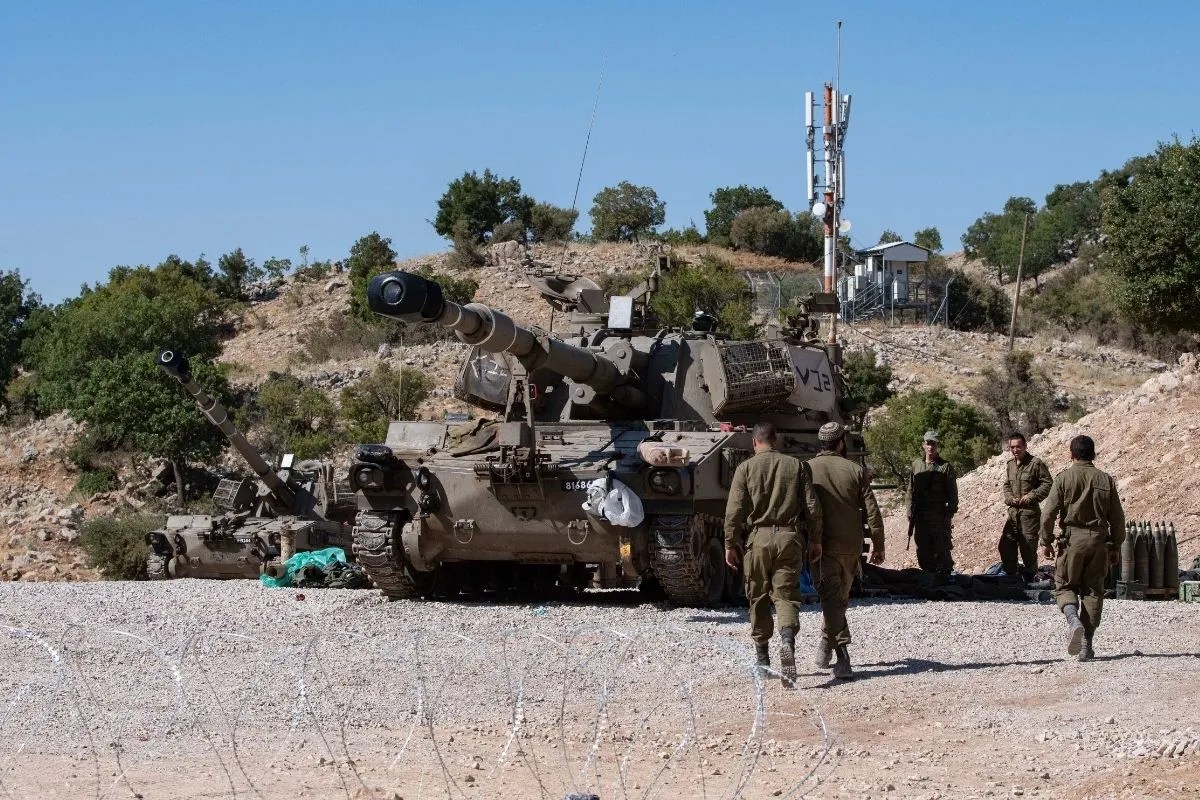
The escalation of kinetic operations in Southern Lebanon represents a shift from reactive border skirmishes to a systematic degradation of insurgent infrastructure. This transition is defined by the synchronization of psychological operations (PSYOP) with high-intensity precision strikes. When the Israeli Defense Forces (IDF) issue evacuation orders for specific geographic coordinates, they are not merely disseminating safety warnings; they are executing a strategic clearing of the operational environment to redefine the rules of engagement. This process isolates combatants from the civilian population, theoretically stripping the adversary of the human shield defense while creating a legal and tactical buffer for large-scale munitions deployment.
The Logic of Pre-emptive Evacuation Protocols
The decision to force mass internal displacement via digital and broadcast warnings functions as a precursor to "area denial" tactics. By designating specific villages and urban centers as active combat zones, the military apparatus establishes a framework where any remaining presence is categorized as a legitimate target or collateral risk. This creates three distinct operational outcomes:
- Reduced Kinetic Friction: Removing non-combatants allows for the use of heavier ordnance, such as bunker-busters or thermobaric weapons, which would be politically and legally untenable in a populated environment.
- Logistical Strain as a Weapon: The sudden movement of thousands of civilians toward the north creates immediate administrative and logistical paralysis within the Lebanese state. This pressure acts as a secondary front, forcing the central government and international agencies to divert resources from defense to humanitarian crisis management.
- Signal Mapping: By monitoring how and where populations move following a warning, military intelligence can identify hidden insurgent movement patterns. Combatants often attempt to blend into the exodus or move against the flow of traffic to reinforce positions, making them easier to track via signals intelligence (SIGINT) and overhead surveillance.
Structural Degradation of Non-State Infrastructure
The recent strikes target more than just personnel; they are designed to dismantle the "long-tail" logistics of Hezbollah. Analysis of strike patterns suggests a focus on hardened storage facilities and command-and-control (C2) nodes integrated into civilian architecture. The objective is the total neutralization of short-range and medium-range rocket launch capabilities.
Success in these operations is measured by the "interdiction rate"—the frequency at which munitions are destroyed before they can be moved to a launch position. The complexity of this task stems from the decentralization of the adversary's assets. Hezbollah utilizes a subterranean network of tunnels and reinforced basements, making surface-level damage insufficient. Effective neutralization requires high-velocity kinetic energy penetrators capable of reaching depths where the primary arsenal is cached.
The Cost-Benefit Ratio of Precision Munitions
The financial and political expenditure of these strikes is significant. A single precision-guided munition (PGM) can cost between $25,000 and $250,000, depending on its guidance system (GPS, laser, or inertial). When hundreds of targets are engaged in a 24-hour window, the burn rate of inventory demands a robust supply chain and continuous diplomatic alignment with manufacturing partners.
The strategic risk lies in the "diminishing returns of kinetic intensity." As the easy-to-find targets are eliminated, the intelligence required to find the remaining, more deeply embedded assets becomes exponentially more expensive and difficult to acquire. If the strikes do not lead to a decisive shift in the adversary's willingness to negotiate or a total collapse of their firing capacity, the operation risks entering a phase of static attrition. Attrition favors the non-state actor, who can sustain lower-level harassment for longer periods than a modern military can maintain high-intensity bombardment.
Operational Bottlenecks and Strategic Limits
Several factors limit the effectiveness of the current aerial campaign. The first is the "Intelligence-Strike Gap"—the time elapsed between identifying a mobile target (like a truck-mounted rocket launcher) and the arrival of the munition. If this gap exceeds five to ten minutes, the strike's probability of success drops significantly.
The second bottleneck is the resilience of the tunnel infrastructure. While aerial strikes can collapse entrances and vent shafts, they rarely destroy the entire network. This necessitates a transition from air power to ground maneuvers if the goal is the permanent removal of the threat. However, a ground incursion introduces the risk of close-quarters combat in mountainous terrain, where the defender holds a natural advantage.
Forced Migration as a Geopolitical Lever
The displacement of residents from Southern Lebanon is a deliberate application of geopolitical pressure. By making the region uninhabitable, the IDF is effectively creating a "buffer zone" without a permanent troop presence. The long-term viability of this strategy depends on whether the Lebanese government or international peacekeepers can (or will) prevent the return of armed groups to these vacated areas.
Historically, such zones are difficult to maintain without direct occupation. If the civilian population returns without a robust security mechanism in place, the insurgent infrastructure is typically rebuilt within months. Therefore, the current strikes are a temporary tactical reset rather than a permanent strategic solution. They buy time for diplomatic negotiations or prepare the theater for a more extensive ground-based clearing operation.
Final Strategic Assessment
The escalation in Southern Lebanon has moved beyond a tit-for-tat exchange into a systematic attempt to re-establish deterrence through the destruction of hardware and the displacement of the social base that supports it. To achieve a definitive end-state, the following actions must be synchronized:
- Hardening of Northern Borders: Defensive systems must be optimized for high-volume saturation attacks to prevent the adversary from overwhelming Iron Dome and David’s Sling interceptors during the final stages of the kinetic campaign.
- Targeting Financial Lifelines: Kinetic strikes on physical assets must be coupled with the freezing of crypto-wallets and traditional banking channels used to fund the replenishment of lost ordnance.
- Pre-emptive Ground Shaping: If a ground offensive is the intended follow-up, the current air campaign must focus on the destruction of "anti-access/area denial" (A2/AD) weapons, specifically anti-tank guided missile (ATGM) teams and mineshafts along the immediate border.
Failure to transition from broad strikes to these specialized objectives will lead to a resource-intensive stalemate, where the tactical successes of today are negated by the persistent asymmetric capabilities of tomorrow.