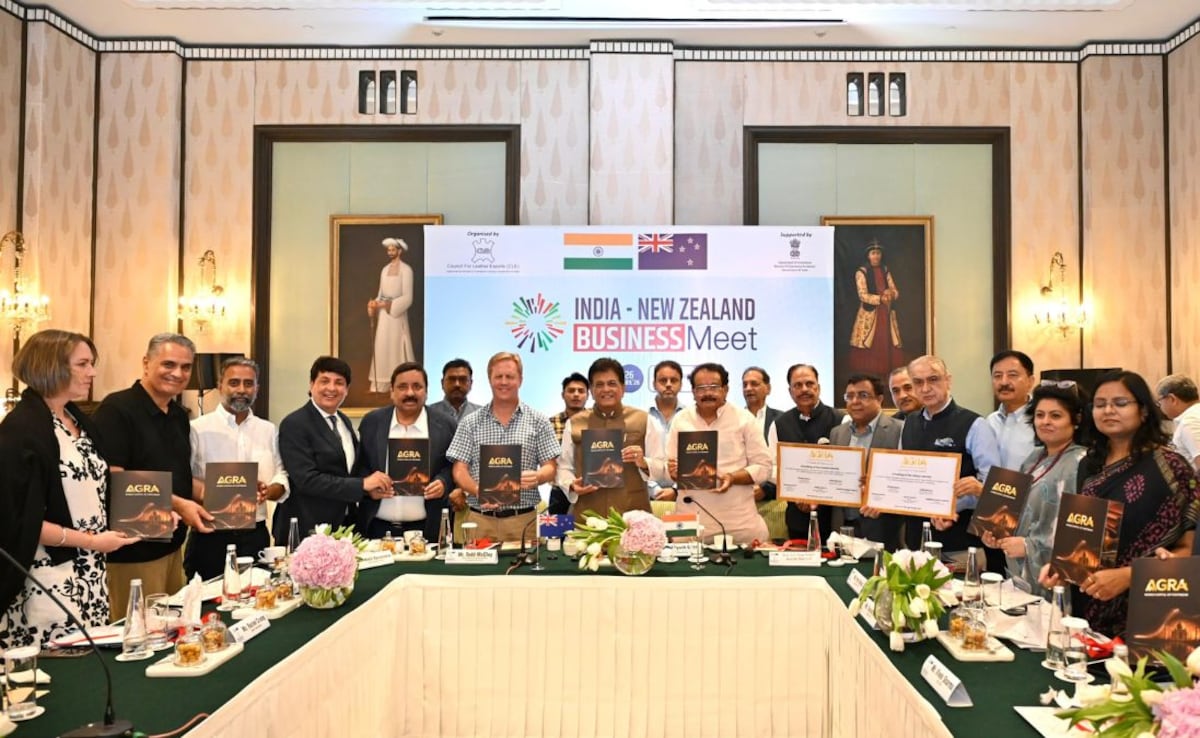
The "once-in-a-generation" bilateral agreement between India and New Zealand functions as a structural realignment of Southern Hemisphere trade routes rather than a mere diplomatic formality. While public discourse focuses on the novelty of the pact, the underlying mechanism is a calculated attempt to hedge against regional supply chain vulnerabilities and diversify away from historical dependencies on North Asian manufacturing hubs. This framework establishes a high-trust corridor that prioritizes agricultural technology transfer, educational integration, and maritime security, effectively creating a symbiotic relationship between India’s massive labor scale and New Zealand’s specialized high-value IP.
The Bilateral Value Exchange Model
The logic of this agreement rests on a complementary resource theory. New Zealand possesses a surplus of technological efficiency in primary sectors but faces a permanent ceiling on domestic market growth due to its population of five million. India offers a nearly bottomless demand sink and a burgeoning middle class, yet suffers from systemic inefficiencies in cold-chain logistics and agricultural yield per hectare.
The exchange is categorized by three distinct capital flows:
- Intellectual Capital: New Zealand’s dairy and horticultural optimization techniques are being ported into the Indian agricultural framework. This is not philanthropy; it is the creation of a standardized production base that will eventually facilitate New Zealand-branded food processing within Indian borders.
- Human Capital: The liberalization of visa pathways for students and high-skill professionals addresses New Zealand’s acute labor shortages in technical sectors while providing Indian talent with access to an R&D environment that prioritizes precision over volume.
- Security Capital: Both nations share a common interest in the "Free and Open Indo-Pacific" doctrine. By strengthening maritime cooperation, they increase the cost for any single actor to disrupt the Sea Lines of Communication (SLOCs) that link the Indian Ocean to the Tasman Sea.
Decoupling the Dairy Paradox
The primary friction point in any trade discussion involving Wellington and New Delhi is the dairy sector. New Zealand’s dairy industry, dominated by entities like Fonterra, accounts for roughly 3.5% of its GDP. Conversely, India is the world's largest milk producer, with a market characterized by millions of smallholder farmers. A traditional Free Trade Agreement (FTA) has historically stalled because a zero-tariff regime would theoretically collapse the price floors supporting rural Indian livelihoods.
The new "Once-In-A-Generation" pact bypasses this deadlock through a Non-Competitive Vertical Integration strategy. Instead of focusing on raw commodity imports, the focus has shifted to the "Genetic and Technological Layer."
- Yield Optimization: Utilizing New Zealand’s genomic mapping to improve the productivity of Indian cattle breeds.
- Infrastructure Seeding: Implementing New Zealand-designed cold-chain logistics to reduce the 15-20% post-harvest loss currently seen in the Indian dairy market.
- Value-Add Processing: Developing joint ventures where New Zealand technology processes Indian raw milk into high-value derivatives (e.g., specialized whey proteins, infant formula) for export to third-party markets.
This approach transforms New Zealand from a potential competitor into a critical infrastructure provider for the Indian domestic market.
Maritime Security and the Tasman-Indian Ocean Axis
Geopolitically, this pact signals a shift in India’s "Act East" policy toward a "Look South" orientation. The maritime component of the agreement focuses on Domain Awareness (MDA). In practical terms, this involves the sharing of non-classified tracking data on commercial shipping and suspicious vessels.
This cooperation is necessitated by the "Chokepoint Vulnerability" inherent in the Malacca Strait. By strengthening ties with New Zealand, India secures a secondary diplomatic anchor in the Pacific, ensuring that its interests are represented in forums like the Pacific Islands Forum (PIF), where New Zealand holds significant sway. The strategic utility for New Zealand is an offset to its security dependence on the Five Eyes alliance, providing it with a powerful, non-Western partner that shares its concerns regarding maritime sovereignty and international law.
Education as a Soft Power Export Engine
The educational segment of the pact serves as the long-term stabilization mechanism for the bilateral relationship. New Zealand’s "International Education Strategy" identifies India as its most critical growth market. However, the agreement moves beyond the "Tuition-for-Visa" model that characterized the early 2010s.
The current framework prioritizes Transnational Education (TNE). This includes:
- Dual-Degree Accreditation: Allowing students to complete portions of their curriculum in India before transitioning to New Zealand, reducing the financial barrier to entry while maintaining high quality-control standards.
- Vocational Alignment: Aligning New Zealand’s vocational training (Te Pūkenga) with India’s National Skill Development Corporation (NSDC) to create a workforce that is "plug-and-play" across both jurisdictions.
The economic multiplier here is significant. A student who trains under a joint Indian-New Zealand curriculum becomes a lifelong node in a technical network, favoring the hardware, software, and methodologies of those two nations throughout their professional career.
The Logistics of the Digital and Aviation Corridors
The physical distance between New Delhi and Wellington (approximately 12,000 kilometers) remains the greatest logistical bottleneck. The pact addresses this through a revamped Air Services Agreement. Increased flight frequency is the prerequisite for high-value, low-weight trade—specifically in the tech and pharmaceutical sectors.
- Perishable Goods Velocity: Direct flights allow for the export of high-margin horticultural products (like New Zealand cherries or Indian specialty mangoes) that cannot survive long-range sea freight.
- Service Sector Synchronicity: Close cooperation in fintech and digital identity allows for "frictionless" payments. India’s Unified Payments Interface (UPI) is a primary candidate for integration with New Zealand’s banking systems, which would drastically reduce the cost of remittances and B2B transactions.
Identifying the Risk Coefficients
An objective analysis requires acknowledging the variables that could derail this framework. The "Once-In-A-Generation" moniker implies a long-term commitment, but the execution faces three primary risks:
- Asymmetric Priority: India is currently managing a complex multi-alignment strategy with the US, Russia, and the EU. New Zealand, despite its advanced economy, remains a mid-tier priority in New Delhi’s hierarchy of strategic concerns. If the promised "speed" of bureaucratic approvals in India falters, New Zealand’s private sector may pivot back to safer, more established markets.
- Domestic Protectionism: Despite the shift to "technological cooperation" in dairy, the political optics of any concession in the agricultural sector remain radioactive in Indian domestic politics. A surge in populist rhetoric during Indian election cycles could freeze the implementation of the more ambitious trade clauses.
- Geopolitical Overreach: New Zealand’s traditional "independent foreign policy" occasionally creates friction with the broader security goals of the Quad (of which India is a member). If New Zealand is perceived as being too soft on regional competitors, or conversely, if it is pushed too far into a military-aligned stance, the delicate balance of this bilateral pact could be compromised.
Structural Comparison of Market Access
| Feature | Pre-Pact Environment | Post-Pact Framework |
|---|---|---|
| Dairy Trade | High tariffs; protective barriers | Tech-transfer; joint value-add processing |
| Visa Processing | Bureaucratic; high rejection rates | Streamlined "Green List" pathways for talent |
| Maritime Role | Isolated naval exercises | Continuous Domain Awareness (MDA) sharing |
| Aviation | Limited direct connectivity | Open-skies expansion; cargo priority |
| Strategic Focus | Transactional trade | Comprehensive ecosystem integration |
Execution Pathway for the Next 36 Months
For this agreement to transition from a diplomatic victory to a functional economic engine, the following sequence of events must occur:
First, the establishment of a Joint Technical Committee for Agriculture is required to define the IP protections for New Zealand’s genetic assets. Without these protections, New Zealand firms will be hesitant to share the proprietary data required to boost Indian yields.
Second, the aviation sector must move from "intent" to "slots." Specific takeoff and landing slots must be carved out at Indira Gandhi International Airport and Auckland Airport to ensure that the increased capacity is not absorbed by existing, lower-priority routes.
Third, the integration of digital payment systems must be prioritized. If the UPI-New Zealand integration succeeds, it will serve as the "plumbing" that allows small and medium-sized enterprises (SMEs) to engage in cross-border trade without the 3-5% transaction friction common in traditional banking.
The strategic play is clear: New Zealand is trading its technological edge for scale, while India is trading market access for modernization. The success of this pact will not be measured by the volume of press releases, but by the increase in the complexity and value-density of the goods and services crossing the Indian Ocean. The window for this alignment is open, but the structural hurdles of Indian bureaucracy and New Zealand’s risk-averse investment culture remain the primary headwinds. Firms and policymakers must move beyond the rhetoric of "friendship" and focus on the cold metrics of supply chain resilience and technological interoperability.