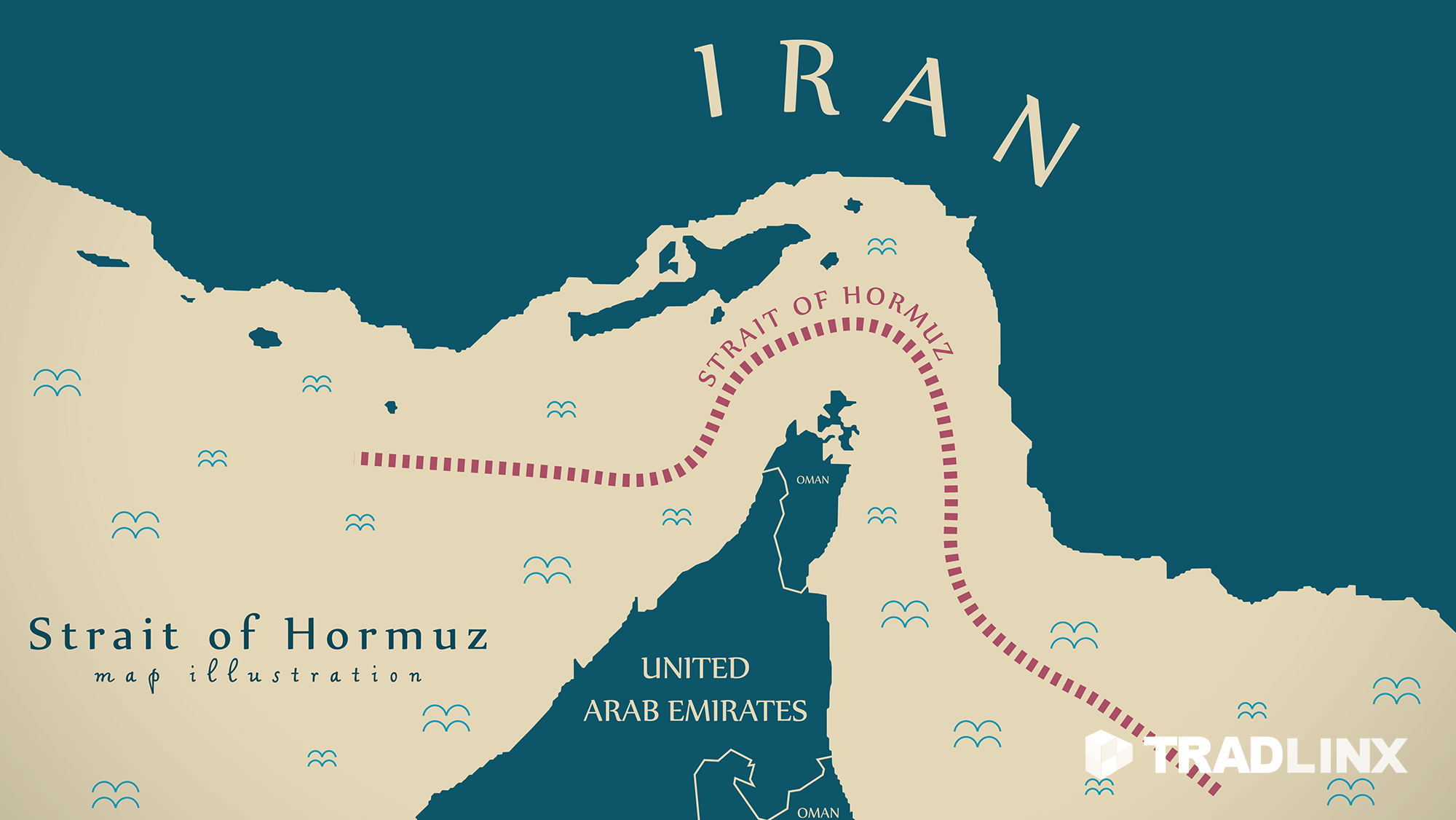
The Strait of Hormuz isn't just a strip of water. It's a loaded gun pointed at the head of the global economy. If you look at a map, it looks small, almost insignificant. But about a fifth of the world's total oil consumption passes through this narrow gap every single day. If it closes, the lights don't just flicker. They go out.
Most people talk about oil prices when they mention the Strait of Hormuz. That's only half the story. This isn't just about what you pay at the pump. It's about the literal physical security of nations that rely on energy imports to keep their hospitals running and their food supply chains moving. We're talking about a waterway that is only 21 miles wide at its narrowest point. The shipping lanes themselves are even tighter. There are two lanes, each just two miles wide, separated by a two-mile buffer zone. Imagine trying to drive the world's economy through a needle’s eye while someone stands over it with a sledgehammer. That's the reality.
The Geopolitical Chess Match
Iran sits on the northern coast. Oman and the United Arab Emirates sit to the south. This creates a messy legal and military situation. Technically, under the 1982 UN Convention on the Law of the Sea, ships have the right of "transit passage." This means they can go through as long as they keep moving and don't threaten the coastal states. Iran hasn't actually ratified that specific part of the treaty. They argue they only have to follow "innocent passage" rules, which gives them more power to intervene if they feel like it.
It's a constant game of chicken. You’ve seen the headlines. Tankers get seized. Mines are found drifting in the water. Drones get shot down. For the United States and its allies, keeping this lane open is a non-negotiable priority. The U.S. Fifth Fleet is based right around the corner in Bahrain for this exact reason. They aren't there for the scenery. They're there to make sure no one gets the bright idea to sink a massive vessel in the middle of the lane, which would effectively block traffic for weeks or months.
Why You Should Care About Liquefied Natural Gas
Everyone obsesses over crude oil. They forget about Liquefied Natural Gas (LNG). Qatar is one of the biggest exporters of LNG in the world. Almost all of their gas has to go through the Strait of Hormuz to reach markets in Asia and Europe. While you can technically find other sources of oil if you’re desperate, gas is harder to replace on short notice.
If the Strait closes, Japan and South Korea lose their primary energy source almost instantly. These aren't small players. These are massive industrial economies. A shutdown here triggers a domino effect that hits manufacturing in Tokyo and then raises the price of electronics in New York. Everything is connected. The Strait of Hormuz is the central nervous system of global trade.
The Myth of Bypassing the Strait
People love to say we can just build pipelines. It sounds simple. Just go around, right? It doesn't work that way. Saudi Arabia has the East-West Pipeline, which can move oil to the Red Sea. The UAE has the Abu Dhabi Crude Oil Pipeline that goes to Fujairah. These help, sure. But they can only handle a fraction of the volume that usually moves by ship.
Current pipeline capacity is nowhere near enough to replace the 20 million barrels of oil that move through the water daily. Plus, pipelines are static targets. They can be sabotaged. They can be bombed. Ships are mobile, at least in theory. Relying on pipelines is like trying to empty a swimming pool with a straw. It’s better than nothing, but you’re still going to get wet.
Insurance Rates and the Hidden Cost of Conflict
Even if the Strait stays open, "tension" has a price. Ship owners aren't charities. When a tanker gets hit by a drone or a limpet mine, insurance companies freak out. They hike up the "war risk" premiums. These costs don't just vanish. They get tacked onto the price of the cargo. You end up paying for the geopolitical instability of the Middle East every time you buy something that was shipped across an ocean.
I've seen estimates where these premiums jump 10 or 20 times their normal rate in a single week. It’s a massive financial burden that slows down trade even when no shots are fired. It’s psychological warfare played out on a balance sheet.
The Drone Factor
The nature of the threat is changing. It used to be about big navies and submarines. Now, it’s about cheap tech. A $20,000 drone can do millions of dollars in damage to a multi-billion dollar tanker. This asymmetric warfare is a nightmare for traditional militaries. How do you defend a slow, massive ship against a swarm of small, explosive boats or drones?
The Strait of Hormuz is the perfect environment for this. It’s cramped. There’s no room to maneuver. It’s a shooting gallery. Iran has spent decades perfecting these "mosquito" tactics. They don't need a massive aircraft carrier to cause chaos. They just need a few determined people and some relatively basic technology.
What Happens if the Trigger is Pulled
If a full-scale conflict breaks out and the Strait is blocked, we see an immediate global recession. There is no "cushion" for this. The strategic reserves held by countries like the U.S. or China can only last so long. They’re designed for short-term supply shocks, not a total blackout of the world’s most important energy artery.
Market analysts usually predict oil prices hitting $150 or $200 a barrel within days of a closure. That kind of spike breaks economies. It stops travel. It kills consumer spending. We saw a tiny glimpse of this during the 1970s oil crisis, but the world is far more dependent on globalized supply chains now than it was back then.
Strategic Realities of 2026
We have to look at the current shift in power. China is now a massive player in the region. They get a huge portion of their energy through Hormuz. This changes the math. In the past, it was mostly a U.S.-Iran standoff. Now, if Iran blocks the Strait, they aren't just poking the "Great Satan." They're cutting off their biggest customer.
This creates a weird kind of stability. No one actually wants the Strait to close because it hurts everyone, including the people who would do the closing. But wars don't always start because people want them. They start because of accidents, miscalculations, and pride. One captain makes a mistake, one missile goes off course, and suddenly the global economy is in freefall.
Immediate Steps to Watch
Keep an eye on the "Tanker Trackers." These are the people who use satellite imagery to see what's actually moving. Don't just listen to the official government statements. Watch the physical movement of the ships. If you see tankers starting to bunch up outside the Gulf, or if they start turning off their transponders in high numbers, something is wrong.
Check the "Joint War Committee" updates from London. They are the ones who decide which areas are too dangerous for ships to enter without massive extra fees. When they change the boundaries of the "listed areas," the market follows.
You should also look at the progress of the various "Alternative Route" projects in Oman and Saudi Arabia. Any increase in land-based infrastructure reduces the leverage that a blockade would have. It's slow work, but it's the only way to eventually lower the stakes. Until then, we’re all just passengers on a ship passing through a very narrow, very dangerous gate. Don't expect the tension to go away anytime soon. It’s part of the geography.