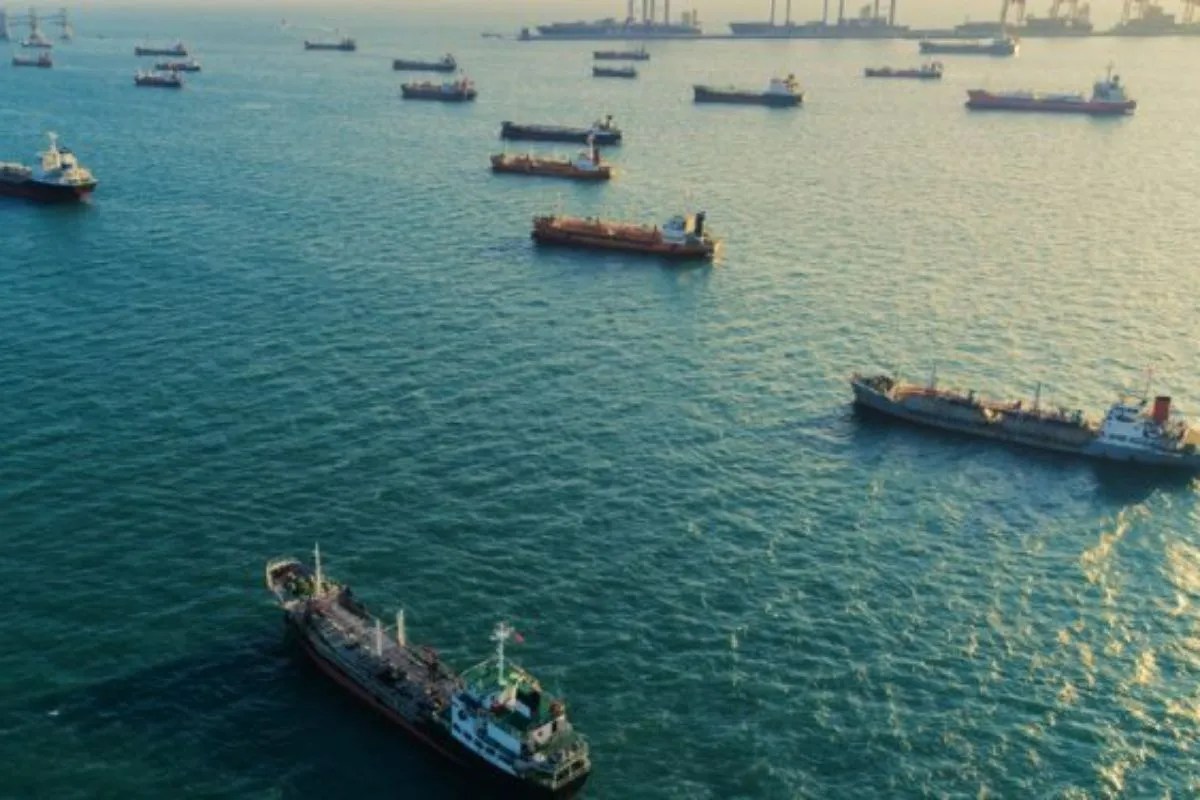
The Pentagon recently declared a fundamental shift in the Persian Gulf, asserting that Iran no longer holds operational control over the Strait of Hormuz and that international forces will guarantee total transit security. It is a bold, sweeping claim designed to project absolute deterrence. It is also an operational fantasy.
The idea that any single navy can permanently sanitize a twenty-one-mile-wide chokepoint bordered by hundreds of miles of heavily fortified, asymmetric coastline ignores fifty years of naval warfare history. While Washington seeks to reassure commercial shipping markets, the reality on the water is not one of total control, but of a precarious, highly volatile stalemate.
The Myth of Total Maritime Dominance
Naval supremacy is easy to declare from a press briefing room in Virginia. It is significantly harder to enforce when a low-cost drone can disable a multi-billion-dollar destroyer. The US military’s announcement suggests a permanent shift in the balance of power, yet the geography of the region remains stubbornly unchanged.
The Strait of Hormuz is a geographic bottleneck. At its narrowest point, the shipping lanes consist of just two two-mile-wide channels for inbound and outbound traffic, separated by a two-mile buffer zone. This means every commercial tanker, whether carrying crude to Asia or liquefied natural gas to Europe, must pass within easy striking distance of the Iranian coastline.
Iran does not need a blue-water navy to disrupt this flow. Their entire doctrine relies on asymmetric denial. Over three decades, the Islamic Revolutionary Guard Corps Navy (IRGCN) has built a force specifically designed to exploit the constraints of these shallow waters. They utilize thousands of fast-attack craft, smart mines, shore-based anti-ship cruise missiles, and loitering munitions. To claim Iran has lost control assumes they ever sought conventional control in the first place. They did not. Their goal has always been the ability to inject unpredictable chaos at a moment's notice.
The Math of Asymmetric War
Consider the economic asymmetry at play here. A modern Western coalition warship fires air-defense missiles that cost between two million and four million dollars per shot. The drones and anti-ship ballistic missiles they are intercepting frequently cost less than twenty thousand dollars to manufacture.
This is an unsustainable defensive equation. A prolonged campaign of attrition favors the actor with the cheaper ammunition. Even if naval escorts achieve a ninety-nine percent interception rate, the single missile or drone that gets through can cause catastrophic damage, spike global insurance premiums, and effectively halt commercial traffic. Shipping companies do not operate on military risk tolerances; they operate on profit margins. If insurance rates double overnight, the strait is functionally closed, regardless of how many flags the US Navy flies in the area.
Why the Current Security Framework is Fragile
The current international mission to secure the gulf relies on a patchwork coalition of willing nations. While on paper this presents a unified front, the operational reality is fractured by competing political priorities.
European partners frequently balk at aggressive American rules of engagement, fearing that a heavy-handed response will trigger a wider regional conflict that directly threatens their energy supplies. Asian nations, which rely most heavily on Persian Gulf crude, prefer to navigate these waters through quiet diplomacy and back-channel assurances rather than military escort.
[Persian Gulf] -> [Strait of Hormuz (21 Miles Wide)] -> [Gulf of Oman]
                       |
             [Iranian Coastline: Missiles, Drones, Mines]
This lack of strategic cohesion creates vulnerabilities that state actors are experts at exploiting. They do not launch massed, fleet-on-fleet assaults. Instead, they probe for weak links. They shadow a lone tanker. They deploy GPS-jamming spoofers that cause commercial vessels to drift inadvertently into territorial waters. They utilize "dark fleet" tactics where ownership of vessels is so obscured that determining the legal justification for military intervention becomes a legal nightmare.
The Invisible Weapon Underwater
While drone strikes capture the headlines, the far more significant threat lies beneath the surface. The shallow, noisy waters of the Persian Gulf are a nightmare environment for sonar detection. Acoustic tracking is warped by varying thermal layers, high salinity, and heavy commercial shipping noise.
Iran possesses a substantial fleet of midget submarines, such as the Ghadir class, alongside older Russian-built Kilo-class vessels. These small submarines can sit silently on the sandy bottom of the strait, completely undetectable to surface vessels, waiting to drop bottom-moored rising mines or fire heavyweight torpedoes. A single unconfirmed mine detonation in the shipping channels would instantly freeze all commercial traffic. No commercial captain will risk their crew, and no underwriter will insure the hull, until the entire area is swept. Minesweeping is a notoriously slow, methodical process. It takes weeks to clear an area that took hours to pollute.
The Insurance Illusion and Global Markets
The statement by US forces aims to calm global energy markets, but commodities traders are rarely swayed by military rhetoric. They look at risk premiums.
When a state actor demonstrates the capability to seize a vessel, as has occurred repeatedly over the last few years, the market adjusts. The shipping industry uses a mechanism known as the War Risk Premium. This is an additional fee charged by syndicates like Lloyd's of London for vessels entering high-risk zones.
- The Baseline: Under normal conditions, transit fees are predictable and factored into long-term contracts.
- The Escalation: Following a single kinetic incident, war risk premiums can jump by five hundred percent within forty-eight hours.
- The Consumer Impact: This cost is not absorbed by the shipping lines; it is passed directly down the supply chain, manifesting as higher prices at the pump and increased manufacturing costs globally.
Therefore, military protection is only effective if it drives these premiums down to baseline levels. Currently, they remain elevated because the industry understands that a naval escort cannot be everywhere at once. A destroyer cannot wrap itself around a three-hundred-meter supertanker to shield it from every vector of attack.
The Red Line That Keeps Moving
The fundamental flaw in the declaration of total security is the problem of red lines. For deterrence to work, the penalty for crossing the line must be swift, certain, and severe. In the Persian Gulf, that line has drifted constantly.
When commercial drones are shot down, the response is diplomatic condemnation. When tankers are limpet-mined, the response is increased patrolling. This measured approach is understandable from a geopolitical standpoint—nobody wants to trigger a war that could shut down twenty percent of the world's petroleum supply. However, this restraint signals to adversaries that there is a wide gray zone where they can operate with near-impunity. They know exactly how far they can push without triggering a devastating retaliatory strike.
This gray-zone warfare is precisely where Western militaries struggle. They are built for decisive, high-intensity conflict. They are not optimized for a low-intensity, protracted war of nerves where the enemy uses deniable assets, civilian proxies, and environmental hazards to erode the rules-based international order.
True maritime security in the region cannot be achieved by declarations or patrols alone. It requires a fundamental shift in how the international community handles maritime law enforcement and gray-zone aggression. Until the cost of disrupting commerce outweighs the political benefits for regional actors, the Strait of Hormuz will remain a dangerous trigger point, always one miscalculation away from a global economic crisis. Use caution when reading declarations of total control; the sea is far too vast, and the coast is far too close.