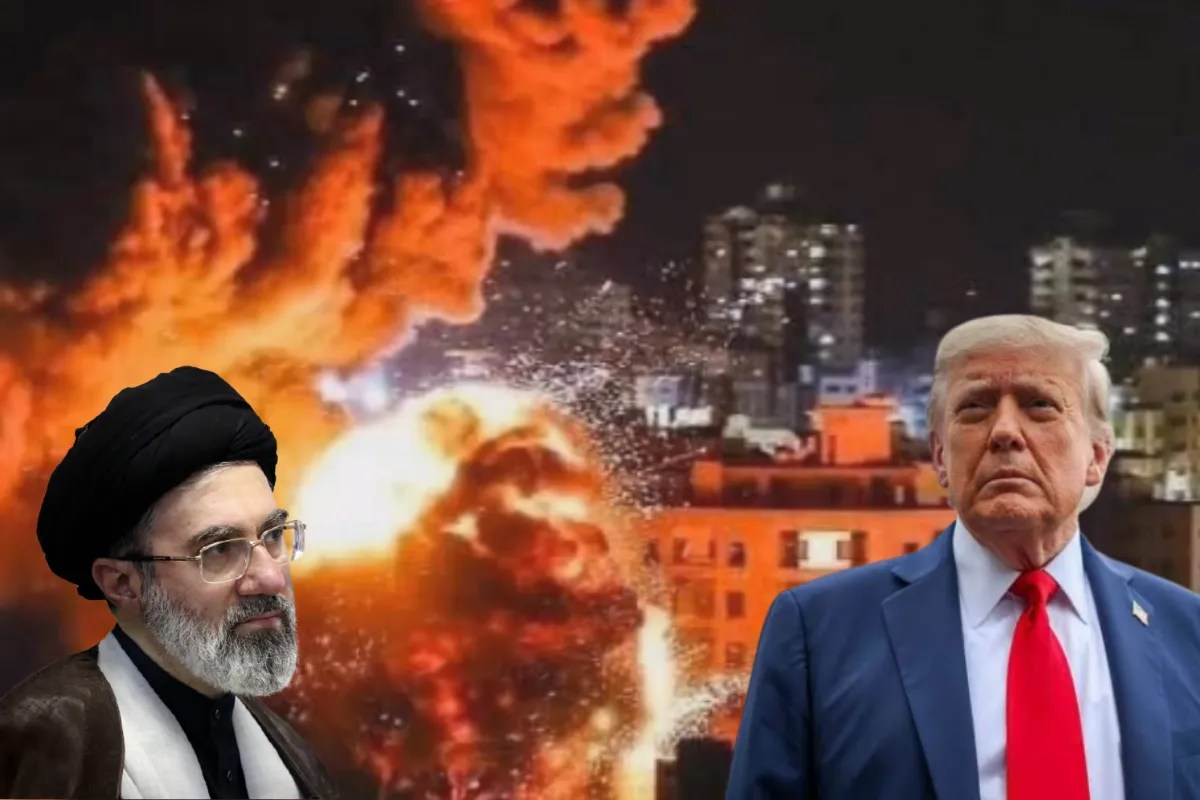
The death of three Iranian soldiers in a United States missile strike on July 30, 2026, is not merely a localized military casualty. It represents a definitive collapse of the fragile diplomatic framework that attempted to stabilize the world’s most critical maritime energy chokepoint. While headlines focus on the tactical exchange, the reality is a widening regional conflagration that has moved far beyond the initial scope of the 2026 Iran war.
For five months, the Strait of Hormuz has functioned as a testing ground for American resolve and Iranian desperation. The brief, ineffective memorandum of understanding signed in mid-June—intended to provide a sixty-day glide path to peace—is now functionally dead. When Iran targeted three commercial vessels earlier this month for bypassing its unilaterally imposed transit protocols, it signaled that Tehran had no intention of relinquishing its claim to the waterway. The United States response, culminating in the recent strikes, demonstrates a clear pivot back to direct, kinetic intervention.
The mechanics of this conflict are rooted in a fundamental disagreement over sovereignty. Iran, under significant economic strain and domestic pressure, views the strait as a primary bargaining chip to force the international community to accept its terms of engagement. By requiring ships to follow preapproved routes and threatening those that do not, the Islamic Revolutionary Guard Corps seeks to institutionalize a "tolls-and-control" system that the United States and its regional allies refuse to recognize.
Consider a hypothetical scenario where global shipping companies were forced to pay fees to a non-state militia to pass through the English Channel; the resulting disruption to European supply chains would be catastrophic. This is the logic Tehran is attempting to apply to the Persian Gulf.
The human and physical costs are compounding. Beyond the soldiers killed in Zanjan, the broader conflict has now entangled neighboring nations. Reports from Kuwait regarding a fatal strike on a facility and repeated missile interceptions over Jordan underscore that the geography of this war is expanding. When a conflict shifts from a localized naval standoff to an expansive regional air war, the predictability of supply lines vanishes. Insurance premiums for tankers, which once spiked four to six times following the initial February hostilities, remain tethered to the volatility of daily military maneuvers.
Diplomacy has become a secondary concern for actors currently operating under the assumption that military force is the only viable language. The United States maintains a posture of forceful containment, aiming to keep the shipping lanes open through escort operations and aerial deterrence. Tehran, however, is betting that the cumulative fatigue of the United States and its domestic electorate will eventually force a retreat.
The strategy of "maximum pressure" has transitioned into a war of attrition. Washington’s reliance on airpower to dismantle Iranian maritime capabilities has yet to yield a long-term strategic advantage. Instead, it has prompted Tehran to diversify its methods—using mine-laying, satellite spoofing, and ground-based missile strikes against secondary targets—to force the U.S. to spread its defensive assets thin.
The instability at the strait now ripples through every sector of the global economy. Natural gas shortages, expected to reach a daily deficit of 100 million cubic meters this winter in Iran, reflect the internal damage of these attacks, yet the regime remains committed to its blockade tactics.
The current situation is not a temporary hiccup in regional security. It is a reordering of how energy is moved across the globe. As Saudi Arabia coordinates a fourteen-nation maritime coalition and Iran pivots further toward its proxy networks, the expectation of a return to the pre-2026 status quo is becoming increasingly unrealistic. The maritime world is bracing for a sustained period of contested navigation. Each missile fired is a reminder that the Strait of Hormuz is no longer a neutral passage, but the primary front line of a struggle for regional dominance that shows no signs of resolution. The path forward is not found in the wreckage of broken treaties, but in the hardening reality of an entrenched, multi-front engagement.