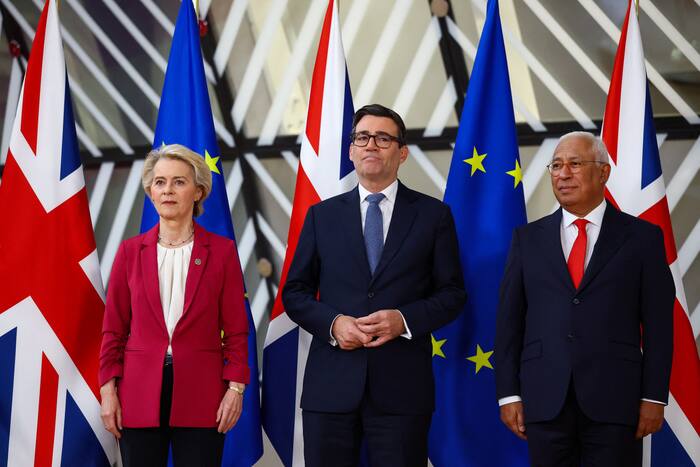
Diplomats love a summit. It gives them an excuse to drink lukewarm coffee in Brussels, issue a joint communique filled with empty adjectives, and pretend structural economic friction disappears because two politicians smiled for the cameras.
The coverage surrounding the UK-EU summit and Andy Burnham’s campaign to "mend Brexit damage" falls straight into the laziest trap in European political journalism. The mainstream consensus treats the post-Brexit trade slump like a bruised marriage that just needs better communication, a few regional mayors shaking hands in Northern capitals, and a "reset" in diplomatic tone.
That narrative is dangerously naive.
You cannot hug away a customs border. You cannot mend regulatory divergence with regional goodwill. When the United Kingdom left the European Single Market and the Customs Union, it did not merely damage a relationship; it erected a legal and technical wall between two distinct regulatory jurisdictions. Pretending that high-level summits or sub-national diplomacy from Greater Manchester can meaningfully reverse that math is a distraction from the hard, unglamorous realities of international trade.
The Illusion of the Diplomatic Reset
Mainstream commentators treat "strengthening ties" as an economic stimulus package. They point to security pacts, youth mobility whispers, and regional delegations led by figures like Andy Burnham as proof that Britain is quietly undoing the economic drag of 2016.
Here is what they miss: Brussels does not run on vibes.
The European Union is a rules-based legal machine. Its Single Market exists precisely because member states surrender sovereignty to a shared regulatory rulebook enforced by the European Court of Justice (ECJ). There is no secret backdoor where a British metro mayor—no matter how popular he is in Manchester—can negotiate preferential market access for Northern tech firms or manufacturers while Westminster remains outside the EU’s legal architecture.
I have sat across the table from mid-sized British exporters in Birmingham and Leeds who believed the early political promises that "common sense" would prevail at the border. They watched their profit margins evaporate not because EU officials hated Britain, but because sanitary and phytosanitary (SPS) checks, rules-of-origin paperwork, and conformity assessments are binary legal requirements. Either your goods meet EU law under EU jurisdiction, or they stop at Dover for inspection.
A summit changes zero lines of the Trade and Cooperation Agreement (TCA). Unless London is willing to accept dynamic alignment—meaning Britain copies EU rules without having a vote on writing them—every "reset" is just theater for domestic voters.
What Andy Burnham Gets Wrong About Regional Trade
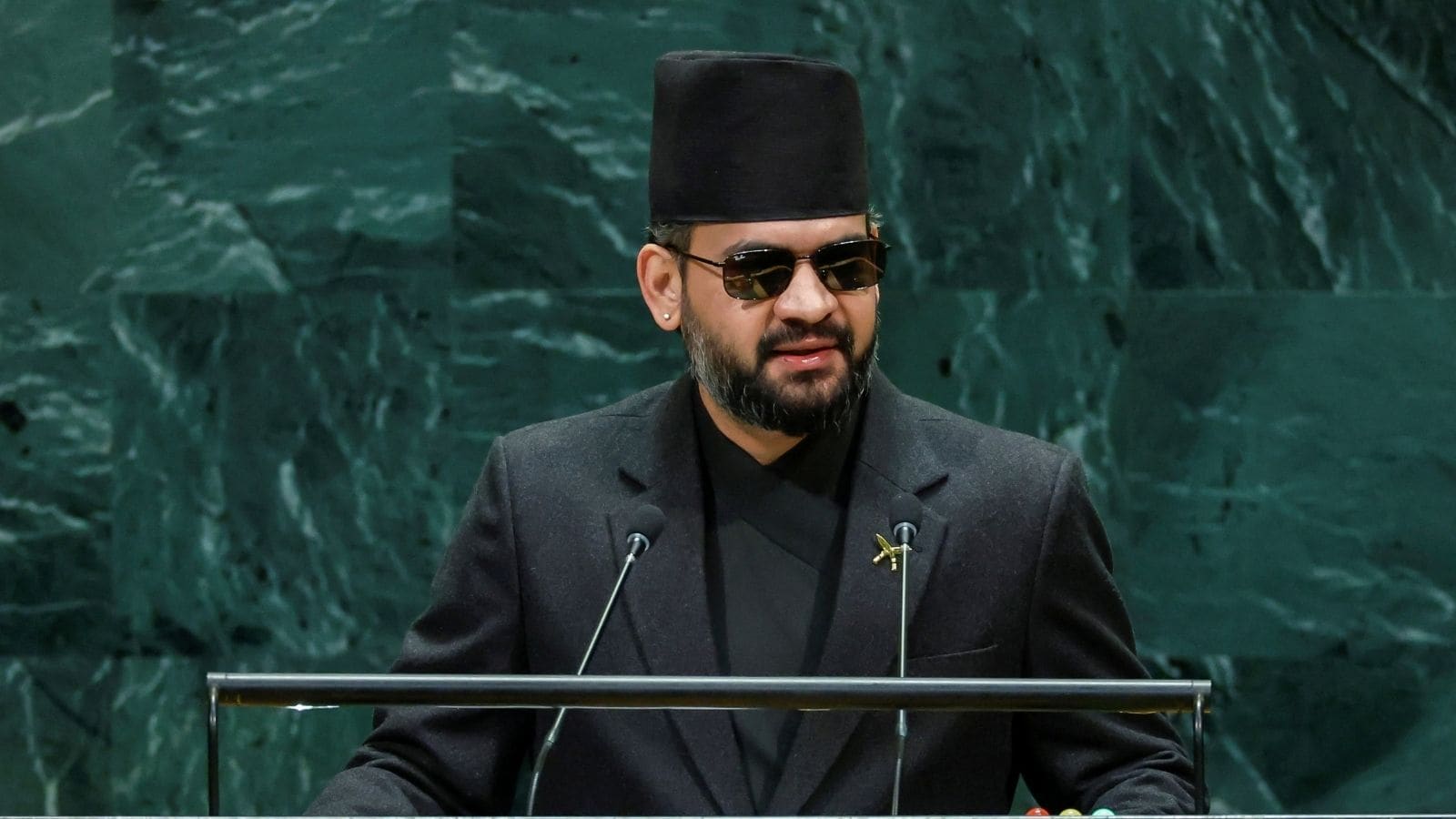
Andy Burnham’s push to forge direct ties with European regions and repair the damage of Brexit makes for great local headlines. It positions him as a pragmatic statesman cleaning up Westminster’s mess.
Economically, it solves almost nothing.
Sub-national diplomacy—often called paradiplomacy—works well for cultural exchanges, university research partnerships, and sharing best practices on public transit. What it cannot do is alter tariffs, eliminate non-tariff barriers, or grant mutual recognition of professional qualifications.
Consider the actual mechanics of trade friction:
- Rules of Origin: Under the TCA, goods moving tariff-free between the UK and EU must prove sufficient local content. If a Manchester manufacturer imports components from Asia, assembles them in Salford, and ships them to Rotterdam, they still hit tariff walls if they miss threshold percentages. No regional pact with the mayor of Rotterdam changes EU customs code.
- Services Passporting: Financial, legal, and architectural firms in the UK lost automatic passporting rights into the EEA. A British architect cannot simply sign off on blueprints in Berlin because Greater Manchester signed a memorandum of understanding with a German state.
- VAT and Customs Declarations: Small businesses stopped exporting to the EU not because of hostility, but because the fixed administrative cost of customs brokerage eats the entire margin on orders under a few thousand pounds.
Burnham is diagnosing the symptom accurately—British regions are bleeding trade volume—while prescribing an aspirin for a compound fracture.
The Wrong Question Everyone Keeps Asking
If you look at public search trends and parliamentary debates, everyone asks the exact same question: "How can the UK and EU rebuild trust to fix trade?"
That is the wrong question entirely. Trust was never the bottleneck. Sovereignty vs. market access is the bottleneck.
Let us dismantle the three biggest myths driving the current summit coverage:
Myth 1: A Swiss-Style Deal Fixes Everything
Many commentators suggest Britain can simply cherry-pick sectors—like chemicals, automotive, or veterinary agreements—to smooth out friction without rejoining the Single Market.
- The Reality: Brussels spent a decade trying to unwind the messy bilateral treaties it signed with Switzerland because the Swiss model created constant legal disputes and cherry-picking headaches. The European Commission has explicitly stated it will never replicate the Swiss model with the UK. Any veterinary or SPS agreement requires Britain to follow EU food and agricultural rules dynamically, enforced by the ECJ. The moment Westminster accepts that, it cannot strike independent trade deals with countries like the US or Australia that use different agricultural standards.
Myth 2: Security Cooperation Buys Economic Concessions
The prevailing wisdom suggests that because Europe faces severe security threats on its eastern flank, the EU will soften its trade stance in exchange for British military and intelligence muscle.
- The Reality: In Brussels, Directorate-General for Trade (DG Trade) and the European External Action Service (EEAS) do not trade security guarantees for Single Market exemptions. Protecting the integrity of the Single Market is an existential priority for the European Commission. Even during the height of the Ukraine crisis, Brussels refused to bend rules-of-origin requirements for electric vehicle batteries until European automakers themselves lobbied for a temporary delay. Britain cannot barter troops for tariff relief.
Myth 3: Young Voters and Politicians Can Quietly Reverse Brexit
There is a quiet assumption among pro-European elites that incremental steps—a youth mobility scheme here, Horizon Europe re-entry there—will naturally snowball back into the Customs Union within a decade.
- The Reality: Rejoining the Customs Union or Single Market is not an administrative tweak; it is a constitutional earthquake that requires unanimous ratification by all 27 EU member states. Imagine a scenario where a future British government applies to rejoin the Single Market. Spain would immediately raise Gibraltar. France would demand long-term fishing quotas. Greece would bring up cultural artifacts. Every single member state holds a veto, and none of them have any incentive to offer Britain the rebates and opt-outs it enjoyed prior to 2016.
The Heavy Hitters Already Know the Math
Serious trade economists—from the Centre for European Reform (CER) to the UK in a Changing Europe think tank—have documented the exact numbers for years. The Office for Budget Responsibility (OBR) maintains that leaving the EU will reduce the UK's long-run productivity by roughly 4 percent compared to remaining, with both exports and imports sitting roughly 15 percent lower over the long term.
Notice what the OBR model does not include: a variable for "friendly summits."
The gravity model of trade—one of the most empirically verified principles in economics—dictates that countries trade most intensely with large, wealthy neighbors geographically close to them. When you introduce regulatory friction between neighbors, trade drops automatically. You do not overcome gravity with speeches.
The Contrarian Admission: Why Brussels Also Loses
To be completely honest, the hardline EU posture has a massive blind spot too. By treating regulatory purity as sacred, Brussels is strangling its own industrial competitiveness.
Europe is falling behind the United States and China in artificial intelligence, green tech manufacturing, and capital markets depth. Pushing London—Europe's deepest financial pool and premier defense powerhouse—away from seamless capital integration hurts Frankfurt, Paris, and Amsterdam just as much as it hurts the City of London. While European politicians lecture Britain on regulatory divergence, European pension funds struggle to find the deep liquidity pools that London effortlessly provides.
Both sides are trapped in performative politics. Westminster pretends it can get Single Market perks without Single Market rules. Brussels pretends it can afford to keep its closest economic and military ally at arm's length while its own industrial base stagnates.
What Smart Operators Do Instead of Waiting for Summits
If you run a business, manage capital, or advise policymakers, waiting for Westminster and Brussels to "mend" Brexit is a losing strategy. Politicians operate on five-year election cycles; supply chains operate on quarterly cash flow.
Stop watching diplomatic summits and execute the moves that actually bypass the friction:
- Establish a True EU Subsidiary—Not a Shell: If more than 20 percent of your revenue comes from the EU27, stop exporting finished goods from the UK. Set up an operational entity inside the Single Market—Ireland, the Netherlands, or Poland—and hold inventory locally. Use the UK strictly for intellectual property, R&D, or high-margin specialized components.
- Audit Your Bill of Materials for Rules of Origin: Most British manufacturers bleed tariffs because they rely on legacy supplier contracts that fail TCA origin thresholds. Map every sub-component down to the Harmonized System (HS) code. Switching a single tier-two supplier from East Asia to a UK or EU vendor often unlocks zero-tariff status across your entire finished product line.
- Pivot High-Growth Sales to Non-EU Regulatory Blocs: The entire point of leaving the EU regulatory orbit was the freedom to move faster in high-growth markets. Look at the Comprehensive and Progressive Agreement for Trans-Pacific Partnership (CPTPP) and bilateral digital trade deals with Singapore and Japan. If you are going to pay the fixed cost of navigating foreign compliance anyway, spend that compliance budget in economies growing at 4 percent a year rather than stagnant Eurozone markets growing at 0.8 percent.
- Demand Regulatory Divergence Where It Counts: If you are lobbying Westminster, stop asking them to beg Brussels for minor border tweaks. Demand aggressive domestic deregulation in clinical trials, AI data governance, and financial services listings. If Britain keeps EU rules while sitting outside EU markets, it gets the worst of both worlds—all the bureaucracy with none of the access.
Political summits exist to give leaders a photo opportunity before they fly home to their domestic media markets. They do not rewrite customs codes, they do not eliminate veterinary border posts, and they do not restore lost GDP.
Stop applauding the handshake and look at the tariff schedule.