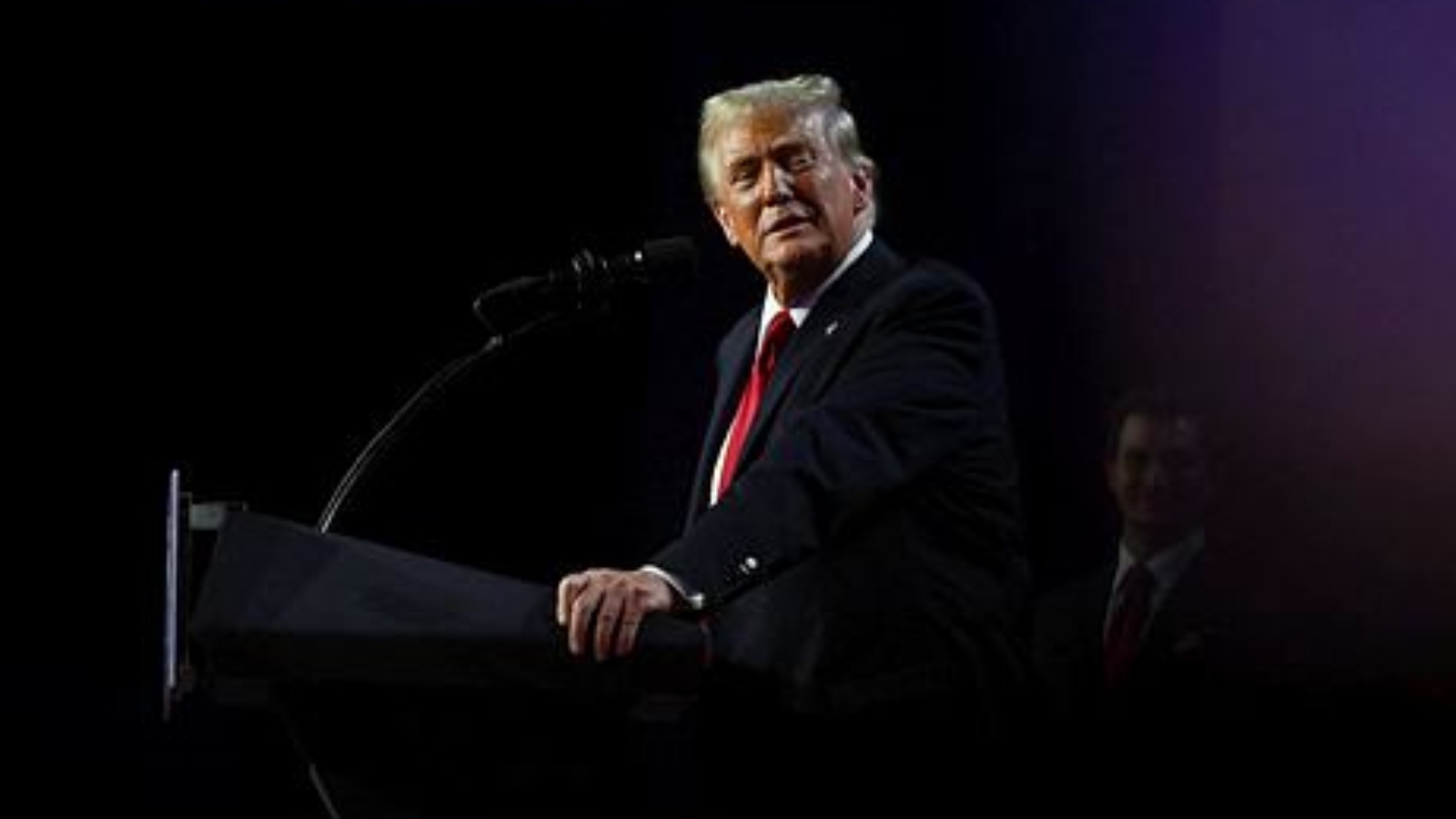
Political journalists love a clean, binary narrative. They have spent the entire primary season framing the Texas Republican Senate runoff between John Cornyn and Ken Paxton as a tidy ideological boxing match. It is the Beltway establishment versus the MAGA insurgency. It is institutional norms versus populist fire. When Donald Trump dropped his late-game endorsement on Paxton, the press corps dutifully dusted off their favorite playbook, declaring it a monumental test of the former president's kingmaking power.
They are asking the entirely wrong question.
This race is not a barometer of Trump’s grip on the modern GOP. That debate concluded years ago. Treating this primary as a standard factional struggle misses the underlying rot. The $120 million-plus carpet-bombing campaign between Cornyn and Paxton is not a war for the soul of the Texas Republican Party. It is a mutually assured destruction pact that has effectively neutralized the state party's structural advantages, all while handing Democrat James Talarico a golden ticket to November.
The lazy consensus insists that a Paxton victory proves the base owns the state, while a Cornyn victory proves the old guard can still hold the line. The brutal reality? Both conclusions are wrong. Whichever candidate walks out of this primary alive will be a fundamentally damaged nominee heading into a general election where Texas is no longer a guaranteed firewall.
The Myth of the General Election Safeguard
Let's dismantle the establishment premise first. National Republican strategists have been hyperventilating for months, begging Trump to back Cornyn. They argue that Cornyn, a four-term incumbent and consummate institutionalist, is the only safe bet to protect a razor-thin Senate majority. They view his massive $91 million war chest as proof of viability.
I have watched political operations blow through nine-figure sums on the exact same flawed assumption. Money cannot purchase a compelling reason to exist.
Cornyn’s entire campaign strategy has relied on a desperate, reverse-engineered attempt to prove he is just as aggressive as the grassroots. When your entire political brand is built on being the serious, pragmatic legislator who cuts bipartisan deals—like the 2022 gun safety bill after Uvalde—you cannot suddenly pivot to hunting for phantom threats in local real estate developments without looking hollow.
By spending tens of millions trying to out-populist Paxton, Cornyn did not expand his appeal. He narrowed the entire electorate. He validated the opposition's framework. When an institutionalist spends his time and capital speaking exclusively to the hardest of the hardcore voters, he is not building a general election coalition. He is merely setting his own house on fire to stay warm.
The Loyalty Trap
On the flip side, the MAGA commentary machine is celebrating Paxton’s Trump endorsement as a masterstroke of pure political loyalty. Vice President JD Vance defense of Paxton summarized the ethos perfectly: when it counted, Paxton was there.
But loyalty is not an electoral strategy in a shifting state.
Paxton’s political baggage is not just a collection of standard opposition research bullet points; it is an entire logistical train wreck. We are talking about a candidate who has survived a nine-year securities fraud indictment, an impeachment trial by his own party in the Texas House, and an FBI investigation triggered by his own top staff. His personal life has been laid bare in public legislative testimony.
The populist base views these scars as proof of a fighter who has survived the gauntlet. The broader electorate views them as a profound distraction.
Imagine a scenario where the national Republican apparatus has to divert tens of millions of dollars from genuine flip opportunities in the Midwest just to defend a seat in Texas. That is not a victory for the movement. It is a massive structural tax. The premise that a primary victory translates cleanly into a populist mandate completely ignores the independent and suburban voters who have steadily chipped away at Republican margins in the state's major metropolitan areas.
The Real Winner Isn't on the Ballot
People also ask: "Can a Democrat actually win a statewide election in Texas?"
For thirty years, the answer was a definitive no. The state’s political gravity always pulled right. But by turning this primary into an absolute mud pit, Texas Republicans have created the exact environment needed for a political anomaly.
James Talarico does not need to build a historic, transformative movement to win in November. He just needs to stand still while his opponents finish each other off.
The hyper-negative tone of this primary runoff—held right after a holiday weekend—is designed to depress turnout. It ensures that only the most ideologically rigid voters participate. While the Republican base shrinks its own sandbox, Talarico is positioning himself to appeal to the exact moderate, suburban, and business-minded voters who are completely alienated by the current spectacle.
The data from recent polling shows a dead heat regardless of who wins the primary. A race that should be a safe Republican hold is sitting squarely in tossup territory.
Stop looking at the Texas primary as a gauge of Trump's endorsement power or a battle for the party’s direction. It is a showcase of structural blindness. The institutional wing abandoned its own identity to chase a base that will never trust it, while the populist wing is on the verge of nominating a candidate whose vulnerabilities could break a thirty-year winning streak. The party is winning the primary and losing the plot.