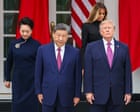
Every time a world leader steps off a tarmac and shakes hands under a barrage of camera flashes, the commentariat loses its collective mind. Headlines scream about breakthrough frameworks, red lines drawn in the sand, and meticulously crafted terms designed to avert war.
It is theater. Expensive, dangerous, high-stakes theater. Read more on a related subject: this related article.
When reports emerge from high-level summits detailing how Xi Jinping supposedly laid out precise terms to prevent a United States-China military conflict, the mainstream media swallows the narrative whole. They want you to believe that peace is just a poorly drafted contract away. They think if an American president just listens carefully enough to Beijing’s grievances, a catastrophic clash can be avoided with a polite communiqué.
This is a profound, dangerous delusion. Further analysis by USA Today explores similar views on this issue.
Geopolitical tectonic plates do not grind to a halt because two men in tailored suits exchanged talking points behind closed doors. Superpower friction is not a misunderstanding waiting for a diplomatic dictionary. It is a structural inevitability.
Let us dismantle the lazy consensus piece by piece.
The Myth Of The Negotiated Truce
The fundamental flaw in how the press analyzes superpower relations is the assumption that conflict is a bug in the system, an accidental malfunction caused by a hot-tempered pilot over the South China Sea or an ill-timed naval patrol.
It is not. It is the feature.
When Xi Jinping outlines terms during a summit, he is not offering an olive branch. He is mapping out the perimeter of China’s core security and economic imperatives in a world where America’s post-Cold War hegemony is actively eroding. These are not negotiable items on a spreadsheet. They are non-negotiable red lines for a rising power determined to reshape the global order, facing off against an incumbent superpower determined to preserve its unipolar dominance.
Think of it like two tectonic plates sliding past each other. You cannot negotiate an earthquake out of existence by asking the plates to be polite.
I have watched defense analysts and geopolitical risk consultants spend decades treating diplomatic readouts like prophetic texts. They parse every adjective, every nuance of official state media statements, trying to find a hidden blueprint for peace. It is a waste of time. Officials do not telegraph their true strategic posture in state-sanctioned communiqués. They project resolve. They set narrative traps.
If you believe a summit can permanently avert conflict, you misunderstand what these meetings are actually for. They are not designed to resolve contradictions; they are designed to manage the temperature while both sides continue their relentless march toward strategic decoupling.
The Real Battlefield Is Not The Taiwan Strait
Everyone loves a good naval standoff story. A destroyer cutting across the bow of a frigate makes for great television. It gives pundits something to hyperventilate about on cable news.
It is also a distraction.
The real war between the United States and China has never been about freedom of navigation drills or territorial claims in the South China Sea. Those are proxy skirmishes, tactical manifestations of a much deeper, colder war fought in quiet laboratories, sovereign currency clearinghouses, and advanced manufacturing facilities.
Look at the actual mechanics of modern statecraft. The conflict is being waged through export controls, technological chokepoints, supply chain reshoring, and alternative financial infrastructure. When Beijing demands concessions on technology access or tries to bulletproof its economy against extraterritorial American sanctions, it is preparing for a world of absolute separation.
When Washington slaps sweeping restrictions on advanced logic chips and artificial intelligence hardware, it is attempting to lock a rival out of the technological future.
These are zero-sum games. There is no middle ground where both sides win. Either American technological dominance endures, or Chinese industrial self-sufficiency reshapes the globe. A handshake between presidents cannot bridge a chasm built on incompatible economic models and competing visions of global governance.
To pretend otherwise is to mistake the weather report for the climate.
The Monetary Subplot Nobody Wants To Talk About
While television networks fixate on military posturing, the true frontline of this rivalry is shifting to the monetary architecture of the global economy.
For decades, the weaponization of the dollar-denominated financial system gave Washington unmatched extraterritorial reach. Sanctions became the default instrument of American foreign policy. Nations watched assets freeze overnight and took furious notes.
When Beijing lays out its terms behind closed doors, sovereign currency defense and de-dollarization initiatives sit squarely at the center of the ledger. China is quietly constructing bilateral currency swaps, expanding cross-border digital yuan pilot programs, and encouraging commodity trade settled in non-dollar currencies across the Global South.
This is not about trade balance sheets. It is about creating a parallel financial gravity well that neutralizes America’s primary instrument of geopolitical coercion. You can sign all the bilateral trade agreements you want in front of the cameras, but beneath the surface, both superpowers are busy building financial fallout shelters.
The Dangerous Mirage Of Guardrails
For years, foreign policy elites have obsessed over the concept of guardrails. We hear it constantly in diplomatic circles: we need guardrails to prevent competition from veering into conflict.
Let us look at what a guardrail actually implies in engineering terms. Guardrails keep a vehicle on a designated road, moving toward a shared destination.
That metaphor is completely broken.
The United States and China are not driving on the same road. They are barreling toward each other on parallel tracks, each convinced that the other is trespassing on their rightful turf. Asking for guardrails in this environment is like asking for seatbelts on a collision course. They might mitigate the worst of the initial impact, but they do not alter the trajectory.
In fact, the obsession with guardrails creates a false sense of security. It allows leaders to check a diplomatic box while quietly doubling down on the very policies that make conflict more likely. It substitutes process for substance.
When a crisis actually hits—whether over territorial disputes, critical supply chains, or cyber warfare—those emergency hotlines will not stop national survival instincts from kicking in. History is littered with treaties, hotlines, and security pacts that dissolved the moment vital national interests clashed. The Anglo-German naval race before the First World War had plenty of diplomatic channels and polite communiqués too. Look how well that turned out.
The Structural Inevitability Of Disruption
Why do smart people keep falling for the summit narrative? Because the alternative is terrifying. Admitting that structural competition must lead to friction forces leaders and investors to confront a reality they despise: uncertainty.
Markets crave stability. Media outlets crave clean narratives with heroes, villains, and neat resolutions. Acknowledging that the bilateral relationship is structurally adversarial—that every meeting is merely a tactical pause in a long-term strategic contest—breaks the comforting illusion of globalized harmony.
So we get the theater of the summit. We get choreographed handshakes. We get breathless reports of terms laid out and lines drawn.
Let us be brutally honest about what those terms actually mean. When Beijing lays out its baseline expectations, it is signaling its refusal to accept American hegemony as a permanent condition. When Washington rejects those terms, it is signaling its refusal to manage its own decline gracefully.
This is an irreconcilable conflict of institutional wills.
If you run a multinational corporation, manage a global supply chain, or allocate capital across borders, you must purge the illusion of a grand diplomatic settlement from your operational model. You cannot hedge your bets on a summit saving your overseas assets.
Navigating The Cold Reality
How do you operate when the baseline assumption of permanent globalization is dead? You stop planning for a return to normal.
Normal is gone. The post-Cold War era of hyper-efficient, frictionless global trade driven by diplomatic goodwill is a historical anomaly that has officially expired. We have entered an era of fragmented sovereignty, industrial policy, and weaponized interdependence.
This requires a complete inversion of strategic thinking.
First, stop listening to public declarations and start watching capital flows and regulatory mandates. Ignore what leaders say in front of the press corps; look at where they are building domestic manufacturing capacity, hoarding critical minerals, and securing digital borders.
Second, accept that redundancy is not a cost center; it is insurance against extinction. The obsession with lean, ultra-optimized supply chains hooked into a single geopolitical rival was corporate malpractice disguised as efficiency. Companies that spent the last decade optimizing for cost while ignoring sovereign risk are now paying the piper.
Third, recognize that peace between superpowers has never been maintained by mutual affection or well-meaning communiqués. It has always been maintained by a terrifying, unblinking calculus of mutual deterrence. When both sides realize that the cost of escalation outweighs any conceivable gain, the guns stay silent. That deterrence is built through technological resilience, economic self-reliance, and hard military readiness—not through the polite fiction of summit diplomacy.
The Uncomfortable Truth
The narrative that a meeting between heads of state can neatly package and resolve superpower friction is comforting. It lets us sleep at night. It keeps stock markets humming for another quarter.
It is also a lie.
The terms laid out in those high-stakes rooms are not peace agreements. They are battle plans disguised as diplomacy. They define the boundaries of the next phase of competition.
Pretending otherwise is a luxury we can no longer afford. The collision course is set. Stop waiting for a handshake to save you from reality.


