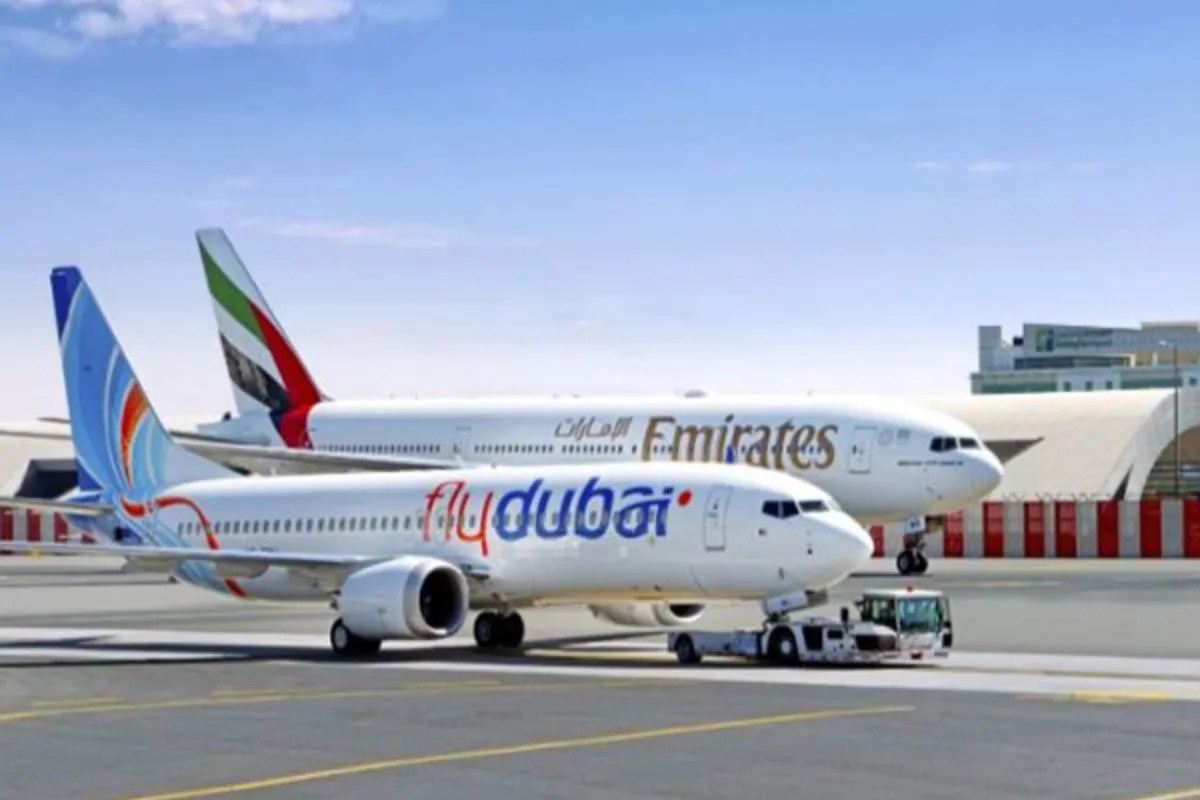
A commercial jet flying from Dubai to Tel Aviv squawks 7700. It touches down on a runway in Saudi Arabia. Within minutes, the internet is flooded with breathless commentary, panic-laced headlines, and amateur geopolitical analysts screaming about high-stakes diplomatic showdowns.
It is exhausting. And it is completely wrong.
Let us dismantle the sensationalist nonsense right now. Every single time a flight operating between the United Arab Emirates and Israel experiences an onboard hiccup and diverts to a Gulf state, the commentariat treats it like a secret war movie script come to life. They want you to believe that pilots are sweating bullets over hostile airspace, that passengers are staring out windows wondering if they are about to become international political prisoners, and that every routine technical snag is a sign of impending regional collapse.
The reality is infinitely more boring. And infinitely more professional.
Gravity does not care about your diplomatic passport. When an aircraft is burning fuel, experiencing a medical emergency, or registering an avionics fault at 36,000 feet, the flight crew does not flip through a Rolodex of foreign ministries to check who is currently speaking to whom. They look at the nearest operational runway that can safely swallow a widebody jet, point the nose of the plane toward it, and land.
If that runway happens to be in Riyadh or Dammam, so be it. Aviation safety protocols were written by engineers and operators, not cable news pundits.
The Anatomy Of A Squawk 7700
Let us define what actually happens when a flight declares an emergency, because the general public has a wildly cinematic misconception of the process.
When a pilot selects 7700 on their transponder, they are broadcasting a general emergency to every air traffic control radar screen in the vicinity. It is not an act of surrender. It is an administrative override. It instantly declutters radar scopes, commands priority handling, and clears the path through congested corridors.
I have sat in dispatch rooms when crews have punched in that code over various regions. The adrenaline spikes, yes, but the reaction is algorithmic. Checklist execution takes over. Every single controller in the sector drops everything to funnel traffic away from the distressed aircraft.
In the case of Gulf corridors, the airspace is tightly packed. Traffic volumes between the UAE, the broader Arabian Peninsula, and the Mediterranean have exploded over the last few years. Statistically, diversions are a mathematical certainty when you scale up flight frequencies. A hydraulic pressure fluctuation, a smoke detector false positive in a cargo hold, or a passenger suffering a cardiac arrest requires an immediate diversion.
When you are midway across the Arabian Peninsula, turning back to Dubai or pushing forward to Tel Aviv might take longer than dropping down onto the nearest Saudi tarmac. Air traffic control units across the region coordinate these handoffs daily. They do not pause to debate bilateral treaties while a plane is descending rapidly due to cabin depressurization. They hand over control, vector the aircraft in, and roll out the emergency vehicles.
The Media Manufactured Drama
Why do media outlets turn a mundane medical or mechanical diversion into a suspense thriller? Because routine competence does not generate ad revenue.
A headline reading "Flight Lands Safely After Minor Technical Issue" does not get clicks. A headline screaming about an emergency alert, an Israeli carrier, and a Saudi landing triggers every primal anxiety button in the reader's brain. It plays into the lazy narrative that the Middle East is a permanent powder keg where even a toilet blockage on an airline cabin turns into a casus belli.
This is intellectually lazy. It completely ignores how modern aviation infrastructure actually functions beneath the diplomatic theater.
Let us look at the operational reality of regional flight tracking. Since the normalization agreements and subsequent airspace normalization measures opened up overflight corridors across the peninsula, thousands of flights have crossed paths safely every month. Airlines do not route expensive commercial assets through airspace where they believe safety is a political gamble. Flight dispatchers run continuous risk assessments. They know that if things go sideways, safety nets exist.
Those safety nets are physical concrete runways, trained rescue crews, and standardized international air traffic control procedures established by the International Civil Aviation Organization. These systems were built precisely to bypass political friction.
What Actually Happens On The Ground
Imagine a scenario where a widebody passenger jet sets down unexpectedly at an unfamiliar international hub due to an unexpected cockpit warning light.
Passengers expect immediate chaos. Instead, they experience a masterclass in bureaucratic efficiency. Mobile stairs roll up. Local emergency services verify the aircraft's integrity. If it is a medical emergency, local paramedics board immediately, offload the affected passenger, and transport them to a nearby hospital. If it is a technical snag, local ground handlers and dispatched maintenance teams assess the issue.
The passengers might spend a few hours sitting on the tarmac or inside a transit lounge. They might grumble about missing their connections. Eventually, either the aircraft is cleared to resume its journey or a replacement aircraft is brought in.
Notice what is missing from this sequence: international intrigue. There are no dramatic standoffs on the tarmac. There are no secret service agents storming the cabin. There are just tired passengers, stressed flight attendants, and engineers turning wrenches.
The Saudi authorities handled these situations with absolute professional detachment because that is what professional aviation authorities do. They protect human life first, clear the runway second, and let politicians argue about the rest later.
The Real Problem With Aviation Coverage
The danger of sensationalizing these events is that it creates phantom fears among travelers who already suffer from flight anxiety. It misinforms the public about how global transit networks operate.
When journalists treat standard emergency protocols as geopolitical anomalies, they reveal a profound ignorance of basic physics and operational safety. They take a system designed to protect human lives and turn it into clickbait fodder.
We need to stop treating normal aviation contingencies as diplomatic crises. When an airplane encounters trouble in the air, the only destination that matters is the ground. The country whose flag flies over that ground is entirely secondary to the fact that the runway is long enough, the lights are working, and the medical or technical support is competent.
The next time you see a breathless alert about a flight diversion across the region, ignore the geopolitical fanfiction. Recognize it for what it is: a standard safety protocol executing precisely as designed, saving lives while the internet loses its collective mind over nothing at all.