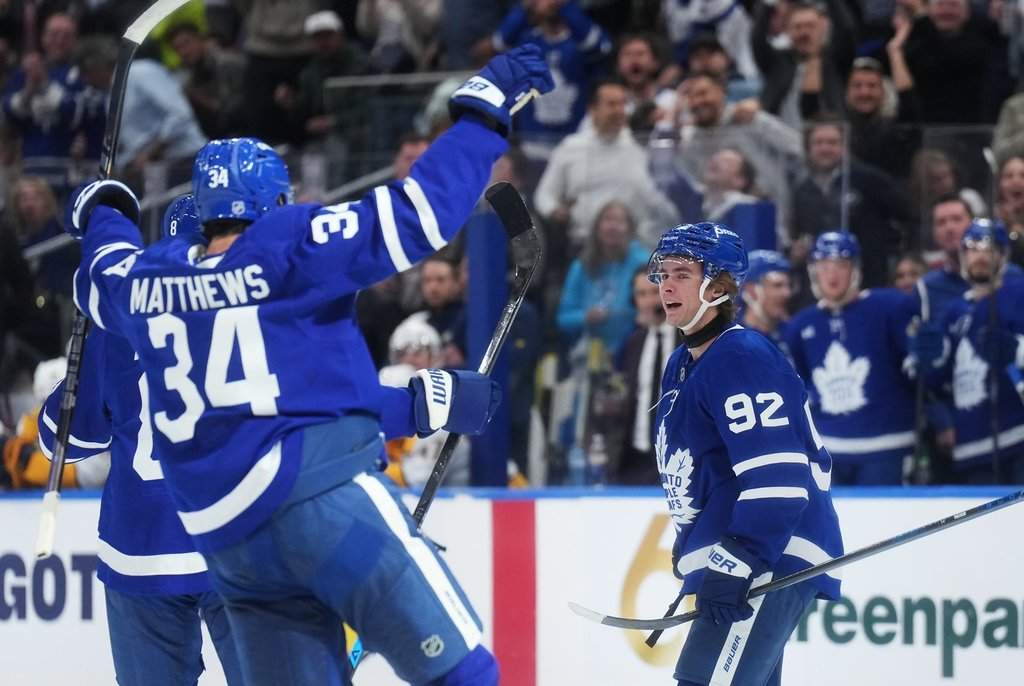
Every box score from that chaotic night against Nashville screamed the same lazy narrative. Auston Matthews scores in overtime, Toronto takes the 5-4 win, and the local airwaves fill with collective sighs of relief. The franchise player bails out the club yet again. Cue the highlight reels. Cue the celebrations.
It is a complete fraud.
If you watch that game and take away the warm-and-fuzzy realization that elite superstars win hockey games, you are looking right past the structural rot that will sink this roster come April. Relying on a multi-goal comeback fueled by individual brilliance and goaltending collapses is not a winning formula in a seven-game playoff series against an opponent that actually plays defense. It is an emergency room triage unit masquerading as an NHL contender.
Let us dismantle the common consensus right now. The narrative around Toronto has long been that they just need their big guns to fire when the pressure peaks. But obsessing over the final score of a regular-season track meet obscures the alarming truth about how this roster handles momentum, defensive zone coverage, and basic puck management.
When a team surrenders four goals to a Nashville squad that struggles to generate sustained offensive zone pressure at even strength, your primary concern should not be who scored the winner. It should be why you required a heroic rescue mission in the first place.
The Fallacy of the Clutch Scorer
We have built an entire media ecosystem around the cult of the clutch goal. When Matthews roofs a wrist shot in the extra frame, analysts line up to praise his unmatched release and killer instinct. Nobody wants to talk about the breakdown that allowed the Predators to dictate the pace for fifty minutes.
Individual scoring power is a depreciating asset if your structural floor is made of balsa wood. In a tightly checked postseason environment, the space required to execute those highlight-reel finishes shrinks to the size of a postage stamp. If your defensive structure requires your best center to score two or three goals a night just to keep pace with your own defensive zone giveaways, you do not have a contender. You have a fragile superstar surrounded by a prayer.
I have spent enough time around professional front offices to recognize the aroma of desperation disguised as resilience. Teams that routinely fall behind early and rely on third-period surges do not possess character; they possess a glaring lack of focus and an over-reliance on adrenaline. Adrenaline fades when the legs get heavy in the third period of a hostile road game.
Why Regular Season Thrillers Are Red Herrings
Fans love a good comeback. It provides dopamine, creates viral clips, and fills the morning sports talk shows with spirited debates about grit. But hockey analytics tell a brutal, unromantic story about high-scoring, chaotic victories.
Every time a team trades defensive discipline for offensive volume, their expected goals against spikes. Nashville did not lose that game because they were outplayed over sixty minutes; they lost because their own structural integrity cracked under the weight of late-game fatigue, and Toronto happened to capitalize on the chaos.
Think of it like a high-stakes poker player who constantly goes all-in on a bad draw and happens to spike an ace on the river. You can congratulate them on the chip count all you want, but math dictates they will eventually go broke. Relying on overtime winners to mask defensive deficiencies is a fast track to another early spring exit.
The modern NHL does not reward teams that win 5-4 barnburners. It rewards teams that suffocate transition, suppress high-danger chances, and dictate terms through neutral-zone congestion. If Toronto wants to break the cycle of postseason heartbreak, they need to stop celebrating the rescue missions and start demanding that the building stop catching fire in the first place.
The Cost of Complacency
The danger of an overtime winner is that it buys management another month of inaction. When the puck hits the back of the net and the horn sounds, the flaws in the roster composition vanish behind a cloud of confetti. Trade rumors quiet down. Defensive pairings that look lost against physical forechecks get another pass.
This is how windows close. Front offices look at the standings, look at the offensive totals of their marquee forwards, and convince themselves that the pieces are already in place. They confuse individual talent with team construction.
Matthews is a generational goalscorer. That is undisputed fact. But treating him as a human shield for a flawed defensive corps is a massive organizational failure. If you give a Ferrari engine to a chassis built out of spare parts, do not act surprised when the axle snaps the moment you hit a sharp turn.
Stop buying into the theater of the comeback. True contenders do not need to claw their way back from the brink against lesser opponents on a Tuesday night. They control the game from the opening puck drop, choke the life out of the opposition, and walk away with quiet, efficient two-goal victories.
Until this organization learns that style points and late-game heroics mean nothing without structural discipline, the narrative in April will remain unchanged, no matter how many times the puck finds the back of the net in overtime.