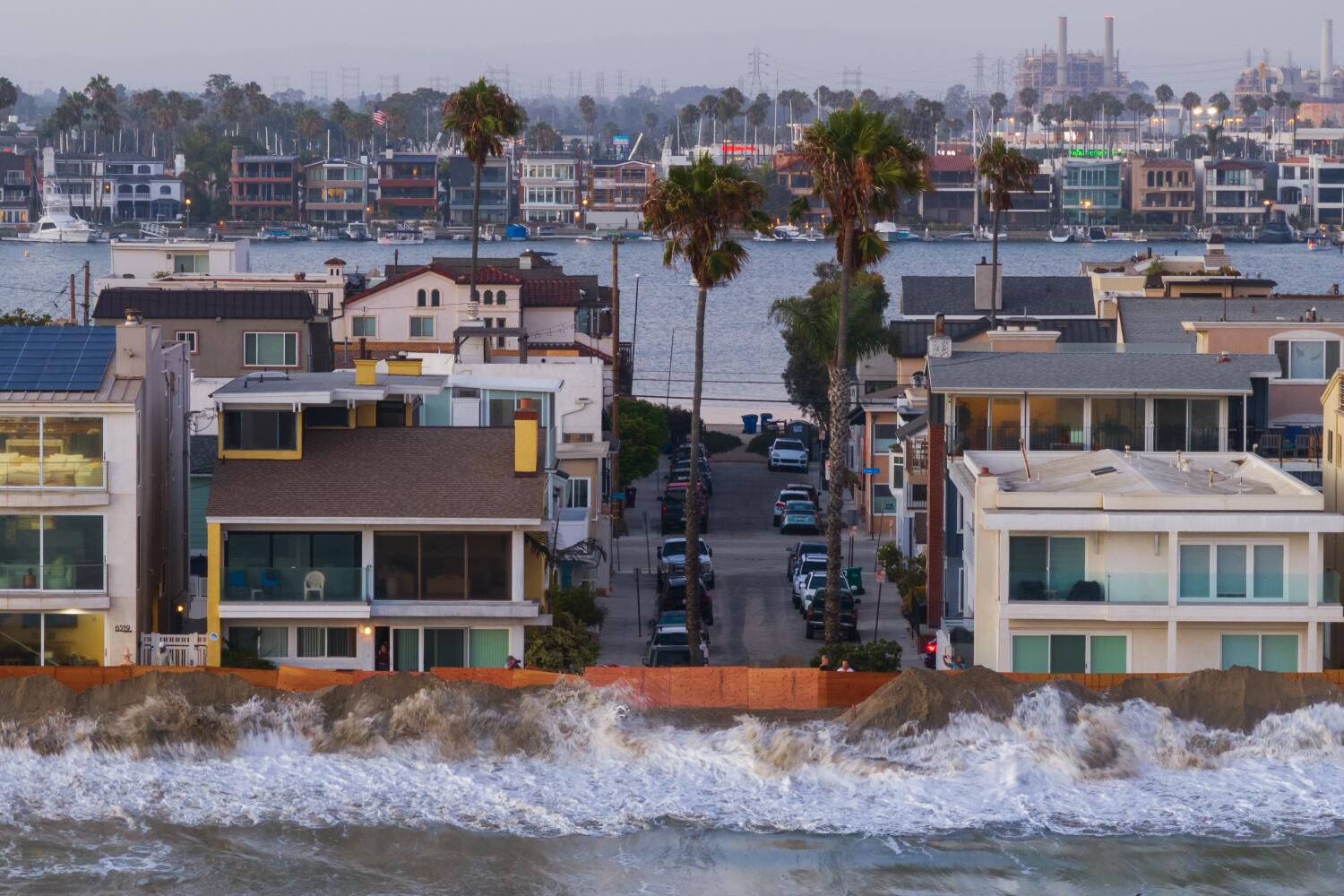
Every single headline right now screams the exact same lazy panic. Turn on the local news or scroll through any mainstream feed, and you will see breathless warnings about a massive El Nino forming in the Pacific, ready to drown California under endless walls of water. The narrative writes itself. Reservoirs overflowing, mudslides wiping out multi-million-dollar coastal properties, and frantic suburbanites hoarding sandbags like the apocalypse is Tuesday.
It is a great script for ratings. It is also completely wrong.
I have watched public officials and corporate infrastructure planners panic-buy temporary fixes for the wrong crisis for two decades. The lazy consensus assumes that a strong warm-water phase in the equatorial Pacific equals a cartoonish, state-drowning deluge. Weather doesn't work that way. Climate systems are not simple on-off switches. When you look past the media hysteria and break down historical sea surface temperature anomalies alongside actual atmospheric blocking patterns, the reality is far more inconvenient.
California is not facing a uniform, state-wide soaking. It is facing a stark geographical lottery where the hype of a super El Nino masks localized vulnerabilities that water from the sky won't fix, and drought triggers that return the moment the pattern shifts.
The Myth of the Uniform Soak
Let us clear up the basic meteorology right out of the gate. An El Nino event is characterized by weakened trade winds and anomalous warming of the central and eastern tropical Pacific Ocean. That warm water shifts the jet stream. Standard lore dictates that this shift aims a firehose of moisture directly at the Golden State.
Except the correlation between El Nino strength and California precipitation is remarkably messy.
Take the winter of 1997 to 1998. That was one of the most powerful El Nino events on record. Southern California got hammered. Los Angeles recorded nearly triple its normal seasonal rainfall. Infrastructure strained, and insurance companies took a bath. Forecasters looked at that single data point and locked it into the cultural memory as the universal template for every future warm event.
Then came the El Nino of 2015 to 2016. Meteorologists promised a repeat of the late nineties. Billions of dollars in municipal emergency preparations went live. Reservoirs were aggressively managed to make room for the expected flood. What happened? Northern California received solid rain, but Southern California limped through a weak, deeply underwhelming winter that barely moved the needle on long-term deficits. The firehose missed.
Why? Because a warm tropical Pacific is only one variable in a massive atmospheric equation. The Pacific Decadal Oscillation, the Arctic Oscillation, and high-pressure ridges off the coast can completely hijack the jet stream and deflect moisture north toward Oregon or dump it uselessly into the Gulf of Alaska.
Treating a super El Nino as a guaranteed statewide flood is lazy risk management. It leads cities to waste capital shoring up storm drains in areas that might stay bone dry while ignoring structural water storage mechanics where it actually matters.
The Infrastructure Shell Game
I have sat in municipal engineering briefings where executives pat themselves on the back for clearing a few drainage ditches ahead of a predicted wet winter. It is security theater.
The real problem in California is not that we get too much water at once. The problem is our utter incapacity to capture and distribute that water when it actually falls. We build our identity around frantic emergency response while neglecting the boring, unsexy mechanics of long-term groundwater recharge.
When an atmospheric river hits a concrete-lined channel in Los Angeles, millions of gallons of pristine stormwater rush past urban neighborhoods and empty straight into the Pacific Ocean within hours. We treat water like a hazardous waste product that needs to be evacuated immediately, and then we spend the next five months whining about drought restrictions.
A super El Nino doesn't fix a broken plumbing system. It stress-tests it. And every time the system fails, politicians blame the weather instead of their own zoning laws and archaic water rights policies.
Consider the surface storage paradox. Major reservoirs like Shasta and Oroville are managed under rigid, decades-old federal flood-control rule curves. These rules legally mandate that dam operators dump massive amounts of water in the middle of winter to maintain empty storage capacity just in case a monster storm hits. If the storm underperforms, those reservoirs are left half-empty heading into summer.
We are literally throwing away our water supply out of fear of a worst-case scenario that meteorology models over-hype every single decade.
Follow the Money
Who benefits from the perpetual cycle of climate panic?
Emergency response contractors, temporary barrier manufacturers, and media networks selling ad space against disaster porn. Every time a major climate anomaly is forecasted, municipal procurement departments loosen their purse strings for no-bid emergency contracts. Millions of dollars flow into short-term mitigation that dissolves the moment the sun comes out.
Meanwhile, actual structural upgrades—like expanding subterranean aquifer injection wells, modernizing delta pumps, and updating environmental flow regulations—get bogged down in endless bureaucratic litigation.
Imagine a scenario where cities stopped treating every El Nino cycle like a Hollywood disaster movie and instead redirected that panic capital into distributed, decentralized water capture networks. We would transform urban landscapes from concrete runoff deserts into sprawling sponges that bank water locally.
Instead, we buy sandbags.
The Contrarian Playbook for Water and Risk
If you want to survive and thrive through the coming weather volatility, you have to ignore the mainstream noise. Stop looking at statewide averages. Stop listening to forecasters who treat complex thermodynamic shifts as binary outcomes.
Here is what actually matters:
- Ignore aggregate rainfall stats. Total inches of rain across California are meaningless if the precipitation falls as rain instead of snowpack in the Sierra Nevada. Snowpack is our natural reservoir. If a warm El Nino raises freezing levels, high-altitude precipitation runs off immediately rather than storing itself for the summer dry season. That is a net loss for the state, regardless of how green your lawn looks in January.
- Audit your local water district, not the sky. Your real risk isn't a mudslide unless you bought a home on an unstable coastal bluff against all common sense. Your real risk is tiered municipal pricing spikes and arbitrary rationing. Decentralize your own water consumption where legal and feasible. Greywater systems and localized rain-barrel arrays provide more true security than a municipal government ever will.
- Discard short-term emotional hedging. Do not build your life or your business around the hype of a single seasonal forecast. Climate volatility means the baseline is shifting toward extremes in both directions. Plan for dry years during wet years, and vice versa.
The panic over a super El Nino is a symptom of a broader cultural addiction to crisis management. We prefer the drama of the flood over the discipline of the pipe.
The next time an anchor tells you to batten down the hatches because the Pacific is warming up, check your local aquifer levels instead of your local hardware store's sandbag supply.
The storm will pass. The drought will return. The only thing unchanging is our refusal to build for reality.
Stop waiting for the sky to save you.