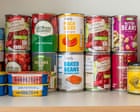
Supermarket executives are popping champagne in Mayfair while you lug fifty pounds of lukewarm plastic water bottles and dented cans of baked beans up three flights of stairs.
Every time Whitehall publishes a new resilience guide, the retail press runs the exact same breathless headline. Sales surge. Shelves empty. Commentators nod solemnly about British pragmatism and sensible preparation. They treat a spike in tinned mackerel and Evian multipacks as proof that the public is finally taking national security seriously. Discover more on a connected issue: this related article.
They are wrong. What we are witnessing is not resilience. It is performative anxiety monetized at a thirty percent retail margin.
I have spent the last decade consulting on supply chain logistics and municipal infrastructure across Northern Europe. I have watched billion-pound retail conglomerates manufacture artificial scarcity out of thin air, and I have seen private households waste thousands of pounds building useless pantries that rot in damp utility rooms. When the government tells citizens to prepare for seventy-two hours of disruption, the public hears "buy groceries." The supermarkets hear "Q3 earnings beat." And the actual mechanics of surviving an infrastructure failure get buried under mountains of single-use polyethylene and sodium-heavy canned goods. More reporting by The Washington Post delves into related views on the subject.
If you joined the stampede at Tesco this week, you did not buy security. You bought a placebo.
The Seventy-Two Hour Fallacy
Let us look at the actual physics and economics of what happens when a modern Western grid goes down.
The UK government's Prepare campaign—and every similar civil defense pamphlet issued from Stockholm to Washington—operates on a very specific bureaucratic baseline. Civil servants design household advice around a seventy-two-hour bridge. That is the estimated window required for central authorities, utility operators, and military logistics units to clear downed trees, reroute substations, or deploy mobile water bowsers to town centers.
Here is the problem with that timeline. If an event is minor enough to be resolved in three days, your neighborhood shops do not run out of food, and your municipal water pressure rarely drops to zero. Conversely, if an event is severe enough to sever regional water treatment plants and collapse automated grocery distribution networks, it is not going to be fixed by Tuesday afternoon.
You are preparing for a storm window that barely exists in real-world crisis data.
Consider the Bullwhip Effect, a foundational principle in supply chain management formalized by MIT researchers like Jay Forrester. When consumer demand shifts by just five percent at the checkout till, order volatility amplifies upstream by up to forty percent across regional distribution centers and manufacturers. A sudden, media-driven rush on bottled water does not reflect a physical shortage of water in the UK. It creates the exact artificial bottleneck that frightens the next wave of shoppers into clearing the remaining pallets.
Supermarkets love this. Just-in-time (JIT) logistics systems are notoriously fragile, operating with roughly twenty-four to forty-eight hours of shelf inventory to maximize warehouse efficiency and minimize working capital. When a government minister mentions "emergency supplies" on morning television, retailers get to clear slow-moving ambient stock at full retail price without spending a penny on promotional discounting.
Why Bottled Water Is the Worst Way to Store Water
Let us dismantle the centerpiece of every panic-buyer's trolley: the shrink-wrapped flat of twenty-four 500ml water bottles.
First, examine the basic arithmetic of human hydration. The UK government guidance recommends at least three liters of drinking water per person, per day, alongside extra water for basic hygiene and cooking. For a family of four over three days, that is a minimum of thirty-six to forty-eight liters.
Buying that volume in standard supermarket multipacks requires hauling nearly fifty kilograms of dead weight from a retail park to your kitchen. Worse, standard commercial bottled water is packaged in thin-walled PET (polyethylene terephthalate). PET is permeable to gases and degrades when exposed to heat or fluorescent garage lighting, leaching antimony and microplastics into the water within months. You are paying upwards of eighty pence per liter for tap water wrapped in degrading petroleum byproducts, taking up prime square footage in a cramped British flat.
Second, you are ignoring the massive, pressurized reservoir already plumbed into your house.
Unless a catastrophic earthquake shears the physical water mains beneath your street, municipal water loss during power outages occurs because electric booster pumps lose power, causing system pressure to drop. When pressure drops, water drains downward toward the lowest points in your building's plumbing.
- Your cold water storage tank in the loft holds anywhere from 150 to 250 liters of water.
- Your hot water cylinder holds another 120 to 200 liters of potable water that can be drained via the bottom valve once cooled.
- Your household pipes retain several liters of trapped water if you open the highest tap in the house to break the vacuum seal before drawing from the lowest tap.
Spending fifty pounds on a single hollow-fiber membrane gravity filter—like a Sawyer Squeeze or a Katadyn BeFree—and two collapsible twenty-liter food-grade jerrycans gives you the capacity to purify thousands of liters of rainwater, river water, or questionable tap water. It costs less than two months of panic-bought Evian, takes up the space of a shoebox, and does not expire in six months.
The Tinned Food Trap Nobody Talks About
Now let us address the second pillar of the supermarket surge: the wall of tinned beans, spam, and chopped tomatoes.
Canned food is heavy, bulky, and nutritionally lopsided. Food manufacturers preserve vegetables and legumes in brine or sugary tomato sauces to survive the high-heat retorting process required for commercial sterilization. When you live off canned goods during a stressful crisis, you are ingesting massive amounts of sodium, which accelerates dehydration—the exact opposite of what you want when your water supply is rationed.
More importantly, almost nobody calculates thermal energy requirements when they buy emergency groceries.
Take a look inside your cupboard. Can you eat every single tin you just bought cold, straight out of the metal, with a spoon? Technically, yes, because commercial canning cooks the food inside the vessel. Psychologically, eating cold, congealed kidney beans in the dark during a freezing November power cut is a fast track to misery.
If you plan to heat those tins, how are you doing it?
Most modern UK households rely on electric induction hobs, ceramic stoves, or gas boilers with electronic ignition switches. When the grid goes dark, your kitchen becomes an expensive room full of cold metal boxes. Firing up a disposable barbecue or a camping stove indoors without industrial ventilation kills people every winter via carbon monoxide poisoning.
A genuinely resilient pantry does not look like a 1950s bunker. It looks like high-calorie, zero-cook, dry-weight efficiency:
- Nut butters and tahini: Roughly 600 calories per 100 grams, packed with fats and protein, zero cooking required, and completely shelf-stable for over a year.
- Oats and powdered milk: Mix with cold water, let sit for fifteen minutes, and you have a dense, complex-carbohydrate meal with zero fuel expenditure.
- Olive oil and hard cheeses: High-fat calorie density that keeps core body temperature up when central heating fails.
- Freeze-dried expedition rations: Developed for mountaineers, lightweight, twenty-five-year shelf life, and requiring only a tiny splash of boiling water from a single-burner backpacking stove used safely near an open window.
People Also Ask: Dismantling the Crisis Myths
When headlines scream about emergency stockpiles, search engines flood with panicked questions. Most of those questions are built on completely flawed premises.
How much cash should I keep at home for an emergency?
People ask this thinking about buying bread if card readers go down. Here is the brutal reality: if Visa, Mastercard, and the Faster Payments Service suffer a nationwide outage, your local supermarket's automated checkout tills and inventory scanners will also be dead. Retail staff will not stand at the door making change out of a cardboard box while calculating VAT in their heads; corporate liability insurance forces stores to lock their doors the second point-of-sale systems crash. Keep two hundred pounds in ten- and twenty-pound notes for paying a local tradesperson, buying fuel from an independent garage, or bribing a neighbor with a generator—not for buying groceries at Sainsbury's.
Is the UK government warning us about an imminent war or cyberattack?
No. Politicians and civil servants issue resilience guidelines when institutional liability shifts. By telling you to keep a torch and a battery-powered radio at home, Whitehall legally and politically insulates itself from blame the next time an ageing regional power grid buckles under a winter storm. It is an exercise in expectation management, not secret intelligence. If a genuine geopolitical strike were imminent, they would not communicate it through a lifestyle webpage recommending wind-up radios and wet wipes.
What is the single most important item to buy right now?
Not food. Not water. Thermal retention. The human body can survive three weeks without food and three days without water, but in a damp, unheated British semi-detached house in January, hypothermia sets in within hours. Insulation—heavy wool blankets, closed-cell foam sleeping pads, thermal base layers, and window draft-proofing—beats canned soup every single time.
The Uncomfortable Downside of Real Preparedness
I am not claiming that buying a water filter and sleeping bags makes you invincible. Real preparedness comes with serious friction that lifestyle blogs conveniently gloss over.
First, maintenance is tedious. Batteries corrode inside flashlights if you leave them sitting in a drawer for two years. Stored water in jerrycans must be rotated and treated with chlorine dioxide drops every six months, or you will cultivate a thriving colony of Legionella bacteria in your hallway closet. Freeze-dried food tastes aggressively mediocre, and your family will complain if you force them to eat expedition rations during a routine twenty-four-hour blackout.
Second, social isolation is a fatal flaw. Hollywood disaster movies have poisoned Western minds into believing that every crisis turns neighbors into ruthless scavengers. Decades of sociological disaster research—most notably by the Disaster Research Center at the University of Delaware—proves the exact opposite. In real emergencies, communities exhibit overwhelming mutual aid. The guy hoarding six hundred tins of tuna behind locked curtains while refusing to share a flashlight with the elderly woman next door is not a survivor; he is an anti-social liability.
True resilience is infrastructural and social, not transactional. Knowing where your stopcock is located, owning a physical wrench to shut off your gas meter, keeping your car's fuel tank above half full at all times, and actually knowing the first names of the four people living on your landing will save your life faster than an entire aisle of supermarket multipacks.
What You Should Actually Do Tonight
Stop treating emergency preparedness like a seasonal shopping spree. Cancel the online grocery delivery stuffed with plastic water bottles and heavy tins.
Instead, walk into your kitchen right now and flip your main circuit breaker off for four hours tonight.
Do not touch your phone unless it is an actual emergency. Cook dinner without electricity. Figure out how you will light the bathroom, keep the house warm, and charge a device using only what is currently sitting in your cupboards. You will discover within forty-five minutes where your actual vulnerabilities live—and you will realize they have nothing to do with a shortage of baked beans.