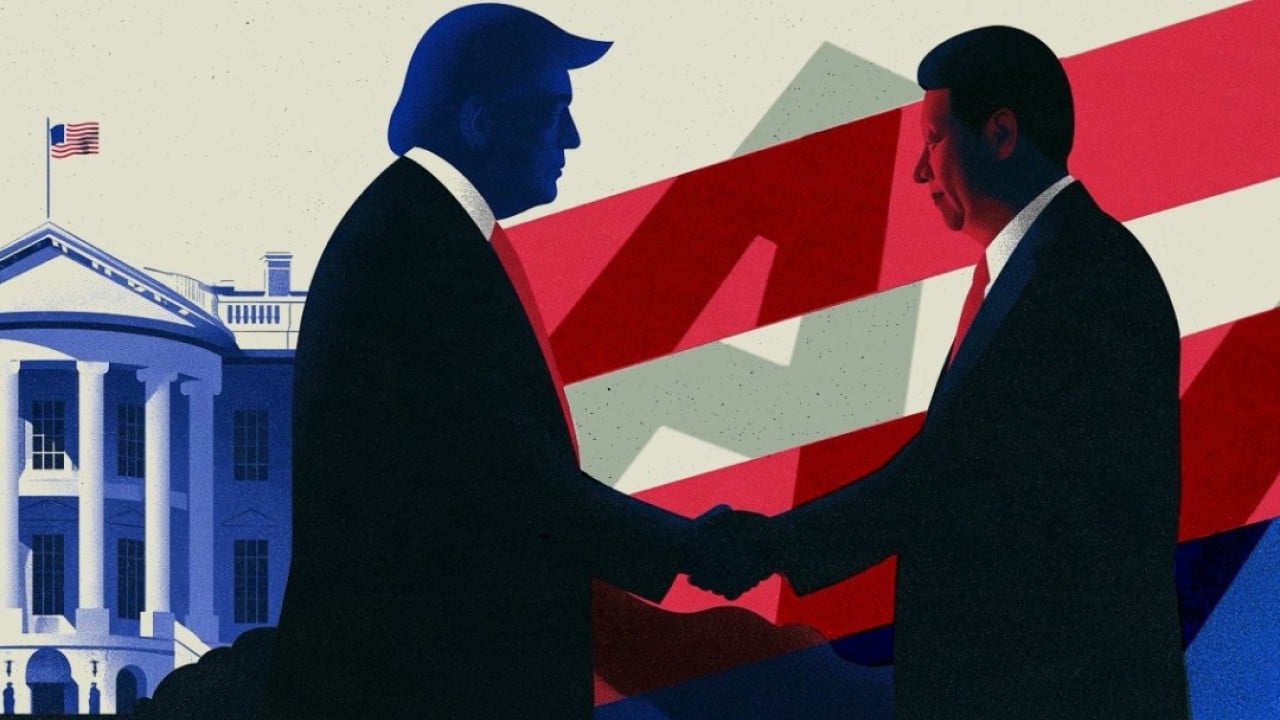
Conventional wisdom in Washington and Beijing circles insists that the primary obstacle to global stability is a lack of mutual trust between Xi Jinping and Donald Trump. Analysts, think-tank fellows, and legacy media commentators repeatedly argue that unless the two leaders build interpersonal rapport and institutional confidence, the world’s most consequential bilateral relationship will spiral into conflict.
A growing chorus of realist strategists, economic historians, and game theorists argues the exact opposite. Trust is not the solution to US-China friction. In great-power politics, chasing trust is a dangerous distraction that leads to miscalculation, broken promises, and strategic vulnerability. Stability between Washington and Beijing does not come from believing the other side will act in good faith. It comes from verifiable deterrence, aligned self-interest, and predictable boundaries.
The Myth of Interpersonal Diplomacy
For decades, foreign policy commentators have treated summits between American presidents and Chinese paramount leaders as exercises in relationship counseling. The underlying assumption is simple: if the two leaders sit across a table, share a meal, and establish personal chemistry, institutional hostility will melt away.
Political scientists who study international relations—most notably offensive and defensive realists like John Mearsheimer and Stephen Walt—have spent years dismantling this premise. States do not have friends; they have interests. Even when leaders share genuine personal warmth, domestic political pressures and structural security dilemmas override personal affinity.
Consider the historical record. Franklin D. Roosevelt believed his personal charm could win over Joseph Stalin at Yalta, yet the Cold War began almost immediately afterward. George W. Bush famously looked into Vladimir Putin’s eyes and claimed to get a sense of his soul, a sentiment that did nothing to prevent the subsequent collapse of US-Russian relations. Similarly, during Trump’s first term, repeated praise for Xi Jinping’s leadership did not stop the imposition of sweeping tariffs, technology export controls, or military standoffs in the South China Sea.
When pundits claim that Xi and Trump face the challenge of "building trust," they confuse diplomatic theater with strategic reality. Leaders do not abandon core national objectives because they like their counterpart.
Why Trust Is a Liability in Great-Power Competition
In behavioral economics and game theory, trust is only rational when the cost of betrayal is low or when a third-party enforcer can punish defection. Neither condition exists in geopolitics. There is no global police force to penalize Washington or Beijing if one side violates an informal understanding.
Relying on trust in an anarchic international system creates three specific hazards:
- The Complacency Trap: When policymakers convince themselves that a rival leader is trustworthy, they underinvest in resilience. Western corporations and governments spent two decades assuming that China’s integration into the World Trade Organization would naturally liberalize its economy and moderate its geopolitical ambitions. That misplaced faith left supply chains for critical minerals, active pharmaceutical ingredients, and legacy semiconductors heavily concentrated in a single jurisdiction.
- The Betrayal Spiral: Agreements built on vague promises rather than strict verification inevitably collapse when circumstances change. When one side interprets an ambiguous clause differently than the other, the resulting sense of betrayal poisons diplomacy far worse than open skepticism ever could. The breakdown of the Phase One trade deal—where purchase commitments ran headlong into the pandemic and structural economic realities—demonstrated how unverified expectations breed resentment.
- Asymmetric Vulnerability: Open democracies operate with transparent budgets, public legislative debates, and free presses. One-party states operate with opaque decision-making apparatus and state-directed capital. Extending unilateral trust across that institutional divide creates an immediate intelligence and strategic disadvantage.
What Actually Stabilizes the Relationship
If trust is a mirage, what prevents a cold war from turning hot? History shows that rival superpowers maintain peace through managed distrust—a framework built on clarity, verification, and mutual economic pain.
During the height of the Cold War, the United States and the Soviet Union had zero trust in each other’s intentions. Yet they avoided direct military conflict and negotiated landmark arms control treaties. Ronald Reagan captured the operating principle in three words borrowed from a Russian proverb: Doveryay, no proveryay—"Trust, but verify." In practice, verification did all the heavy lifting.
For Xi and Trump, stability requires replacing vague assurances with hard mechanisms:
- Transparent Red Lines: Ambiguity invites testing. During the Cuban Missile Crisis, backchannel communications and explicit, verifiable commitments regarding missile withdrawals in Cuba and Turkey resolved the standoff without requiring Nikita Khrushchev and John F. Kennedy to trust each other's long-term goodwill. Clear communication about red lines in the Taiwan Strait and the South China Sea reduces the risk of accidental escalation.
- Military-to-Military Guardrails: Hotline agreements and maritime incident protocols—such as the Code for Unplanned Encounters at Sea—exist precisely because rival navies expect friction. These technical mechanisms allow commanders to de-escalate localized collisions without waiting for political trust to materialize at the top.
- Reciprocal Economic Leverage: Trade between the US and China is often framed either as a bridge to peace or a weapon of coercion. In reality, selective interdependence acts as a mutual hostage mechanism. When both economies suffer immediate, quantifiable damage from sudden decoupling, both capitals have a selfish incentive to keep commercial channels predictable.
Dismantling the Common Questions
Public debate around US-China relations frequently gets stuck on flawed premises. Looking closely at the questions observers ask reveals how deeply the "trust" fallacy permeates the conversation.
Can a "Grand Bargain" Solve US-China Tensions?
Every few months, commentators speculate that Trump’s transactional style and Xi’s centralized authority could produce a sweeping "grand bargain" covering trade, Taiwan, and technology.
Experienced trade negotiators and diplomatic historians reject this scenario. A grand bargain requires both sides to trade core priorities permanently. Beijing views its political system, technological self-reliance, and territorial claims as non-negotiable existential interests. Washington views its alliance network in the Indo-Pacific, dollar dominance, and leadership in frontier artificial intelligence as equally vital. You cannot trade away existential priorities in a single deal. What is achievable—and far more durable—is a series of narrow, transactional micro-deals on tariffs, fentanyl precursor interdiction, and agricultural purchases where compliance can be measured monthly.
Does Decoupling Make War More Likely?
A popular argument in business circles holds that cutting economic ties removes the financial penalty for military conflict, thereby making war inevitable.
Economic history complicates that claim. Prior to World War I, Great Britain and Germany were each other’s largest trading partners, leading writer Norman Angell to argue in The Great Illusion that war between industrial powers had become economically irrational. Four years later, Europe was in ruins. Deep trade ties do not guarantee peace; meanwhile, targeted "de-risking" in defense supply chains, telecom infrastructure, and advanced semiconductors reduces the leverage a rival can exert during a crisis. Reducing strategic dependency lowers the temptation for coercion.
Is the Thucydides Trap Inevitable Without Trust?
Harvard political scientist Graham Allison popularized the "Thucydides Trap"—the observation that when a rising power threatens to displace a ruling power, war frequently results. Many readers take away the lesson that the two sides must build friendship to escape the trap.
Allison’s own historical case studies point to a different conclusion. In the instances where rising and ruling powers avoided war—such as the United States overtaking the British Empire in the late nineteenth century, or the US-Soviet standoff—peace held because the powers established clear spheres of influence, engaged in vigorous deterrence, and recognized the catastrophic cost of direct conflict. Prudence and balance-of-power politics, not naive trust, broke the historical pattern.
The Trade-Offs of Managed Distrust
Adopting a posture of pure realism and managed distrust is not without serious costs. Pretending otherwise ignores the friction such an approach creates across the global economy.
First, operating without trust imposes a massive compliance tax on multinational businesses. When every semiconductor shipment, cross-border data transfer, and joint venture requires licensing, audits, and supply-chain tracing, efficiency drops and consumer prices rise. Companies must duplicate manufacturing footprints across Southeast Asia, Mexico, and North America rather than optimizing for single-market scale.
Second, a relationship anchored purely in deterrence and transactional bargaining leaves little room for cooperation on transnational threats. Issues like pandemic preparedness, nuclear non-proliferation, and sovereign debt restructuring in developing nations move slowly when every proposal is scrutinized for hidden geopolitical advantage.
Finally, constant vigilance carries the risk of hardening domestic attitudes in both countries to the point where tactical compromises become politically impossible. If leaders frame every interaction as a zero-sum struggle, they lose the domestic maneuver room needed to strike pragmatic deals when circumstances demand it.
How Strategists and Businesses Should Actually Operate
Waiting for a diplomatic breakthrough in trust between Xi and Trump is a losing strategy for policymakers and corporate boards alike. Organizations operating across the Pacific need to build around structural reality rather than diplomatic optimism.
- Price in Permanent Friction: Treat tariffs, export controls, and investment screening not as temporary bargaining chips that will vanish after a summit, but as permanent features of the operating environment. Build supply chains that remain profitable even if bilateral tariffs fluctuate sharply.
- Demand Verification Over Pledges: In both diplomacy and commercial contracts, ignore Memorandum of Understanding documents that rely on "best efforts" language. Structure agreements around automatic triggers, escrow mechanisms, and real-time audit rights.
- Separate Tactical Deals from Strategic Alignment: Recognize that Washington and Beijing can cooperate on narrow, self-interested transactions—such as stabilizing agricultural trade or establishing rules for artificial intelligence in nuclear command systems—while remaining locked in fierce technological and military competition.
International politics is not a personal friendship, and the Pacific is not a boardroom where a handshake seals a merger. The sooner observers stop asking how Xi Jinping and Donald Trump can learn to trust each other, the sooner both nations can focus on the only thing that actually keeps nuclear-armed rivals at peace: crystal-clear boundaries, credible deterrence, and deals that enforce themselves.