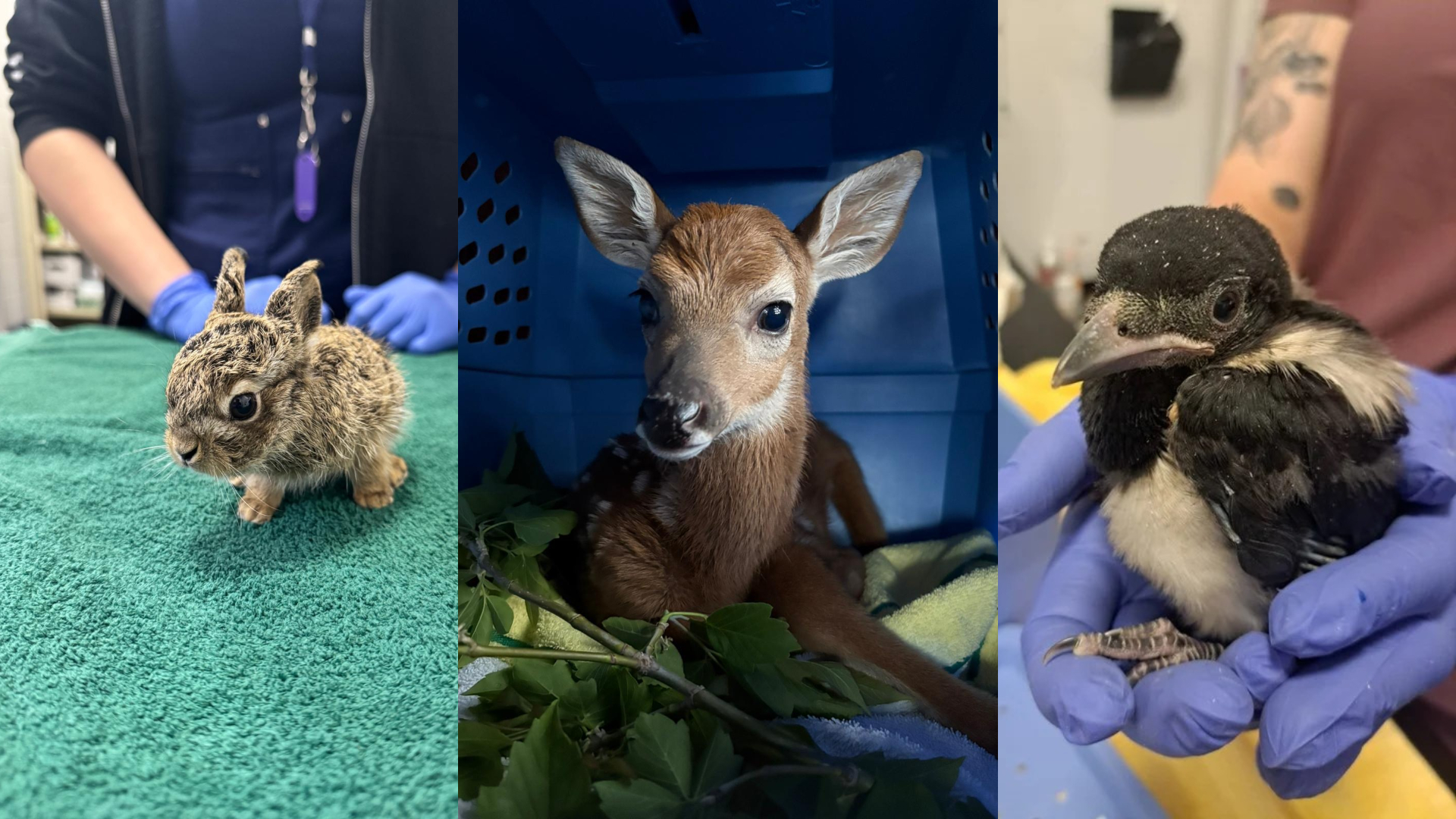
The corporate wildlife rehabilitation complex is selling you a comfortable lie wrapped in the language of pristine conservation. Every spring, organizations like WILDNorth and state environmental departments issue identical, sterile press releases with the exact same headline: "Think twice before rescuing baby animals." They tell you that the solitary fawn in the brush or the featherless nestling on the concrete isn't actually abandoned. They call your protective instinct "accidental kidnapping." They order you to walk away, keep your distance, and let nature take its course.
It sounds noble. It sounds scientific. It is also an absolute abdelineation of human responsibility that ignores how drastically we have broken the natural systems these animals rely on.
The "look, don't touch" doctrine operates on a deeply flawed premise: that our backyards, suburban parks, and strip-mall retention ponds are untouched, balanced ecosystems where wild parents can raise their young free from anthropogenic chaos. I have spent fifteen years managing wildlife conflicts and working alongside overstretched rehabilitators who are forced to triage casualties. I have seen the devastating aftermath of the hands-off consensus.
When a wildlife center tells you to leave a baby rabbit in a shallow nest on a suburban golf course because its mother "will return at dusk," they are omitting a massive variable. That mother rabbit is currently navigating four lanes of commuter traffic, a dozen neighborhood outdoor cats, and a barrage of synthetic lawn pesticides. The idea that nature provides the best care possible assumes an environment that no longer exists. Sticking rigidly to a hands-off policy in a highly fractured, urbanized world isn't conservation; it is passive execution.
The Flawed Logic of Accidental Kidnapping
The core argument of the hands-off lobby relies on weaponizing the fear of abandonment. For decades, the public has been told that if you touch a baby bird or a hare, your human scent will cause the mother to reject it. This is biologically inaccurate. The vast majority of birds have an exceptionally poor sense of smell, and while mammals can detect human odors, their maternal drive routinely overrides the scent of a brief human interaction.
The real reason wildlife centers push this narrative has very little to do with biology and everything to do with resource management.
Wildlife rehabilitation centers are chronically underfunded, understaffed, and completely overwhelmed every single spring. They simply do not have the cages, the volunteers, or the budget to feed thousands of songbirds every fifteen minutes or bottle-feed hundreds of fawns. To prevent their intake systems from collapsing, they rely on a blanket public policy: tell people to leave the animals alone unless they are visibly bleeding or broken.
Consider the standard advice given for a fledgling songbird found hopping on a suburban sidewalk. The official directive states that the bird is just learning to fly, its parents are nearby, and you must not intervene.
Imagine a scenario where that sidewalk is adjacent to a busy driveway and surrounded by outdoor domestic cats—which are responsible for an estimated 2.4 billion bird deaths annually in the United States alone according to data from the Smithsonian Conservation Biology Institute. Leaving that fledgling on the hot concrete because it is technically healthy is a death sentence. Moving that bird twenty feet into a dense, thorny bush or placing it in an artificial nest box isn't "kidnapping." It is an intervention that balances the scales against threats humans introduced to that environment.
The Human-Induced Hazard Metric
If we want to actually protect wildlife, we have to stop treating urban environments as if they are national parks. True conservation requires an active, interventionist framework based on the specific hazards present in the immediate vicinity.
| Situation | The Lazy Consensus Advice | The Counter-Intuitive Reality |
|---|---|---|
| Fawn in Suburban Yard | Leave it entirely alone; the mother is foraging. | Assess the perimeter. If the yard is fenced or near a high-speed road, the mother may be trapped outside or dead. |
| Fledgling on Concrete | Don't touch; parents are watching from afar. | Move it immediately. Concrete offers zero thermal protection or camouflage from urban predators like raccoons and stray cats. |
| Hare Nest in Mowed Lawn | Cover with grass and leave it for the mother. | Active mowing or domestic dog presence makes the site unviable. Relocate slightly to a brush line. |
The hard truth nobody wants to admit is that human development has turned normal parental strategies into fatal traps. A white-tailed deer hiding her fawn in tall grass makes perfect sense in a continuous forest. It makes zero sense when that grass is a highway median. When we force animals to breed in our fragmented landscapes, we lose the right to claim that "nature will fix it."
When to Defy the Blanket Rules
Amateur intervention can absolutely cause harm if done blindly. Raising a wild animal in your closet on cow's milk will destroy its digestive tract and habituate it to humans, ruining any chance of survival. But the alternative should not be total abandonment. We need a precise, calculated approach to intervention that bypasses the rigid "do nothing" dogma.
First, evaluate the physical space for human structural traps. Window strikes, storm drains, window wells, and chain-link fences are completely unnatural hazards. If a young animal is trapped or compromised due to an architectural feature, the hands-off rule is immediately void.
Second, understand the true timeline of abandonment. While a mother deer may leave a fawn for up to twelve hours, she will not leave it for twenty-four. If you observe a fawn crying loudly, wandering aimlessly, or covered in ticks in the exact same spot across two consecutive days, the mother is almost certainly dead. Waiting for a rehabilitation hotline to return your call while the animal dehydrates is a failure of basic empathy.
The Downside of Action
Taking a stand against the passive conservation model comes with serious risks. The legal structure is heavily weighted against individual action. In almost every jurisdiction under federal and state wildlife codes, taking a wild animal into your possession without a specific rehabilitator's permit is a misdemeanor.
Furthermore, wild animals are vectors for zoonotic diseases. Handling a young raccoon or fox risks exposure to rabies, while handling waterfowl introduces the risk of highly pathogenic avian influenza. If you choose to intervene, you must accept the legal and physical liabilities that come with it. You must use personal protective equipment, minimize handling time, and focus entirely on stabilization and immediate transfer to a licensed professional rather than long-term domestic care.
The current system relies on you feeling guilty for wanting to help. It uses the phrase "nature knows best" as a shield to hide the fact that we have dismantled nature at every turn. Stop looking away from the suffering in your backyard just because a generic brochure told you it was natural. Look at the immediate environment, calculate the human threats, and make a conscious, protective choice.