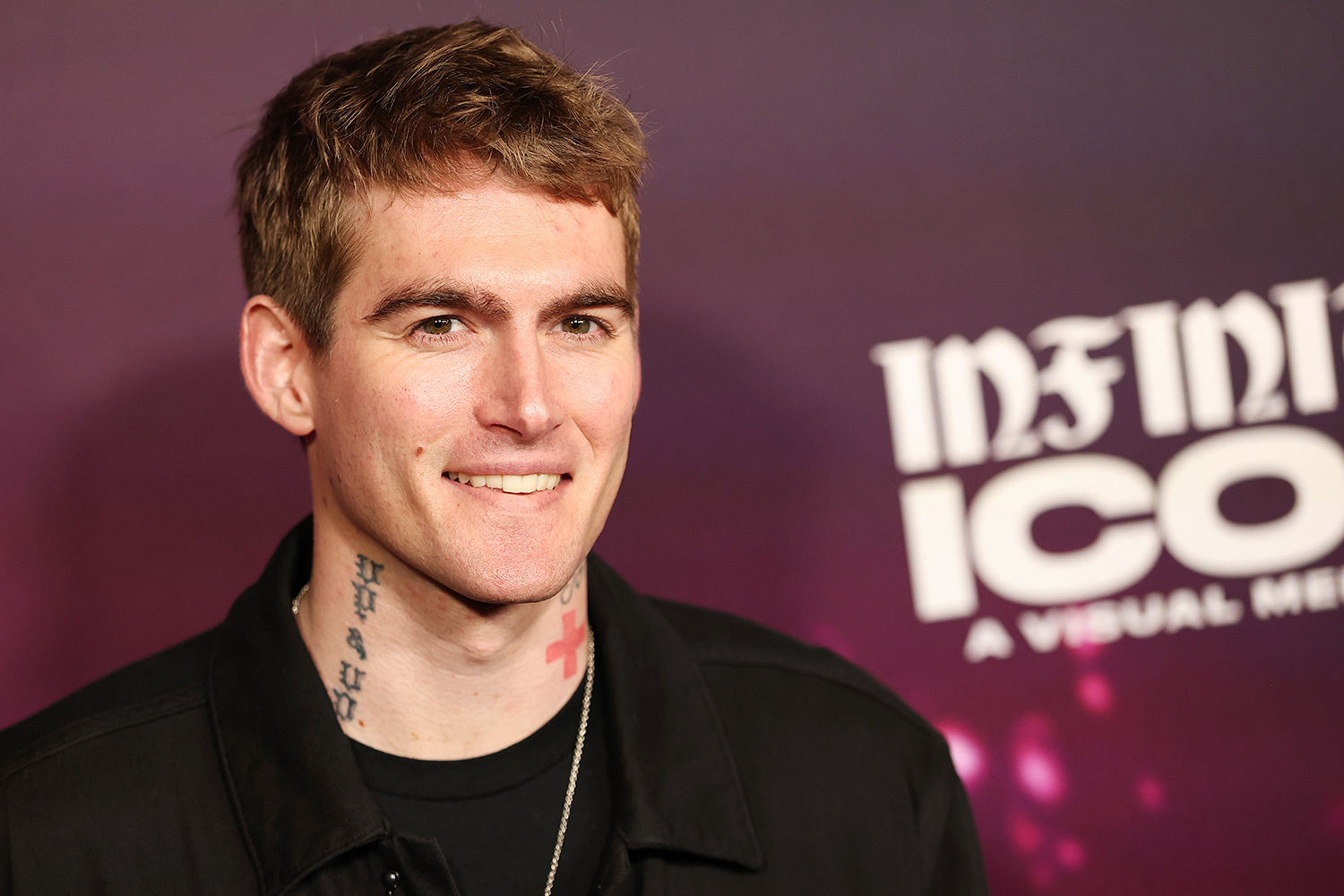
The internet loves a tragedy when it involves a famous last name. When headlines scream about the downfall, collapse, or alleged demise of a supermodel's offspring, the digital mob gathers not with grief, but with greedy anticipation. Tabloids push sensational fiction and exaggerated misery because the public demands a sacrifice. We live in a culture that builds shrines to 1990s icons only to demand the psychological execution of their children.
Let us dispense with the polite fiction that celebrity children enjoy an easy ride. The lazy consensus among armchair psychologists is that wealth and genetic lottery wins inoculate you against pain. People look at a face carved by elite genetics and a trust fund funded by magazine covers and assume human suffering is canceled. That is a comforting lie told by people who want to justify their own resentment. In reality, being born into high-stakes celebrity royalty is a masterclass in psychological demolition.
Consider the mechanics of inherited fame. You do not sign a contract when you exit the womb. You do not audition for the paparazzi waiting outside your nursery. Yet from day one, your existence is monetized by an invisible machine. When you stumble as a teenager or young adult—and every human does, because brains do not finish wiring until age twenty-five—your mistakes are broadcast to millions. Ordinary teenagers make mistakes in private classrooms or empty parking lots. Celebrity offspring make mistakes under an electron microscope, recorded by long lenses, analyzed by millions of strangers who feel entitled to a vote on their character.
The media ecosystem thrives on this cruelty. When gossip sites run predatory pieces or fabricated shock value about young models like Presley Gerber or his peers, they are not reporting news. They are manufacturing a gladiatorial arena. They frame privilege as a sin punishable by public humiliation. If you are born wealthy, the unspoken societal rule dictates that you must suffer publicly to pay for your parents' success. Any sign of struggle, rebellion, or psychological friction is met with mockery rather than empathy.
Look closer at the modeling industry and the legacy burden. When your mother is Cindy Crawford—a woman whose face defined an entire epoch of global fashion, whose work ethic was military-grade, and whose public image was surgically pristine—the shadow is not a shadow. It is an eclipse. Walking into that arena means competing against an impossible ghost. Every photograph is compared to iconic archival campaigns shot decades prior. Every misstep on a runway or tattoo on a face is treated as a personal insult to the legacy of 90s glamour.
We must dismantle the absurd notion that inherited visibility is a privilege without a price tag. Psychologists call it anticipatory scrutiny and chronic surveillance stress. When your nervous system registers that millions of people are watching your every move, evaluating your bone structure, your relationships, and your mental stability, your brain enters a permanent state of hyper-vigilance. Cortisol levels spike. Anxiety becomes baseline. Substance use or erratic rebellion often follows not from a lack of discipline, but as a desperate, crude attempt at self-medication against an inescapable fishbowl.
Yet the public refuses to grant them the basic dignity of imperfection. Look at the comment sections under any article detailing the struggles of second-generation stars. The vitriol is staggering. People write paragraphs condemning strangers they have never met, fueled by a toxic cocktail of economic frustration and class envy. They project every grievance about wealth inequality onto a twenty-something kid trying to figure out who they are outside of their parents' orbit. It is displaced rage disguised as media consumption.
The media exploits this public sickness. Tabloids know that negativity converts. A headline about peace and stability generates zero clicks. A headline hinting at ruin, rebellion, or medical crisis triggers the algorithms. Writers who have never stepped foot on a fashion set churn out speculative garbage about young adults navigating normal developmental crises under abnormal pressures. They diagnose mental health issues from paparazzi snapshots. They invent narratives of family fracture based on Instagram unfollows. It is predatory voyeurism masquerading as journalism.
We need to talk about the total absence of guardrails for children of fame. Child labor laws protect kids on studio lots to an extent, but they do nothing to protect the psychological welfare of children whose parents' fame exposes them to global scrutiny before they can legally vote. There is no regulation for social media harassment. There is no human resources department for the court of public opinion. These kids are thrown into the colosseum with a camera flashed in their eyes and told to smile for the cameras while the crowd screams for blood.
Consider the alternative perspective that the media refuses to entertain: what if these young adults are simply trying to escape a trap they never chose? Presley Gerber and others in his cohort did not ask to be born into the tabloids. When young people in these positions pull back, change paths, get face tattoos, or retreat from the spotlight, society mocks them for squandering opportunities. When they lean into the lifestyle, society mocks them for nepotism. It is a no-win matrix. They are damned if they monetize their parents' name and damned if they try to walk away from it.
Let us examine the economic reality behind the clicks. The gossip economy depends on the deconstruction of human beings for entertainment. Every time a reader clicks on an unverified rumor about a celebrity child's health or behavior, they fund the next invasive lens. The public is an active participant in this exploitation. We cannot complain about the mental health crisis among youth while simultaneously refreshing feeds to consume the very articles driving them to the brink.
The cure for this sickness requires a fundamental shift in how we consume culture. First, starve the machine. Stop clicking on speculative pieces about the private lives of people who hold no public office and bear no societal responsibility. Second, separate the achievements of parents from the personal struggles of their children. Cindy Crawford's legendary status on a runway has zero bearing on the psychological resilience of her adult children. Holding them to the standard of 90s icons is profoundly irrational.
More importantly, we must recognize that wealth does not immunize against the human condition. Depression, anxiety, and existential dread do not check bank statements before they strike. In fact, extreme wealth combined with extreme visibility often strips away the ordinary scaffolding that helps young people build identity. When every door is open, nothing feels earned. When every mistake is televised, nothing feels safe. That is not a life of pure luxury; it is a psychological cage lined with velvet.
Furthermore, let us look at the systemic failure of adult enablers in the entertainment industry. Agents, managers, and publicists often encourage young people from famous families to capitalize on their lineage before they possess the emotional armor to withstand the blowback. They hand them brand deals and magazine covers while their internal lives are unraveling. The transaction is cold: youth and a famous surname traded for short-term media engagement. When the inevitable burnout or public crisis hits, those same enablers vanish, leaving the young adult to face the pack alone.
We also need to address the cowardice of anonymous commentary. Digital anonymity has turned millions of people into armchair executioners. In physical public squares, social norms and basic empathy keep most vicious impulses in check. Behind a glowing screen, those restraints vanish. People write things about twenty-year-old kids that they would never dare utter to a neighbor's face. This normalization of casual cruelty creates a toxic feedback loop where the subject of the article internalizes the hatred, leading to real behavioral spirals that the tabloids then cite as proof of their initial predatory claims. It is a self-fulfilling prophecy manufactured for ad revenue.
Consider the historical weight carried by second-generation models. The fashion industry operates on a ruthless cycle of novelty and discard. When you enter that world bearing the name of a living legend, you are never evaluated on your own merits. You are treated as an imitation or a disappointment. If you succeed, critics cry nepotism. If you struggle, critics celebrate your downfall as proof that genetics do not guarantee talent. There is no room for quiet mediocrity, no space for gradual mastery. You must be an instant superstar or an abject failure, with zero middle ground allowed by the cultural gatekeepers.
The next time a sensational headline drops about a famous family, pause before you consume the outrage. Recognize the machinery at work. Look past the clickbait and see the human being caught in the crossfire of public appetite. We do not need more commentary diagnosing people we do not know. We need a society that stops treating the children of legends as acceptable casualties in the war for internet attention.
Drop the stones. Turn off the tabloid feeds. And let the kids who never asked for your spotlight live their lives in peace.