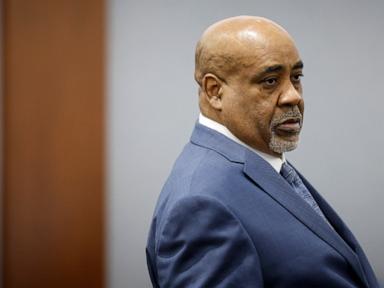
For nearly thirty years, the public has begged for closure on the murder of Tupac Shakur. Now that closing arguments are underway in the trial of Duane "Keffe D" Davis, the internet is celebrating a long-overdue victory for justice.
They are dead wrong.
What is happening inside a Clark County courtroom is not a triumph of investigative policing or a testament to the pursuit of truth. It is a legal circus built on a foundation of sand, fueled by a retired gangster's compulsive need for relevance, and validated by prosecutors who traded hard evidence for a headline. If this conviction lands, it will not prove that the system works. It will prove that the state can lock a man away for life using nothing more than a ghost story, a paperback book, and eight hours of recorded street folklore.
Let us look at the lazy consensus accepted by mainstream journalism: Duane Davis confessed, therefore Duane Davis is guilty, and justice is served.
It sounds clean. It fits neatly into a true-crime podcast arc. But it ignores the basic mechanics of how street culture, ego, and modern media interact. The state's entire case rests on Davis's own mouth—his media interviews, his secret police proffer sessions where he thought he had immunity, and his co-authored memoir, Compton Street Legend.
Ask yourself a basic question that prosecutors gloss over with theatrical hand-waving: where is the physical evidence?
There is no murder weapon. There are no ballistic matches. There are no fingerprints. The DNA from 1996 is gone. The other three men who sat in that white Cadillac—including Orlando Anderson and Deandre Smith—are dead. The state has no independent eyewitnesses placing a gun in Davis's hand or proving he ordered a hit. They built a multi-million-dollar murder trial out of a hype man's tall tales.
Any seasoned investigator who has spent time working gang homicides knows a fundamental truth: old gang members love to mythologize their past. When a washed-up figure from the South Side Compton Crips is offered money, airtime, and a chance to sit across from documentary crews and police task forces, the lines between what happened and what sounds cinematic blur completely. Davis wanted to sell books. He wanted to look like the ultimate shot-caller who orchestrated the death of the most famous rapper on earth.
To treat a commercially incentivized autobiography and jailhouse bravado as an airtight legal confession is an insult to the standard of proof required for a murder conviction. The defense attorney is entirely correct on the facts, even if the public refuses to listen: Davis talked because talking paid. His story has shifted across different interviews, changing who held the gun and who fired the shots depending on who was holding the microphone. In any other cold case where physical evidence is completely nonexistent, a case built on an aging, contradictory storyteller would be laughed out of a grand jury room.
Yet, we are watching a court system massage these contradictions into a narrative because people desperately want an ending to a tragedy that shook pop culture.
This is the danger of letting public nostalgia dictate criminal procedure. When a culture demands a scalp for a historical trauma, the courts are all too happy to oblige, substituting actual forensic rigor with theatrical performance. By accepting Davis's public posturing as a literal truth, prosecutors have set a terrifying precedent: if you talk a big enough game to documentary filmmakers decades after a crime, the state will use your own mythology to put you away, regardless of whether the forensic reality backs it up.
Closure built on a legally dubious foundation is not justice. It is theater. And when the gavel finally drops, we won't be looking at a solved murder. We will be looking at a system that finally found a sucker willing to write its script for it.