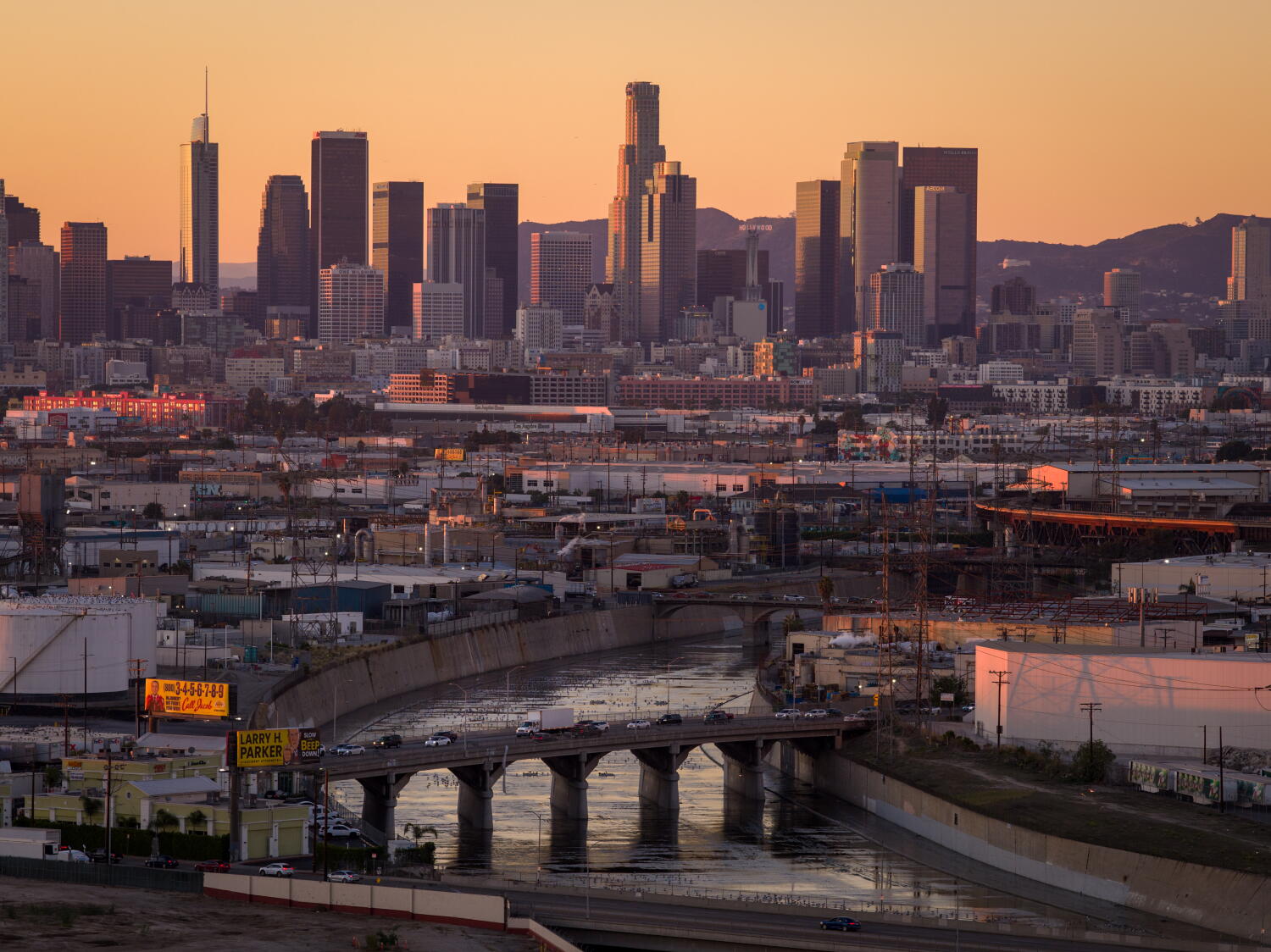
Every two years like clockwork a real estate columnist declares that Downtown Los Angeles has finally turned the corner.
They point to a new luxury food hall in the Arts District. They cite a boutique hotel opening near Broadway. They highlight a single institutional buyer snapping up a distressed office tower at seventy cents off the peak and call it blood in the streets signaling a generational bottom.
It is lazy journalism masquerading as market analysis.
The latest wave of optimism surrounding Downtown LA’s supposed revival relies on a fundamental misunderstanding of urban economics, municipal taxation, and the math of commercial debt. You cannot declare a neighborhood cured because a few speculative funds bought distressed concrete at fire-sale prices. A transfer of ownership from a bankrupt developer to a vulture fund does not magically put sixty thousand office workers back on the Metro B Line at eight in the morning.
I have watched institutional capital light hundreds of millions of dollars on fire chasing the "urban core renaissance" thesis across Sunbelt and coastal cities over the last fifteen years. The playbook never changes. Brokers hype cultural momentum. Politicians cut ribbons on streetscape improvements. Meanwhile the underlying unit economics rot from the inside out.
If you want to understand what is actually happening in the 90012 through 90017 zip codes right now, stop reading press releases from business improvement districts and start looking at cap rates, transfer taxes, and floorplate geometry.
The Distressed Debt Illusion
The primary argument fueling the current Downtown LA comeback narrative goes like this: prices have crashed so hard that the reset is complete. Once a Class A tower trades at $150 per square foot instead of $600, the new owner has a low enough basis to slash rents, undercut the competition, and fill the building.
On a spreadsheet in Midtown Manhattan, that logic looks airtight. On Figueroa Street, it falls apart.
Resetting the debt basis only solves half the equation. It reduces debt service, yes, but it does nothing to lower operating expenses, property insurance, security overhead, or municipal compliance costs. In Downtown LA, operating expenses alone often run north of $18 to $22 per square foot annually. When you factor in tenant improvement allowances—the cash landlords must hand over just to get a corporate tenant to sign a lease—your effective net rent approaches zero even when your purchase price looks like a bargain.
Consider how commercial real estate distress actually plays out. When a tower like the Aon Center or Union Bank Plaza trades at a massive discount, the headlines scream opportunity. What the headlines miss is that the new buyer still faces a bifurcated tenant market. Blue-chip law firms and financial institutions—the traditional backbone of Bunker Hill—have spent the last four years consolidating into smaller, newer footprints in Century City or Beverly Hills. They are not leaving Downtown because rent was $45 instead of $35. They are leaving because their partners live on the Westside and refuse to commute forty-five minutes through gridlock for a diminished street-level experience.
You cannot discount your way out of a geographic preference shift.
The Adaptive Reuse Mirage
Whenever the office sector stalls, urban planners immediately pivot to their favorite buzzword: adaptive reuse. Turn those half-empty 1970s office towers into vibrant residential apartments, solve the housing crisis, and bring 24/7 foot traffic back to the Financial District.
Anyone who has ever priced a core-and-shell conversion knows this is largely fantasy for modern high-rises.
Los Angeles famously passed its Adaptive Reuse Ordinance in 1999, which successfully converted dozens of pre-war historic buildings along Spring and Main Streets into lofts. Those buildings worked because they were built before air conditioning and fluorescent lighting. They had narrow floorplates—typically 60 to 80 feet wide—meaning every apartment unit could get natural light and operable windows.
Post-1970 Bunker Hill towers are a completely different animal. They feature massive, square floorplates exceeding 20,000 to 25,000 square feet with deep, windowless interior cores built for banks of elevators and HVAC shafts. If you try to carve apartments out of a floorplate that deep, you end up with bowling-alley units where the front door is fifty feet away from the nearest window. Building codes require bedrooms to have natural light and egress. You end up wasting thirty percent of the square footage on dead corridor space or storage lockers that generate zero residential rent.
Then comes the plumbing nightmare. An office floor has two centralized restrooms near the elevator core. A residential floor needs twenty-five kitchens, twenty-five showers, and twenty-five toilets, all requiring vertical waste stacks punched through post-tensioned concrete slabs.
Even if the engineering pencil works, California's regulatory environment suffocates the pro forma. Measure ULA—the city’s transfer tax imposing a 4% levy on property sales over $5 million and 5.5% over $10 million—acts as a punitive tax on the exact transactions required to assemble, finance, and exit redevelopment projects. Add in prevailing wage mandates, inclusionary zoning requirements, and the multi-year entitlement bottleneck at the Los Angeles Department of Building and Safety, and your "cheap" office conversion suddenly costs $550,000 per door to build.
Nobody is building market-rate rentals at $550,000 a unit when surrounding comps struggle to clear $3.50 per square foot in rent.
The Split-Screen Reality Nobody Wants to Admit
The biggest flaw in the mainstream coverage of Downtown LA is treating a massive, sprawling geographic zone as a single monolithic market.
Downtown is not one neighborhood. It is at least six distinct micro-markets operating on completely different economic trajectories. Lumping the Arts District in with the Historic Core or South Park is like comparing Soho to the Port Authority Bus Terminal because they both sit on the same island.
The Arts District works because it functions as a low-rise, creative-industrial campus with direct freeway access and authentic architectural grit. Tech, media, and fashion tenants want to be there, and residential supply remains constrained enough to support high rents.
South Park works—barely—because of its proximity to the Crypto.com Arena, LA Live, and the Convention Center. It functions as an entertainment and hospitality district, insulated somewhat by tourist dollars and event-driven foot traffic. Yet even here, ground-floor retail vacancy remains stubbornly high once you walk two blocks east of Figueroa.
Bunker Hill and the Financial District are caught in a structural trap. Built exclusively for the nine-to-five corporate commuter, these submarkets lack neighborhood-serving retail, grocery density, and organic street life. After 6:00 PM on a Tuesday, the concrete plazas feel like a movie set after the crew has gone home.
The Historic Core and Skid Row adjacent zones face acute humanitarian and public safety crises that no amount of private capital can solve alone. When small business owners have to budget thousands of dollars a month for shattered storefront glass and private armed security, the retail ecosystem collapses. Restaurants close early. Foot traffic vanishes. A negative feedback loop sets in that a single shiny new hotel cannot break.
Pretending that a positive headline in South Park validates an investment thesis in the Financial District is how amateur investors lose their shirts.
Answering the Wrong Questions
If you look at what people actually search for regarding Downtown LA—whether it is safe, whether rents are dropping, or whether the 2028 Olympics will save it—you see how deeply the public buys into the myth of the silver bullet.
Will the 2028 Olympics trigger a permanent Downtown LA turnaround?
No. Major sporting events are temporary demand spikes, not structural economic cures. The 1984 Los Angeles Games succeeded financially because the city used existing infrastructure and spent almost nothing on new venues. The 2028 Games will certainly bring fresh paint, temporary security sweeps, and a massive boost to hotel occupancy for six weeks in the summer. Once the closing ceremony ends and the broadcast trucks leave, the structural problems—housing affordability, homelessness, tax policy, and remote work habits—will still be sitting right where they were in July. Relying on a two-week track meet to fix thirty-year municipal dysfunction is a terrible investment strategy.
Is Downtown LA residential rent finally becoming affordable?
Define affordable. Concessions are everywhere right now. Landlords in South Park and the Historic Core are routinely offering six to eight weeks of free rent, waived amenity fees, and free parking just to maintain occupancy. On paper, that brings your net effective rent down. However, the baseline asking rents remain tethered to construction loans originated during the zero-interest-rate era. Landlords cannot drop face rents by thirty percent without triggering technical defaults on their debt covenants. So instead of true affordability, you get artificial pricing games—and a massive shock when your lease renews in month thirteen without the concessions.
Is it safe to live or invest in Downtown LA right now?
Safety in Downtown is hyper-local, block-by-block, and hour-by-hour. A luxury high-rise with twenty-four-hour concierge and subterranean valet parking offers a completely controlled environment. Step outside that lobby and walk three blocks in the wrong direction at midnight, and the reality shifts dramatically. Investors who underwrite Downtown assets from spreadsheets in New York or London consistently underestimate the friction this creates for retail tenants and residential retention. People do not renew $4,000-a-month leases if they have to run a gauntlet every time they walk their dog.
What Actually Has to Happen Before the Comeback Is Real
There is a legitimate contrarian bull case for Downtown LA, because land in coastal Southern California is finite and major transit hubs eventually find their footing. I am not arguing that Downtown is dead forever. I am arguing that the current recovery narrative is premature by at least five to seven years, and the catalysts required to make it real are nowhere in sight.
For Downtown LA to stage an authentic, durable turnaround, four things must happen first:
- Repeal or carve out Measure ULA for commercial-to-residential conversions. You cannot tax the cure and expect the patient to recover. Until the city removes the punitive transfer tax on distressed commercial assets destined for housing, institutional capital will keep sitting on the sidelines or deploying in business-friendly metros like Dallas, Phoenix, and Nashville.
- Allow the creative destruction of obsolete office stock. Instead of propping up zombie buildings with extend-and-pretend loan modifications, lenders need to foreclose, wipe out the equity, and let the buildings trade at true land value—even if that means tearing down functionally obsolete 1960s structures rather than forcing awkward residential conversions.
- Shift municipal focus from ribbon-cuttings to basic street-level governance. Clean sidewalks, reliable transit security, predictable permitting, and aggressive, compassionate intervention for acute street homelessness matter infinitely more than another tax-subsidized convention center expansion. Businesses do not need city subsidies; they need the city to do its basic job.
- Build actual neighborhood infrastructure. Downtown needs public schools, urgent care clinics, hardware stores, and mid-tier grocery options—not another $28-cocktail speakeasy. Until a couple can raise a child in Downtown without driving to Silver Lake or Pasadena for basic errands, the residential population will remain transient.
The Hard Truth About Contrarian Investing
Timing a market bottom is a fool's errand, and being early is indistinguishable from being wrong.
The buyers picking up Downtown LA office towers at seventy percent discounts today might look like geniuses in 2036. If you have a fifteen-year horizon, zero leverage, and the stomach to absorb negative cash flow for the next half-decade while waiting for City Hall to wake up, buying distressed concrete near the 110 Freeway makes sense.
Most investors do not have that timeline. Most small business owners signing five-year retail leases cannot survive three years of foot-traffic stagnation waiting for a macro turnaround.
Real estate recoveries do not happen because journalists write hopeful headlines or because private equity firms buy cheap debt. They happen when regular people choose to live, work, and spend money on a street corner without being bribed by free rent concessions or lured by a one-off sporting event.
Until the basic math of living and operating in the urban core works without subsidies, stop calling it a comeback. It is just a clearance sale.