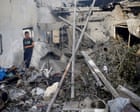
Every time Israel calls a snap election, foreign correspondents dust off the exact same template. You know the headline by heart. Israeli politicians lurch to the right to court swing voters, Palestinian civilians brace for the worst, and human suffering in Gaza becomes cynical campaign fodder.
It is clean. It is emotionally resonant. And it misses the structural reality of how power actually operates in the Levant. If you liked this post, you might want to look at: this related article.
Treating Israeli electoral cycles as the primary driver of Gaza’s humanitarian crisis gives Western editors a convenient calendar to hang their coverage on, but it fundamentally misdiagnoses the patient. The uncomfortable truth—one that veteran diplomats will admit off the record over warm beer in Jerusalem and Ramallah—is that Israeli elections do not create the blockade, they do not dictate Hamas’s governance model, and they do not manufacture the diplomatic paralysis keeping two million people trapped in an open-air pressure cooker.
When analysts frame Gaza’s misery merely as a byproduct of Knesset campaigning, they accidentally strip agency from every other actor on the board while overstating what a change in Jerusalem’s prime minister’s office can realistically deliver. For another look on this event, check out the recent update from The Guardian.
The Myth of the Campaign Trail Escalation
The standard media narrative relies on a simple, seductive cause-and-effect loop. An Israeli prime minister faces a tight race, polls show vulnerability on national security, and suddenly airstrikes or border crackdowns spike to project toughness.
Look closer at the historical ledger and that tidy formula falls apart. Major military flare-ups—Cast Lead in 2008, Pillar of Defense in 2012, Protective Edge in 2014, Guardian of the Walls in 2021—were rarely triggered by a campaign manager looking at focus group data. They were triggered by specific tactical ruptures: kidnapped soldiers, cross-border tunnel networks, rocket barrages aimed at population centers, or flashpoints in East Jerusalem that spiraled out of control faster than any political strategist could script.
In fact, incumbent Israeli leaders historically dread major Gaza escalations right before an election. War is unpredictable. Body bags and prolonged rocket fire into Tel Aviv do not win votes; they shatter the illusion of control that incumbents depend on. When Ehud Olmert’s government launched Operation Cast Lead weeks before the February 2009 election, it did not save Kadima from losing power to Benjamin Netanyahu. When skirmishes erupted ahead of the 2019 and 2020 ballot cycles, Netanyahu repeatedly opted for Qatari cash suitcases and quiet understandings with Hamas rather than full-scale ground invasions—precisely because a messy war would have wrecked his electoral math.
Calling Gaza "campaign fodder" confuses loud rhetoric with actual policy shifts. Politicians on the campaign trail always talk tough. Yet once they sit in the Defense Ministry and read the Shin Bet intelligence briefings, their options narrow to the exact same unenviable menu their predecessors faced.
Why Changing the Prime Minister Rarely Changes the Border
If you want to understand why Gaza remains locked down regardless of who wins 61 seats in the Knesset, stop looking at party platforms and start looking at structural security doctrine.
Between 2021 and 2022, Israel was governed by the most ideologically diverse coalition in its history. It included right-wing nationalists, centrists, left-wing peace advocates from Meretz, and, for the first time ever, an independent Arab Islamist party, Ra’am. If any government was going to tear up the old playbook on Gaza, that was the one.
What happened? The naval blockade stayed intact. The dual-use import restrictions remained enforced. Perimeter buffer zones were still policed with live fire. Yes, the Bennett-Lapid government increased work permits for Gazan laborers entering Israel—a meaningful economic lifeline—but the core architecture of containment did not budge an inch.
Why? Because Israel’s security establishment views Hamas not as a conventional political rival, but as an entrenched Iranian-backed military organization dedicated to Israel's destruction. Whether the prime minister is a hawk from Likud or a centrist from Yesh Atid, the military brass demands the same baseline conditions before lifting restrictions: demilitarization, the return of captive citizens and soldiers’ remains, and a verifiable end to tunnel and rocket production.
No Israeli politician can waive those demands and survive politically, not because voters are uniquely bloodthirsty during election season, but because no sovereign electorate on earth would vote to allow an armed militia on its border to import heavy weaponry unimpeded.
The Convenient Erasure of Local and Regional Veto Players
Here is where conventional reporting commits its biggest sin of omission. By zooming in exclusively on Israeli ballot boxes, commentators treat Palestinians in Gaza as passive props acted upon solely by Jerusalem, while erasing the other hands holding the locks on the doors.
Start with Gaza’s de facto ruler. Hamas has governed the Strip since violently expelling Fatah in 2007. It has not held a legislative or presidential election since 2006. Every dollar of tax revenue collected at the Kerem Shalom and Rafah crossings, every decision to prioritize subterranean concrete bunkers over civilian electrical grids, and every choice to launch unguided projectiles into Israeli towns belongs to Hamas’s leadership. Blaming an Israeli election for Gazan suffering while ignoring an authoritarian administration that arrests journalists, crushes domestic protests like the "We Want to Live" demonstrations, and diverts international aid toward military infrastructure is analytical malpractice.
Then look across the southern border. Gaza does not share a frontier only with Israel. Egypt controls the Rafah crossing, Gaza’s sole gateway to the wider Arab world. Cairo’s security apparatus enforces strict closures, floods smuggling tunnels with seawater, and restricts the movement of people and goods just as aggressively as Israel—often more so. Egypt’s calculus has nothing to do with Israeli campaign season. Cairo views Hamas as an ideological offshoot of the Muslim Brotherhood, an existential threat to Abdel Fattah el-Sisi’s regime, and refuses to inherit responsibility for two million impoverished residents.
Finally, look at Ramallah. The Palestinian Authority under Mahmoud Abbas has repeatedly used financial levers—cutting civil servant salaries, slashing payments for Gaza’s electricity supply, and blocking medical referrals—to squeeze Hamas in their bitter intra-Palestinian civil war.
When four separate actors—Israel, Hamas, Egypt, and the Palestinian Authority—all hold overlapping vetoes over Gaza’s economy and freedom of movement, pinning the blame on Israeli electioneering is like blaming a house fire on the guy selling matches down the street while ignoring the three people pouring gasoline on the floor.
Answering the Questions Nobody Wants to Ask
If you follow Middle East coverage, you constantly see the same frantic questions pop up every election cycle. Let’s dismantle the flawed premises behind them.
Does a far-right victory in Israel automatically mean immediate war in Gaza?
No. History shows that right-wing Israeli governments often prefer asymmetric containment—managing the conflict from the air while buying quiet through economic incentives—precisely because they distrust diplomatic grand bargains and want to avoid costly ground occupations. Conversely, centrist and center-left Israeli governments have historically launched some of the largest military operations in the country’s history to prove they are not soft on defense. Ideology predicts rhetoric; intelligence assessments and tactical provocations dictate military action.
Would a left-wing Israeli victory lift the blockade tomorrow?
Not a chance. Even Israel’s most dovish mainstream parties condition the lifting of the blockade on the Palestinian Authority retaking control of Gaza’s crossings and international monitors verifying that weapons smuggling has stopped. Until Hamas relinquishes its monopoly on armed force inside the Strip, no Israeli cabinet—left, right, or center—will open the sea lanes or airspace.
Why do Palestinian voters in Gaza even care about Israeli elections if they cannot vote in them?
Because daily survival in Gaza is hyper-sensitive to marginal shifts at the border crossings. Ten thousand extra work permits mean tens of millions of dollars flowing into a local economy suffocating under 45 percent unemployment. Tighter restrictions on agricultural exports mean crops rot in trucks. Gazans are not delusional about an Israeli savior emerging from the ballot box; they are pragmatic observers tracking whether the next coalition will tighten the tourniquet or loosen it by half an inch.
What Actually Moves the Needle
I have spent years sitting in briefings with policy planners, NGO directors, and regional negotiators who waste millions of dollars designing diplomatic initiatives timed around Israeli election calendars. Every single time, they fall into the same trap: they wait six months for the campaign to finish, wait four months for coalition talks to conclude, and then discover that the new government faces the exact same constraints as the old one.
If serious observers want to stop treating Gaza’s population like a weather report tied to Israeli politics, the analytical focus has to shift from who sits in Jerusalem to the structural mechanics on the ground.
- Follow the crossings, not the campaign speeches. Ignore what ministers promise at party rallies. Watch the daily truckload numbers entering Kerem Shalom, the megawatts flowing from Israeli power lines, and the issuance of merchant and laborer permits. Those metrics tell you the real policy, and they often move in the exact opposite direction of public rhetoric.
- Track intra-Palestinian reconciliation before Israeli coalition math. No sustainable reconstruction or long-term ceasefire mechanism works without a single, accountable Palestinian governance structure at the border. Until Fatah and Hamas resolve their institutional split—or a credible technocratic alternative emerges—external actors will continue treating Gaza as a hostile entity rather than a viable economic partner.
- Hold regional guarantors to account. Qatar, Egypt, and the United Nations act as the essential shock absorbers preventing total systemic collapse in Gaza. When Qatari fuel subsidies stall or Cairo tightens transit rules at Rafah, the humanitarian impact hits Gaza within days—completely independent of whether Israelis are heading to the polls.
The Blind Spot of This Perspective
There is a legitimate criticism to be leveled against this structural analysis, and ignoring it would be dishonest.
Focusing heavily on long-term security doctrines and multi-actor vetoes can inadvertently numb observers to the very real damage caused by domestic Israeli political incentives. Even if right-wing or populist politicians do not invent the blockade from scratch during campaign season, electoral pressures do create a deadly ratchet effect. When an incumbent needs votes from nationalist constituencies, authorizing bold diplomatic concessions, expanding medical exit permits, or restraining disproportionate military responses becomes political suicide. Elections rarely cause the fire, but they routinely prevent anyone from turning on the sprinklers.
Furthermore, over-emphasizing Hamas’s governance failures can easily slide into collective blame, obscuring the fact that ordinary teachers, doctors, and shopkeepers in Gaza have zero say over rocket launches or tunnel budgets yet pay the highest price whenever deterrence breaks down.
Stop Watching the Wrong Clock
The obsession with Israeli elections as the decisive turning point for Gaza is a symptom of lazy journalism. It reduces a multi-layered geopolitical deadlock into a simple morality play with a predictable news hook every eighteen months.
Gaza’s misery is not an accidental side effect of someone else’s campaign strategy. It is the permanent, engineered equilibrium of four entrenched power centers—Jerusalem, Gaza City, Cairo, and Ramallah—each deciding that the status quo, however brutal for civilians, is less risky than the concessions required to break it.
Until those incentives change, counting ballots in Tel Aviv and Jerusalem will tell you who gets the corner office, not when Gaza gets to breathe.