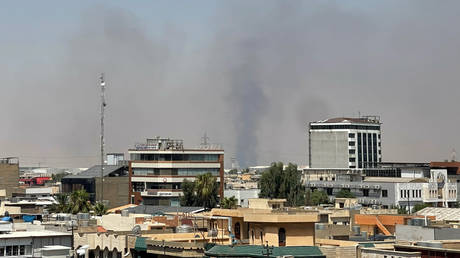
Every summer, Europe plays out the exact same predictable script. Flames engulf southern Europe, media outlets rush out sensational breaking news banners, and politicians line up behind podiums to decry an unprecedented climate emergency.
When emergency crews respond to massive blazes across Spain, officials trot out the same scapegoat: atmospheric heating. For a different view, see: this related article.
It is a convenient narrative. If a crisis is driven entirely by global atmospheric trends, local leaders bear zero responsibility for the ashes. They can throw up their hands, request federal relief funds, and promise green transitions while the countryside burns to the bedrock every single July.
The narrative is clean, terrifying, and fundamentally misleading. Related coverage on the subject has been shared by The Washington Post.
Climate conditions undoubtedly set the stage by extending dry spells and driving up temperatures. But heatwaves do not throw matches into dry brush, and rising temperatures do not stack fuel on a forest floor. Spain does not have a climate crisis on its hands—it faces a structural land management collapse that decades of short-sighted public policy created.
By blaming everything on global climate shifts, public leaders hide behind an unassailable global phenomenon to mask decades of hyper-local systemic failure.
The Rural Abandonment Engine
For centuries, Spain's countryside was managed by human intervention. Pastoral farming, controlled timber extraction, brush clearing, and traditional livestock grazing acted as a continuous, organic firebreak network. Goats and sheep cleared forest floors. Farmers harvested deadwood for heat. Rural communities maintained a patchy, resilient mosaic across the landscape.
Then came rapid urban migration, industrial agriculture, and central policy planning.
Over the past fifty years, millions left rural regions—a demographic flight locals call La España Vaciada (Empty Spain). As villages emptied, active land management vanished. Millions of hectares of former farmland underwent passive natural rewilding.
In public relations documents, passive rewilding sounds ecological and progressive. In reality, it means millions of acres of continuous, unmanaged fuel beds left to dry under the Mediterranean sun.
Without grazing livestock or manual brush clearing, undergrowth thickens unchecked. Small, manageable fires that used to burn out quickly in scrubland now find continuous highways of biomass connecting brush to scrub, scrub to tree canopy, and forest to residential developments.
When you abandon the countryside, you do not restore pristine wilderness. You build a massive, unattended pyre waiting for a spark.
Suppressing Small Fires Guarantees Megafires
Modern firefighting philosophy in Southern Europe relies almost exclusively on aggressive, total fire suppression. The second smoke appears on a satellite feed, water bombers launch and ground teams scramble to extinguish every single flame.
It sounds responsible. It is actually disastrous.
Fire is an inevitable, native component of Mediterranean ecosystems. When small, low-intensity fires burn naturally, they consume dead vegetation, clear dense underbrush, and break up continuous fuel continuity. They perform essential maintenance.
By suppressing every low-intensity ignition immediately, emergency response services inadvertently create the exact conditions necessary for apocalyptic megafires.
Think of it as a fuel bank account where forest authorities make zero withdrawals. Every year a forest does not burn, dead branches, needle cast, and scrub accumulate. Decades of successful suppression create an artificial structural deficit.
When an ignition eventually escapes control during a hot, windy August afternoon, the resulting inferno burns with such intense energy that modern firefighting technology becomes useless. The fuel load generates microclimates, pyrocumulonimbus clouds, and radiant heat that evaporates water before it hits the canopy.
Total fire suppression does not prevent forest fires. It merely defers them, charging compounding interest until the debt is collected in uncontrollable megafires.
Monocultures and Bureaucratic Stagnation
The structural failure goes deeper than simple abandonment. Mid-century forestry policies systematically replaced native, fire-resilient vegetation like cork oak and holm oak with fast-growing, economically profitable species like pine and eucalyptus.
Eucalyptus trees are literal torches. Their bark peels off in long, combustible strips that carry burning embers miles ahead of a fire front, creating spot fires behind containment lines. Their leaves are coated in flammable oils. Planting vast, unbroken stands of eucalyptus next to expanding residential zones is the structural equivalent of surrounding towns with matchsticks.
To fix this, land managers need freedom to execute aggressive controlled burns, run timber thinning operations, and clear strategic fuel breaks during winter months.
Instead, they run straight into an impenetrable wall of environmental bureaucracy.
In many Spanish autonomous regions, getting a permit for a controlled winter burn or thinning a private pine stand takes months of regulatory filing. Regional agencies treat active forest management with suspicion, prioritizing static preservation over dynamic resilience. Private landowners—who own roughly 70 percent of Spain’s forest land—give up trying to navigate the paperwork.
The result? Landowners leave their holdings unmanaged because active stewardship is legally cumbersome, while leaving the land untended costs nothing until everything burns down.
Breaking the Emergency Loop
Continuing to treat seasonal fire surges solely as unpredictable climate emergencies guarantees that every summer will look identical to the last. Spraying water on 1,000-degree infernos is an expensive tactical failure disguised as heroic action.
Fixing this crisis requires dismantling comfortable policy assumptions and replacing reactionary emergency budgets with aggressive structural intervention:
- Subsidize Rural Stewardship: Shift agricultural subsidies away from passive land retention toward active fuel-load reduction. Pay local livestock owners directly for targeted grazing along strategic firebreaks.
- Decentralize Controlled Burning: Slash bureaucratic red tape for prescribed winter burns. Give local foresters authority to set controlled fires without requiring months of high-level administrative reviews.
- Mandate Fuel Breaks Around Urban Interfaces: Implement strict, enforced defensible space laws for towns bordering forest land, forcing local municipalities to clear brush aggressively or face financial liability.
- Replace Highly Combustible Timber: Phase out monoculture pine and eucalyptus plantations near population centers, replacing them with fire-resilient native species through tax incentives.
Until policymakers stop using climate change as an all-purpose policy shield, the fire cycles will only worsen. The fuel is already on the ground. The weather will continue to get hot.
Either we actively manage the landscape through deliberate timber removal, targeted grazing, and winter flames—or the summer heat will manage it for us.